-

Understanding the definition and classification of fish medicines in one article
A drug refers to a substance used to prevent, treat and diagnose diseases and to help the body restore normal function. As the name implies, a fishery drug refers to a drug specifically used in fisheries to ensure the healthy growth of aquatic animals and plants. Therefore, its scope of application is limited to the aquaculture and enhancement industry, while substances used in capture fisheries and the aquatic product processing industry are not included in the category of fishery drugs. Modern aquaculture fisheries are divided into two major parts: the culture and enhancement of various aquatic animals such as fish, shrimp, shellfish, turtles and soft-shelled turtles, and the cultivation of aquatic plants mainly consisting of algae such as nori and kelp.
-
A Comprehensive Guide to Understanding and Preventing Kidney Disease in Dogs
My Dog Won't Eat? "Doctor, my dog hasn't eaten for a week and keeps vomiting. In the past, I just gave him cold medicine and he got better. Why is it so serious this time?" Whenever I hear a case like this, my scalp tingles, and a voice often sounds in my heart: "Don't tell me it's another kidney disease case. Oh God! Not this again." But whenever the blood test report comes out, nine times out of ten it confirms my suspicion, and I can't help but ask, "Why didn't you bring him in sooner?"
-
A detailed explanation of the white tea manufacturing process, understanding the whole process in one article
White tea is a specialty of China, mainly produced in Fujian Province. The surface of the dry white tea is densely covered with white downy hairs. The formation of its quality characteristics comes from, first, being made by picking young tender buds and leaves that are rich in downy hairs, and second, from adopting a drying and baking process in production that involves neither pan-firing nor rolling. At present, there are not many types of white tea, divided into bud tea (Baihao Yinzhen, also known as Silver Needle) and leaf tea (such as Gongmei). The production process is simple. The production process of Baihao Yinzhen is: tea buds, withering, baking, screening and sorting, re-firing, packing. The process of Bai Mudan (White Peony) and Gongmei is: fresh leaves, withering, baking (or shade drying), picking and sorting
-
What Does Green Fisheries Mean? Understanding the Concept and Connotations in One Article
Green fisheries encompasses three aspects of meaning. First, the coordination and consistency between fisheries production and the aquaculture environment, which is conducive to both fisheries development and a virtuous cycle of the ecological environment; second, fisheries inputs are safe and effective, with high input-output efficiency of materials and energy and little waste, and toxic and harmful substances below the standards legally stipulated by the state; third, fisheries outputs can meet the standards and requirements of human food consumption in terms of quantity and quality. Green fisheries is an extension of modern fisheries. In the overall development plan and structural adjustment of fisheries production, it highlights the concept of ecology, endowing
-
How Is Yellow Tea Produced? Understanding the Origins of Yellow Tea in One Article
The basic process for green tea is fixation, rolling, and drying. When the green tea processing technique is not properly controlled - for example, if after fixation the leaves are not spread to cool and rolled in time, or after rolling they are not dried or pan-fired in time and are left piled too long - the leaves turn yellow, producing yellow leaves and a yellow brew, similar to the yellow tea that appeared later. Therefore, the emergence of yellow tea evolved from improper green tea processing methods. Xu Cishu of the Ming Dynasty recorded this history of evolution in his "Tea Commentary" (1597).
-
How to control onion maggots? Understanding the occurrence characteristics is key
I. Damage symptoms Onion maggot larvae bore into and feed on garlic bulbs, causing the bulbs to rot, and the above-ground leaves to turn yellow, wilt, and even die. Pulling out affected plants reveals maggot pupae; the damaged garlic skin shows yellowish-brown rot, the garlic heads are bored into holes by the larvae and become incomplete, with the cloves exposed and split open, accompanied by a foul odor. Affected plants are easily pulled out and break off. II. Occurrence characteristics Onion maggots can cause damage before winter, pupate and overwinter after winter sets in, and begin to emerge as adults from the pupae in March of the following year. Adults lay eggs around the garlic roots
-

What are the propagation methods for sweet wormwood? Understanding sweet wormwood seedling cultivation in one article
Propagation methods for sweet wormwood
-
How to control broad mites in greenhouses and sheds? Understanding the occurrence pattern is key
In greenhouse fruit and vegetable production, curled and shrunken growing points of plants, deformed and cracked fruits are often seen, causing serious losses to production. Because the temperature and humidity inside the greenhouse are very suitable for the growth and reproduction of broad mites, and fruit vegetables are their main targets, and the mites are extremely small and invisible to people, timely control is impossible. Therefore, in recent years, the area of occurrence and damage has been growing larger and larger, which should attract great attention from producers. Broad mites belong to the class Arachnida, order Acariformes, family Tarsonemidae, and are harmful microscopic pests. They mainly damage cucumbers, eggplants, and tomatoes among greenhouse vegetables.
-
What kind of bacterium is Streptococcus suis? Understanding the characteristics of this pathogen
Streptococcus suis belongs to the genus Streptococcus. The cells are round or oval, less than 2.0 mm in diameter, generally arranged in chains or in pairs, and stain Gram-positive. The colonies are small, grayish-white and translucent. Most pathogenic strains are capable of hemolysis. Streptococcus suis has 35 serotypes (1-34, 1/2) as well as some untypeable strains. Among them, the four serotypes 1, 2, 7 and 9 are highly pathogenic. Muramidase-released protein (MRP) and extracellular factor (EF) are
-
What does microbial composting do? Understanding microbially enhanced composting in one article
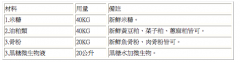
Microbial oil cake compost: Organic farming places special emphasis on cultivating the soil so that it can maintain the highest productive capacity, and one of the best ways to improve the soil is to apply organic fertilizers such as microbial oil cake fertilizer and oil cake liquid fertilizer. This not only significantly shortens the production time of organic fertilizer, but the method is also very simple, clean and hygienic, and crop yield and quality are markedly improved.
条件筛选