-

Want to save 10 yuan per mu on spraying? Understanding this one point is enough
Understand this one point, and save 10 yuan per mu on spraying
-

Conceptual misunderstandings about policy-based agricultural insurance need to be clarified
Clarifying conceptual misunderstandings about policy-based agricultural insurance
-

How much does a chinchilla cost? Understanding the market in one article
How much does a chinchilla cost?
-
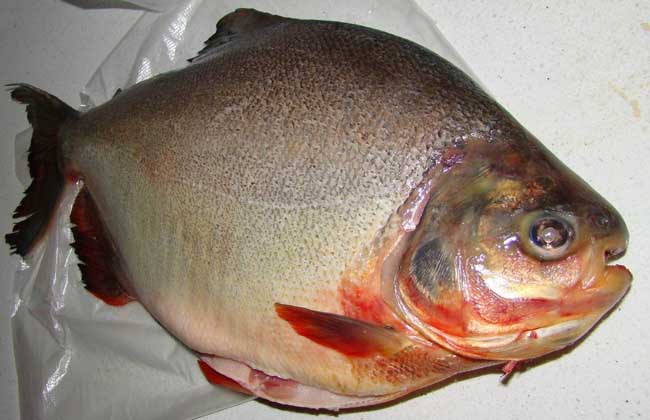
How much is pomfret per jin? Understanding the market price in one article
How much is pomfret per jin?
-

-
Understanding food safety knowledge and recognizing the impact of the food environment on safety
As people's awareness of food safety gradually rises today, many choose to make food at home, and some even take their homemade food to market to sell. But it is difficult to judge food safety standards in a home environment. Therefore, the national laboratory
-

Is Taiwan strawberry famous? Understanding strawberry nutrition and benefits in one article
Is Taiwan strawberry famous? Yes, it is quite famous. Let's learn about the mystery of the origins of Taiwan strawberries. What nutrition do strawberries have and what benefits do they offer? The mystery of the origins of Taiwan strawberries: French strawberries originated in the wilds of North America, and commercial cultivation and mass production in France only began in the 18th century
-
What classifications do tulips have? Understanding tulip variety classification in one article
There are many varieties of tulips, about ten thousand or more. Two main classification methods are introduced here: 1. Classification by flower shape variation. They can be divided into cup type: the corolla is cup-shaped, with representative varieties including Cottage tulip, Darwin tulip, and Darwin hybrid tulip; bowl type: the corolla is shallow dish-shaped and bell-shaped, with many small flowers, and the representative variety is water lily tulip; lily type: the petal tips are gradually pointed, and the corolla resembles a lily flower, with the representative variety being lily tulip; ball type: the corolla is spherical, and these are the double-flowered types among Cottage tulips and Darwin hybrid tulips. 2. Classification by early or late flowering.
-
How to prevent and control cotton root rot in northern Xinjiang? Understanding the patterns of occurrence is key
In 2007, northern Xinjiang suffered varying degrees of cooling and rainfall in April, May and August respectively, and cotton root rot occurred rather severely, with the disease incidence in cotton fields reaching 20%-50%, causing a certain impact on cotton yield in northern Xinjiang. 1. Disease symptoms The pathogen overwinters as chlamydospores on plant residues in the soil and germinates to infect the following year. After cotton is infected, the leaves shrink or wilt, and soon afterward the plant lodges and dies. The stem base and roots of diseased seedlings are purplish brown and gradually rot, with the cortex drying and rotting; when pulled from the soil, the roots are decayed brown.
-
Understanding High-Fever Diseases in Pigs in Summer and Autumn in One Article
For the pig industry, summer and autumn can span from May to early November each year. Over this half-year period, pig diseases are commonly seen and frequently occur for many reasons. According to rough statistics, the incidence of pig diseases in summer and autumn accounts for about 70% of the whole year. The notable feature of pig diseases during this period is that clinically they are mainly characterized by high fever, with body temperature mostly rising above 41°C, presenting as continued fever or recurrent high fever. Among the commonly occurring high-fever diseases are: swine fever, swine erysipelas, swine pasteurellosis, piglet paratyphoid, swine septicemic streptococcosis
条件筛选