Understanding food safety knowledge and recognizing the impact of the food environment on safety
As people's awareness of food safety gradually rises today, many choose to make food at home, and some even take their homemade food to market to sell. But it is difficult to judge food safety standards in a home environment. Therefore, the "Building a Food Safety Network" research team at the Science and Technology Policy Research and Information Center of the National Applied Research Laboratories published the magazine Craftsmanship Happiness Secrets - The First Lesson for Small Producers, using richly illustrated content to teach artisan makers about food safety knowledge related to food production.
Providing small farmers and artisans with food safety knowledge to ensure the safety of homemade food
Convener Hsieh Sheng-yu said that because some people who produce food on a small scale at home only have the skills to make foods such as jam and cookies, but lack food safety hygiene concepts, they may overlook hygiene requirements for clothing and the production environment when making food. Therefore, the magazine content is expected to build artisans' food safety concepts and also help small-farmer processed goods sold in markets gain public trust.
Regarding the production environment, Hsieh Sheng-yu mentioned that it is difficult for people's homes to meet the hygiene standards of large food processing plants. Therefore, by separating zones and times, the various stages of ingredient preparation are divided, so that after peeling fruit or handling raw meat, proper cleaning can be done, and after subsequent steps such as cooking or fermentation, cleaning is done properly again before finally packaging the finished product. Hsieh Sheng-yu added that artisans who now make food at home relatively lack behavioral guidelines, and clear codes of conduct need to be provided for small-scale food practitioners to follow, ensuring food safety.
Editor-in-chief Lin Mei-hui said that the packaging labels of some farmers' homemade foods are unclear, without clearly marked manufacturing dates and expiration dates, and some even fail to label ingredients. This violates current food-related regulations. Some fermented products such as fermented bean curd are high-risk goods because fermentation time, temperature and pH value affect product safety. If the public's food safety knowledge is insufficient, food safety problems may arise.
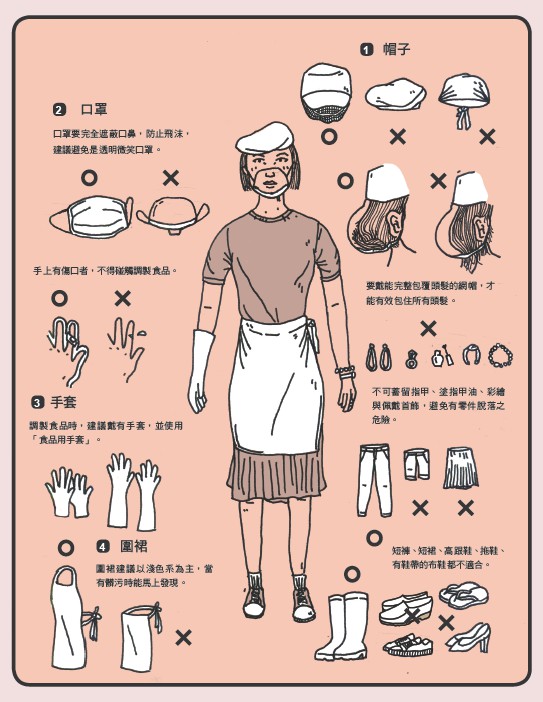
Many people make things by hand at home, requiring clear food safety guidelines to follow
Hsieh Sheng-yu said that currently about 490,000 people in the country are engaged in food manufacturing and processing, but only about 6,000 food factories meet the scale for factory registration and are managed by relevant agencies. The many food practitioners can only follow the principled regulations of GHP, but actual practices often differ because of actual conditions. Therefore, through the magazine, specific illustrated content is used to teach the public methods that comply with GHP standards.
Hsieh Sheng-yu mentioned that in the future they will continue discussions with scholars from the Department of Food Science and the Office of Food Safety of the Executive Yuan, and update the latest food safety guidelines and food production standards, moving toward establishing a risk coefficient management and graded management system, so that various food types all have general codes of conduct, allowing the public to buy small-farmer handmade goods with peace of mind.