How much does Pu'er tea cost? Understanding the market in one article
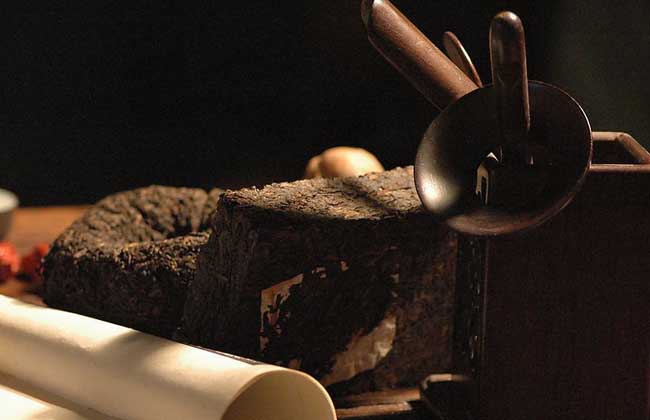
Pu'er tea is named after Pu'er County, where it was originally shipped and distributed. Drinking it regularly has many benefits such as lowering blood lipids, aiding weight loss, inhibiting bacteria and aiding digestion, warming the stomach, promoting saliva production, quenching thirst, and helping to sober up and detoxify. It can clear the stomach and promote saliva, aid digestion and resolve phlegm, relieve alcohol and detoxify, promote urination and dispel cold, relieve cough and resolve phlegm, and lower blood lipids and cholesterol. Now let's take a look at how much Pu'er tea costs!
How much does Pu'er tea cost?
Pu'er tea is divided into three types: cake tea, tuo tea and loose tea, and is also divided into raw tea and ripe tea. Ripe tea is generally loose tea, while raw tea is divided into cake tea or tuo tea. On the market, prices vary by brand, and prices also vary by vintage. Generally speaking, ripe tea is more expensive than raw tea, and if it is aged tea, then the price is even higher. For example, a jin of 1995 Menghai ripe loose tea costs over a thousand yuan or more. Pu'er tea can also be roughly divided into six grades: genuine, fine, superior, precious, premium and unique. The usual price ranges would be 50 yuan for genuine, 100 yuan for fine, 200 yuan for superior, 500 yuan for precious, 1000 yuan for premium and 2000 yuan for unique.
How to identify the quality of Pu'er tea
1. Appearance: Whether it is cake tea, tuo tea, brick tea or various other shapes of tea, first look at the tea leaves' strip shape. Check whether the strips are complete, whether the leaves are old or tender; old leaves are larger, tender leaves are finer. If the appearance of a tea cake shows no obvious strips (the patterns formed by individual tea leaves) and instead looks broken and fine, then it is made from inferior products.
2. Aroma: Mainly look at the purity of the aroma, and in particular distinguish musty odor from aged aroma. Some people say that aged aroma is musty odor, which is wrong. Musty odor is a spoiled smell, an unpleasant and unacceptable odor. Aged aroma, on the other hand, is a comprehensive aroma produced by new substances formed from various chemical components of Pu'er tea during post-fermentation under the action of microorganisms and enzymes. Some resemble longan aroma, some resemble betel nut aroma, and so on. It is a comfortable aged aroma. If there is a musty odor, sour taste, etc., it is abnormal.
3. Taste: Mainly taste the mellow smoothness, smoothness and returning sweetness. Mellow means the taste is refreshing with a sweet note, not very umami, and not strongly stimulating. Smooth means refreshing; "smooth" is the opposite of "astringent", giving a very comfortable feeling in the mouth. Smoothness is the taste of high-quality Pu'er tea. Returning sweetness means the tea soup is thick but not strongly stimulating, and when it enters the mouth there is an obvious sweet aftertaste.
4. Brewed leaves: Mainly look at tenderness and uniformity of color. Brewed leaves with good tenderness contain many buds (with down), and the leaf quality is soft, plump and elastic. Brewed leaves with poor tenderness have no bud down, the leaf blades are relatively coarse and large, and the brewed leaves are hard and without elasticity. Uniform brownish-red color is good. Mixed and uneven color, or reddish, carbonized, or rotten like mud, or leaf blades that do not unfurl (will not open when brewed) all indicate poor quality.
Grades of Pu'er tea
1. Court Pu'er: The appearance has tight, straight and fine strips, with visible golden down. When brewed, the liquor color is red and thick, the aged aroma is rich, the taste is strong and mellow, and the brewed leaves are fine and tender, showing brownish-red.
2. Gift tea Pu'er: The appearance has tight, straight and relatively tender strips, with visible golden down. When brewed, the liquor color is red and thick, the aged aroma is rich, the taste is strong and mellow, and the brewed leaves are fine and tender, brownish-red.
3. Special-grade Pu'er: The appearance has tight, straight and relatively fine strips, with visible down. When brewed, the liquor color is red and thick, the aged aroma is rich, the taste is mellow and thick, and the brewed leaves are brownish-red and relatively fine and tender.
4. Grade 1 Pu'er: The appearance has tight and compact strips, slightly tender, with relatively visible down. When brewed, the liquor color is red and thick, the taste is mellow and thick, the aroma is rich and pure, and the brewed leaves are brownish-red, plump and tender.
5. Grade 3 Pu'er: The appearance has tight and compact strips, still showing down, the aroma is rich and pure, and the brewed leaves are brownish-red and soft.
6. Grade 5 Pu'er: The appearance has firm and compact strips, slightly showing down. When brewed, the liquor color is deep red, the taste is mellow and mild, the aroma is pure and upright, and the brewed leaves are brownish-red, somewhat uneven, and still soft.
7. Grade 7 Pu'er: The appearance has plump and strong, firm and compact strips, and the color is brownish-red with a slight gray tinge. When brewed, the liquor color is deep red, the taste is mellow and mild, the aroma is pure and mild, and the brewed leaves are brownish-red, somewhat uneven, and still tender.
8. Grade 8 Pu'er: The appearance has thick and strong strips, and the color is brownish-red with a slight gray tinge. When brewed, the liquor color is deep red, the taste is mellow and mild, the aroma is pure and mild, and the brewed leaves are brownish-red, somewhat uneven, and still tender.
9. Grade 9 Pu'er: The appearance has thick and large but still firm and compact strips, and the color is brownish-red with a slight gray tinge. The internal quality has a deep red liquor color, a mellow and mild taste, a pure and mild aroma, and the brewed leaves are brownish-red, somewhat uneven, and still tender.
10. Grade 10 Pu'er: The appearance has slightly loose strips, and the color is brownish-red and slightly variegated. The internal quality has a deep red liquor color, a mild taste, a mild aroma, and the brewed leaves are brownish-red and slightly coarse.