-

Training courses must suit farmers' tastes
Recently, the farmer training classroom of the Liuxianzhuang Village Committee in Yutian County, Hebei Province, was bustling with activity. More than 50 people, including all members of the council of the Liuxianzhuang Fuda Farmers' Professional Cooperative, large-scale growers, and some villagers, came enthusiastically to participate in training on integrated pest management technology.
-
Training Class for Managers of National Staple Food Processing Demonstration Enterprises Successfully Held
Website News In order to carry out the staple food processing industry upgrading action in depth, actively cultivate staple food processing demonstration enterprises, and improve the ability to lead and drive development, from September 23 to 29, the Agricultural Products Processing Bureau of the Ministry of Agriculture held a training class for managers of national staple food processing demonstration enterprises in Beijing.
-
In 2014 the Ministry of Agriculture completed the new layout of rural practical talent training bases
This website news On the morning of September 1, the Ministry of Agriculture held an unveiling ceremony for a rural practical talent training base in Fenghuang Village, Nanchang County, Jiangxi Province. Zeng Yichun, member of the Party Leadership Group of the Ministry of Agriculture and Director of the Department of Personnel and Labor, attended the unveiling ceremony and presented Fenghuang Village with an agricultural science and technology mobile service vehicle and training
-
Guizhou Walnut Welcomes the Ministry of Agriculture's 19th Rural Practical Talent Training Base
Green mountains roll on and clouds and mist swirl around; the tea township of northern Guizhou rivals Jiangnan. On August 12, the Ministry of Agriculture's Rural Practical Talent Training Base held its unveiling ceremony in Hetaoba Village, Meijiang Town, Meitan County, Zunyi City, Guizhou Province. This is the 19th Rural Practical Talent Training Base organized and built by the Ministry of Agriculture.
-
Top-level agricultural design should take more account of local realities
Attending the training, my biggest gain was broadening my horizons and learning about successful examples within the scope of information work both domestically and abroad, as well as applied experience in production, management and other links. Combining this with my daily concrete work practice, I have several thoughts: information analysis and application is the key point.
-
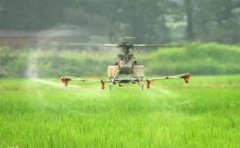
Drone crop-dusting of herbicides offers many advantages, but operators must obtain a training pass certificate before they can work
Faced with problems such as rural depopulation and an increasingly aging population, how to use mechanical equipment to reduce manpower has become an important issue, and using drones to spray pesticides has become one of the options. The Council of Agriculture recently gave notice of the "Regulations Governing the Use of Pesticides and the Random Inspection of Pesticide Residues in Agricultural Products"
-
Sann Yueh Hong Lychee Cultivation Management Techniques, Pruning and Training Tips, and Pest and Disease Control
The trunk of the Sann Yueh Hong lychee is smooth and grayish-brown, with thick, relatively sparse branches and brittle wood. The leaves are smooth, leathery, dark green on the surface, and new shoots are dark reddish-brown. The flower panicles are thick and short, with reddish-brown branches. The fruit is oval or lopsided-heart-shaped, with dark red, relatively thick and crisp skin, and flat tubercles.
-
Melon Cultivation Management Methods and Technical Key Points
Summary Pruning and vine training: Keep the plants with the best growth on the main vine, then prune off the side branches at the cotyledon node. Temperature management: Maintain the daytime temperature at around 25°C; the nighttime temperature must not be lower than 15°C or higher than 18°C. Fruit setting and leaf removal: Apply hormone treatment to the melons,
-
Kiwifruit Cultivation Techniques: How to Prune and Train Plants to Ensure Fruit Quality
Abstract Orchard site selection: deep soil layer, high soil humus content, loose and fertile, adequate water source with good drainage and irrigation facilities. Planting: sturdy planting stock, reasonable planting distance and male-female ratio. Root pruning: prune the damaged or moldy parts of the root system. Branch pruning: for young seedlings
-
High-position trunk-training technical measures and operational key points for navel orange
Navel orange is an excellent variety of fruit, rich in nutrients with a sweet and uniquely delicious taste, and is especially loved by the general public. So do you know how navel oranges are grown? What should be noted when cultivating navel oranges? Below, follow the editor to learn about navel orange cultivation techniques
条件筛选