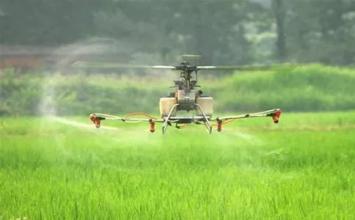
Drone crop-dusting of herbicides offers many advantages, but operators must obtain a training pass certificate before they can work
Faced with problems such as rural depopulation and an increasingly aging population, how to use mechanical equipment to reduce manpower has become an important issue, and using drones to spray pesticides has become one of the options. In the draft amendment to certain provisions of the "Regulations Governing the Use of Pesticides and the Random Inspection of Pesticide Residues in Agricultural Products" recently given notice by the Council of Agriculture, it is stated that drone pesticide spraying should be carried out by crop-dusting pesticide operators who have obtained a qualification certificate.
The Bureau of Animal and Plant Health Inspection and Quarantine gives notice of the Regulations Governing the Use of Pesticides and the Random Inspection of Pesticide Residues in Agricultural Products
After the Civil Aviation Act was amended last year, remote-controlled drones were brought under regulation, stipulating that "no object may be dropped or sprayed by remote-controlled drone," and a solution from the Council of Agriculture was urgently needed. Therefore, the Council of Agriculture recently gave notice of the draft amendment to certain provisions of the "Regulations Governing the Use of Pesticides and the Random Inspection of Pesticide Residues in Agricultural Products," stipulating that "pesticide application by unmanned aerial vehicle shall be carried out by crop-dusting pesticide operators; their operators and unmanned aerial vehicles shall comply with the Civil Aviation Act and relevant laws and regulations, and the operators must obtain a pass certificate from aerial application category crop-dusting pesticide technician training before they may work."
Crop-dusting by unmanned aerial vehicle must not exceed 4 m above the plant canopy
Zou Huijuan, deputy director-general of the Bureau of Animal and Plant Health Inspection and Quarantine of the Council of Agriculture, said that the original aerial application involved large-scale pesticide spraying by aircraft, so the regulations stipulated that residents must be notified 3 days in advance; after switching to drone spraying, because the operating space and area are small, it will not affect residents' normal daily routines, so the regulations state that "pesticide application by unmanned aerial vehicle" does not need to be reported 3 days in advance.
Zou Huijuan said that the regulations stipulate that pesticide application by unmanned aerial vehicle shall be carried out by crop-dusting operators, and the Civil Aviation Act also stipulates that only legal person entities can register, so those currently able to use drones for pesticide application are crop-dusting operators registered as legal persons. The regulations stipulate that it must not exceed 4 m above the plant canopy; she explained that if the distance is too high, there may be a risk of drift, and after application the operators should also enter the application records into the system and upload the flight trajectory.
Zou Huijuan also said that the Bureau of Animal and Plant Health Inspection and Quarantine and the Taiwan Agricultural Chemicals and Toxic Substances Research Institute are currently planning the establishment of related courses, which will also make it easier to grasp the current situation of drone crop-dusting operators.