-

Detailed Explanation of Daily Management Points for the Three-Yellow Bearded Chicken
The Three-Yellow Bearded Chicken is a famous local chicken breed in China, characterized by tender meat, fine bones, crisp skin, delicious flavor, and the three-yellow bearded features. The Three-Yellow Bearded Chicken is a famous excellent meat-type local chicken breed in China. It is tolerant of coarse feed and has strong disease resistance. It originated in the Huiyang region of Guangdong Province, with Zijin, Boluo, Longmen, Huidong, Huiyang and other counties (cities) as the main production areas. It is renowned at home and abroad for its tender meat, fine bones, crisp skin, delicious flavor, excellent meat quality, and its unique appearance featuring three yellows (yellow feet, yellow beak, yellow feathers) and long beards on the lower jaw. Its live chicken export volume is large and its economic value is relatively high. In the Hong Kong, China and Macao, China markets
-
Three Practical Methods for Fattening Old and Cull Cattle
Fattening old and cull cattle is an effective measure for fully utilizing the production performance of cattle and improving the economic benefits of cattle farming. Before fattening, first deworm and vaccinate the cattle, and then adopt intensive fattening, that is, achieving the fattening goal within a short period (80-100 days). (1) Fattening with rice washing water plus rice bran: Use 20-30 kg of rice washing water per head of cattle per day, add 2-3 kg of rice bran, mix and feed to the cattle, and allow the cattle to freely consume other conventional feed, with a daily weight gain of about 1 kg. (2) Fattening with distillers' grains plus concentrate: Use distillers' grains per head of cattle per day
-
Detailed Explanation of the One-Year Three-Harvest Cultivation and Processing Technology for Pinellia (Pinellia ternata)
I. Land Selection and Preparation For planting Pinellia, loose and fertile soil is best. When preparing the land, apply 3000-5000 kg of farmyard manure per mu, 25-30 kg of phosphate fertilizer, and 100 kg of plant ash; do not apply ammonium bicarbonate. Plow deeply and harrow finely, with beds 1.3 m wide and 0.17 m high, and ditches 0.3 m wide; tall crops such as wheat, corn, sorghum, or kenaf can be intercropped in the ditches. II. Sowing Method Usually tuber propagation is used, allowing three plantings and three harvests in one year, namely planting in April and harvesting in July; planting in July and harvesting in October; planting in October and harvesting in April of the following year. The amount of seed tubers used per mu varies with
-
Detailed Introduction to Three High-Quality Garlic Varieties
Farmers in Zhongmu County, Henan Province, discovered a mutant plant during many years of cultivating "Soviet garlic." After years of purification and rejuvenation, they developed an improved garlic variety, later named Songcheng garlic. Songcheng garlic overcame the original variety's shortcomings of mild spiciness, many small cloves, thin and weak garlic scapes, and purple-red stripes on the outer skin, while preserving the original variety's advantage of large bulbs. This variety has now been extended to the autumn-sowing garlic regions of northern China. According to incomplete statistics, in the autumn-sowing garlic regions of China, the planting area of Songcheng garlic is over 7
-
Wheat-cotton-mung bean three-crop-per-year, three-harvest planting model
For the cotton variety, select a marker hybrid insect-resistant cotton with a loose plant type, chicken-claw-shaped leaves, good ventilation and light penetration, and strong boll-setting ability. For the wheat variety, select the high-yield, disease-resistant variety Han 4564. For the mung bean variety, select Zhonglu 1. Choose a plot with good water and fertility conditions for the planting pattern, harvest the autumn crops in time to clear the stubble, and sow while there is soil moisture; if there is no moisture, irrigate the land to create moisture. Apply more than 4 cubic meters of high-quality farmyard manure, 25 kg of diammonium phosphate, 20 kg of potash fertilizer, and 15 kg of urea per mu. Plow deeply to 25 cm and harrow 3-4 times. Make beds 200 cm wide, with a bed ridge width of 60 cm and a bed surface width of 1
-
Cultivation method for growing Pinellia ternata in three crops a year
The Chinese medicinal herb Pinellia ternata can be grown in three crops a year. Planted in April, harvested in July; planted in July, harvested in October; planted in October, harvested in April of the following year. Three crops of Pinellia ternata can bring in more than 5,000 yuan per mu. Site selection and land preparation: For planting Pinellia ternata, loose and fertile soil is best. In combination with land preparation, apply 3,000-5,000 kg of farmyard manure, 25-30 kg of superphosphate, and 1,000 kg of plant ash per mu; ammonium bicarbonate must not be applied. After deep ploughing and fine harrowing, make beds 1.3 m wide and 17 cm high, with ditches 30 cm wide. In the ditches, intercropping can be done with
-
Common problems and solutions in wheat-intercropped Three-Cherry pepper cultivation
With the adjustment of the agricultural structure, Three-Cherry pepper began to be planted in Neihuang County in 1993, and by 2004 it had grown to 4300 hectares, with the most concentrated area being Lucun Township, where the planting area is about 2900 hectares, and a trading market covering 6.5 hectares, with an annual trading volume of 87 million t and an annual trading value of 29.58 million yuan, was established, achieving good economic and social benefits, but many problems still exist, restricting farmers' economic returns. 1 Problems existing in production
-

What are some modern agricultural technologies? These three treasures are products of technological development
The Taiwan Agricultural Research Institute's fruit and vegetable cultivation greenhouse uses a double-net and insect-proof walkway design to reduce pest problems inside the greenhouse, and by adjusting crop cultivation row and plant spacing to reserve space for small agricultural machinery to move through, the number of plants cultivated per unit area not only does not decrease, but can also be coordinated with agricultural machinery for
-
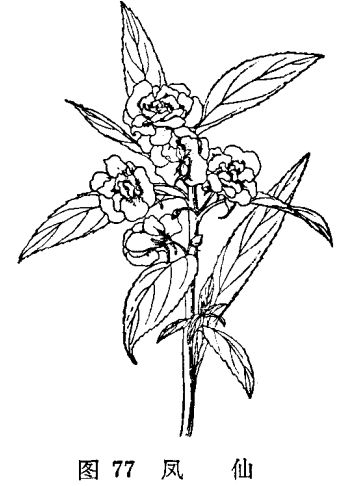
What are the three species of flowers in the same genus as Impatiens?
1. Impatiens balfourii Hook. (Balfour's impatiens): A perennial herb, 90 cm tall, much branched. Leaf margins have fine curved teeth, petioles lack glands. Flowers large, 6-8 clustered into racemes. Capsules erect, 2.5-4 cm long, smooth. Native to the western Himalayan region.
-
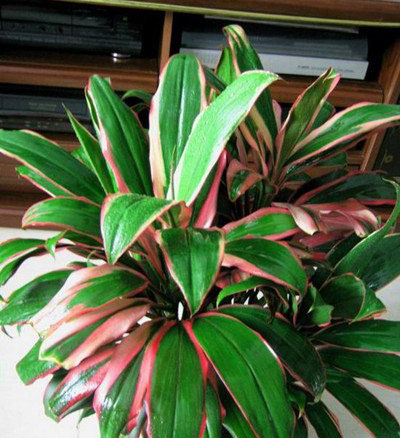
A detailed guide to the propagation methods of the three-colored cordyline, easy to learn at a glance
The three-colored cordyline, also known as the three-colored ti plant, is an evergreen shrub in the Agavaceae family. It prefers a warm, humid and semi-shaded environment and fears direct strong light. Its optimum growth temperature is 20-25°C. It is not cold-tolerant and fears waterlogging. It is suited to loose, fertile, well-drained, slightly acidic sandy loam. The three-colored cordyline is commonly propagated by cuttings.
条件筛选