-
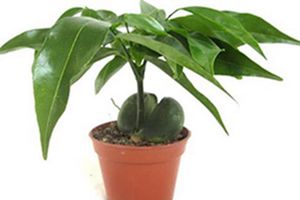
What to Do If the Leaves of the Green Yuanbao (Pachira aquatica) Dry Up? Causes and Solutions
If its leaves dry up, it may be caused by scorching sun exposure, in which case you should move it to a windy area without light for care so its damage can slowly recover. If it is caused by overwatering, you should reduce the amount and frequency of watering. If it is because it gets too much heating in the harsh winter, you should give it ventilation and moisture. If it is caused by too much fertilizer, you should wash out the fertilizer or replace the soil.
-
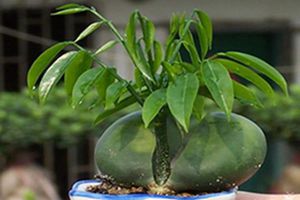
What to Do When the Leaves of a Green Pitcher Plant Droop? Causes and Solutions
If it is caused by too much water, its roots find it hard to breathe, so you need to repot it in soil with good drainage and open the windows for ventilation. If it has been harmed by cold wind, you should move it indoors and adjust the temperature to a suitable range. If it is caused by too much fertilizer, you need to rinse the soil. If it is caused by a lack of light, you need to let it get some sun.
-
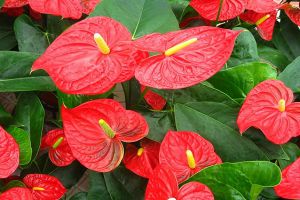
Reasons and Solutions for Dry, Cracked, and Holes in the Middle of Anthurium Leaves
This condition has a huge impact on its ornamental value. It is mainly caused by a lack of light that has lasted for a long time. The main treatment measures need to be discussed separately. If the damaged area is small, some medicinal solution can be applied to prevent further rotting. Then, place it in a ventilated spot. If the area of the hole is very large, then the already rotted leaves need to be cut off to avoid infecting the others. Some garlic juice can be sprayed to sterilize. At the same time, make sure there is sufficient light.
-

What to Do If Anthurium Does Not Bloom? Detailed Causes and Solutions
Many factors can affect its blooming. First, temperature. Neither too low nor too high will do; it is best between 15 and 30 degrees. Second, light. In this respect too, neither too dark nor too strong will do. Generally speaking, diffused and even light is the most favorable. Third is water and fertilizer, which need to be supplied adequately. These two can be combined. Fourth, poor ventilation can also affect blooming. Therefore, a well-ventilated environment needs to be provided. The last one is pests and diseases. Once discovered, treat them promptly.
-
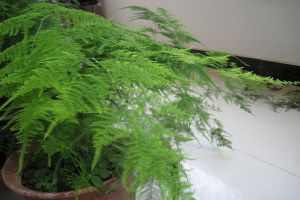
Why Is Your Asparagus Fern Dropping Leaves? Cause Analysis and Solutions
First, it could be a lighting problem: the light is too strong. In this case, you need to move it to a shady spot and mist the leaves with some water. Next, it could be too much water, causing root rot from waterlogged soil. Then you have to control the amount of water and loosen the soil for it. The third is a fertilizer problem: using fertilizer that is too concentrated or not fully decomposed. You need to take the plant out of the pot, remove the fertilizer, rinse it with clean water, and then put it back in. However, there is also a special case: severe leaf drop in winter may be due to not watering for a long time, so you need to water it appropriately.
-
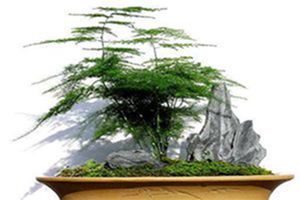
What are the solutions for common diseases of asparagus fern?
If it gets root rot, you can treat it with 1500x diluted Liangdun, and usually pay attention to the amount of watering and the temperature. If it gets branch blight, you can treat it with 1000x diluted Dingruike, and also disinfect it and apply petroleum jelly. If it gets yellowing disease, you need to use new soil to care for it.
-
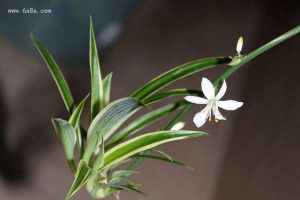
What to Do If Your Spider Plant Has No Golden Edges? Causes and Solutions
First, cut off the leaves that have no golden edges, so that they won't affect the other leaves. We need to put it outdoors for two hours every day; of course, it's better to put it out in the morning and evening, as this way the golden edges will be more pronounced. Apply a certain amount of phosphorus and potassium fertilizer, reduce watering, and increase misting.
-
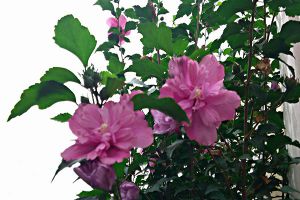
What are the common pests of hibiscus? A full analysis of solutions
This plant mainly has a few kinds of pests. Early prevention and control is the main approach, and after that regular inspections are needed. If there are some insects, use pesticides to kill them. For example, for aphids you can use dimethoate emulsion, while for leaf-rolling moths fenitrothion is feasible, for inchworms you can still use the pesticide used for aphids, and for nettle caterpillars you should directly bury the cocoons, then remove them manually, and you can also use their phototaxis to kill them.
-
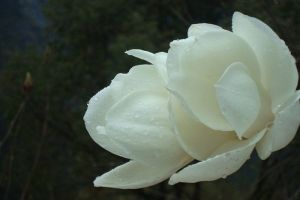
What to Do When Gardenia Flower Buds Wither? Causes and Solutions
There are mainly five causes, each with its own corresponding solution. First, overwatering. The roots rot, causing the flowers to wither. The solution is to wait until the soil is dry before watering, which benefits root growth. Second, the soil has become compacted, which blocks the transport of water and nutrients, causing the flower buds to wither. In this case, use a loosening tool to loosen the soil. Third, it is caused by insufficient light. Then you need to increase the light exposure time. Fourth, it is caused by pests and diseases; spray with a pesticide. Fifth, insufficient nutrients; a certain amount of fertilizer can be applied.
-
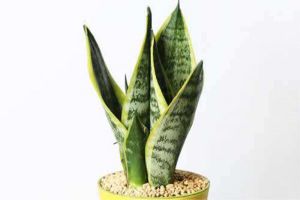
Causes and Solutions for Rotting Leaves on the Golden-Edged Snake Plant
The golden-edged snake plant (Sansevieria trifasciata 'Laurentii') has become a very popular houseplant in recent years, generally grown for its foliage, but if its leaves rot, it can be a real headache. So how should this be handled? First, you need to identify the cause, then apply the corresponding method to deal with it. Specifically, if it has been exposed to cold, remove the rotten leaves and move it to a warm place; if there is too much water, cut off the rotten roots and leaves and control the amount of water; if the potting soil is not breathable enough, replace the soil; if too much fertilizer has been added, add water to dilute it.
条件筛选