What to Do If Anthurium Does Not Bloom? Detailed Causes and Solutions
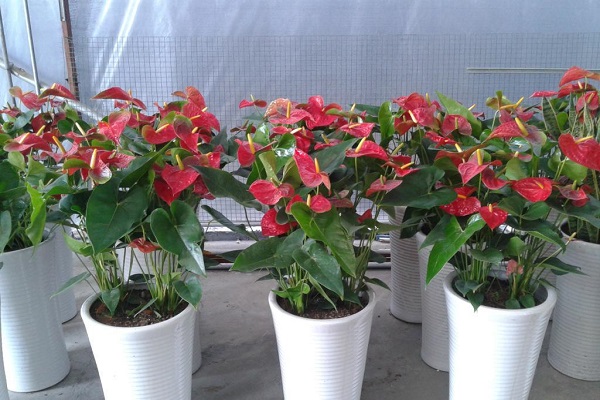
1. Temperature
(1) Specific cause: If the temperature is too low, it is definitely not conducive to blooming. However, it is not that the higher the better either. If it is too high, it is also not conducive to blooming.
(2) Solution: Therefore, we need to ensure a suitable temperature range. Generally speaking, it is 15 to 30 degrees. At the highest, it must not exceed 35. At the lowest, it must not be lower than 10.
2. Light
(1) Specific cause: It is similar to the previous aspect. Being in too shady an environment, like too strong light, may cause failure to bloom or fewer blooms.
(2) Solution: Diffused light and even light are best. For example, it can be placed on an east- or west-facing balcony. In this way, photosynthesis can proceed, and the light will not be too strong. Furthermore, its direction can be rotated over time.
3. Water and Fertilizer
(1) Specific cause: If these two are not supplied adequately, it will be very difficult to bloom.
(2) Solution: These two can be carried out in combination. Fertilizer is relatively more important. Before the flowering period, some fertilizer containing more P and K needs to be used especially, sprayed once every ten days.
4. Ventilation
(1) Specific cause: Many friends think ventilation has little to do with blooming, but that is not the case. Poor ventilation can lead to metabolic disorders.
(2) Solution: Improve the ventilation conditions. At the same time, promptly prune overly dense and aging flower branches to avoid affecting the effect of ventilation.
5. Pests and Diseases
(1) Specific cause: If pests and diseases happen to appear during the flowering period, it may likewise be unable to bloom.
(2) Solution: The main ones include "root rot," "red spider mite," and so on. For them, prevention is the main approach. Once discovered, deal with them immediately.