-

-

When should honeysuckle be newly planted? Autumn and winter are the right time
Honeysuckle can be planted in two seasons, spring, winter or late autumn, that is, between November and late March of the following year, but late autumn or early winter planting is best. To newly plant honeysuckle, the first step is to choose good land. Honeysuckle is not strict about soil and moisture conditions, and can resist drought, waterlogging and poor soil, but as a highly efficient medicinal plant, and with flower high yield as the management goal, it must be managed intensively. Research shows that honeysuckle likes sunlight and cannot tolerate shade, so sunny sandy loam with relatively deep soil layers, fertile and loose soil, good aeration and drainage, and a slope of 15
-
It is the right time for honeysuckle pest and disease control, and Xiushan County, Chongqing Municipality is strictly implementing it
Honeysuckle, formerly known as Japanese honeysuckle, also called silver flower, honeysuckle flower, or double flower, is a twining vine of the Caprifoliaceae family. The county has developed a honeysuckle base of 60,000 mu. Because the base farmers manage extensively and supporting technologies have not kept up, especially pest and disease control management, the yield of honeysuckle is low and the quality is poor. According to a survey by the county plant protection station, honeysuckle pests and diseases occur relatively commonly in our county, among which honeysuckle powdery mildew, brown spot disease, aphids and red spiders are relatively serious in occurrence and damage. At present, it is the best period for controlling honeysuckle powdery mildew, brown spot disease, aphids and red spiders and other pests and diseases
-
Getting the five key steps right in Gastrodia elata cultivation can effectively increase yield
To achieve stable and high yields of Gastrodia elata, the first thing is to get the five pre-planting steps right: First, choose the site. Gastrodia elata cultivation can be adapted to local conditions, whether indoors, in air-raid shelters, semi-basements, or chicken coops. Because Gastrodia elata likes dark, damp, and cool environments, choose places with good ventilation and shade as much as possible, with semi-basements and outdoor trenches giving the best results. You can lay a layer of bricks before use, or increase the thickness of the bottom sand layer to enhance its water permeability. Second, if the indoor floor is concrete, use high-quality Armillaria mellea fungal material (spawn). Armillaria mellea fungal material
-
September is exactly the right time to plant honeysuckle
Cutting propagation: Carry out cuttings in early spring before the new buds sprout, or in autumn from September to October. The seedbed should be close to a water source, with the soil deeply plowed and plenty of base fertilizer applied. Make raised beds 1.3 m wide. Select robust, pest- and disease-free 1- to 2-year-old branches, cut them into cuttings about 33 cm long, and remove the lower leaves. Then open horizontal trenches on the bed at a row spacing of 27-30 cm, with the trench depth depending on the length of the cuttings. Place 10-15 cuttings in each trench, bury 2/3 of each cutting in the soil, and firm the soil after filling.
-
How to choose land for planting Pinellia ternata? Choosing the right plot is the key to success
The Chinese medicinal herb Pinellia ternata has been popular in the national Chinese medicinal herb market for many years and sells well without decline. But some people are not successful in growing it, and one important reason is that in some places Pinellia ternata simply cannot grow or grows poorly. Planting it in clay or alkaline soil is not worth the effort: plant 50 kg of tubers and harvest no more than 100 kg. In mountainous areas or areas short of water, it grows poorly or even fails completely. Pinellia ternata is actually most afraid of drought and likes moisture; it likes to grow in sandy or somewhat sandy soil and requires good water conservancy conditions. This variety is semi-shade
-
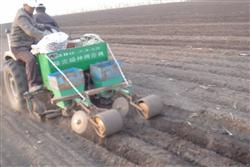
Summer sowing of Isatis indigotica (woad) is good; choosing the right sowing time is key
Isatis indigotica root is a bulk medicinal herb with relatively good market demand. It can be sown in spring, autumn, or summer. However, based on our trial demonstrations over the past two years, summer-sown Isatis indigotica is favored by herb growers because of its short growth period, good quality, high yield, no impact on subsequent crops after flowering, and relatively high returns. Average per mu...
条件筛选