-
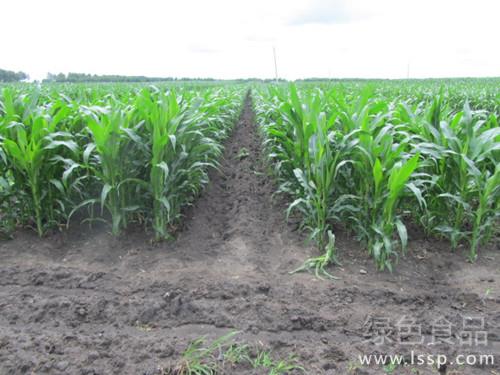
What are the main technical measures for corn cultivation with wide ridges, double rows, and plastic film mulching?
Main technical measures for corn cultivation with wide ridges, double rows, and plastic film mulching
-
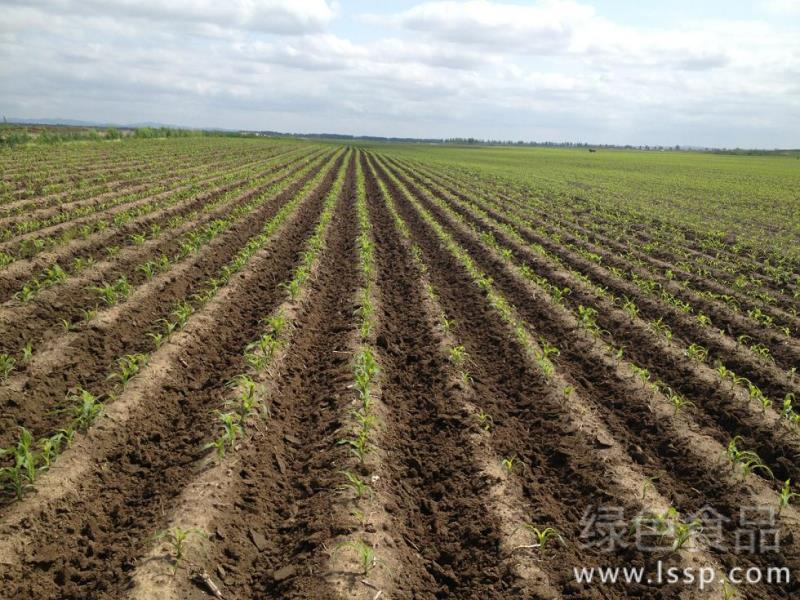
Soybean Ridge Three Cultivation Technique: Layered Fertilization with Double Rows on the Ridge
Soybean Ridge Three Cultivation Technique: Layered Fertilization with Double Rows on the Ridge
-

Detailed Explanation of Soybean Cultivation Technology with Film Mulching Between Rows on Wide Ridges
Heilongjiang Province is China's main soybean production area, with its planting area accounting for 7% of the national total and its current total output accounting for 11% of the national total. In the course of soybean production development, the Heilongjiang Reclamation Area has vigorously promoted scientific and technological innovation, resulting in a relatively large increase in soybean yield per unit area and total output. From 2001 to 2005, the average yield per hectare reached 2531.7 kg; in 2005, the average soybean yield per mu reached 178 kg, reaching or approaching the soybean yields of advanced countries worldwide. Soybean cultivation technology with film mulching between rows on wide ridges
-
Detailed Explanation of the Key Points of the Three-Ridge Soybean Cultivation Technique
In the early 1980s, Heilongjiang Bayi Agricultural University combined agricultural machinery with agronomy and gradually formed a complete, effective, comprehensive mechanized high-yield soybean cultivation technology system, called the "three-ridge" (or "three ridges") cultivation technique. The so-called "three-ridge" refers to the use of three mechanized operation techniques on the basis of ridge tillage: first, deep loosening of the ridge body and furrow in stages and at intervals; second, layered deep application of base fertilizer; third, precision double-row sowing on the ridge. The above three operations are completed by machinery in one pass. After this technique was promoted, various regions made some improvements according to
-
What are the main advantages of the three-ridge soybean cultivation technique?
Main advantages of the "three-ridge" soybean cultivation technique: First, deep soil loosening breaks through the plow pan, deepens the tillage layer, and improves soil structure, which benefits soybean root development and nodule formation; deep loosening creates a soil structure with both loose and firm zones, improving soil permeability. Second, layered fertilization within the ridge body improves fertilizer use efficiency and delays the fertilizer supply period, preventing nutrient deficiency late in the growing season. The small precision seeders currently used in production can all achieve deep placement of chemical fertilizer; they can also apply seed fertilizer and base fertilizer at the same time. Third, double-row precision
-
High-yield Cultivation Techniques for Soybean with Wide Ridge and Narrow Row Close Planting
Wide ridge and narrow row close planting of soybean can increase the canopy leaf area index, make full use of light energy, and achieve the goal of increasing yield. (1) Site selection and land preparation. The best preceding crops are wheat, corn or potato. Ridging is done as sowing proceeds. The ridge spacing is 130 cm, the ridge height is 25 cm, and the ridge top width is 3O cm. (2) Variety selection. For wide ridge and narrow row close planting of soybean, the varieties selected should generally be 168, ZOQI, 9409B, Fengshou 544, Mijiawang, Hefeng 25, Hebing 93-BS, etc. Seed selection should be carried out before sowing.
-
Detailed Explanation of the Two-Ridge-One-Furrow Soybean Cultivation Method
The two-ridge-one-furrow cultivation method is based on 70cm ridge planting, with an additional seedling row added in the furrow every other ridge, a large row spacing of 140cm and a small row spacing of 35cm, sparse inside and dense outside within the furrow and platform, and hole sowing cultivation. Reasons for increased yield: (1) Increased green area and improved canopy structure. (2) Improved ventilation and light penetration conditions. (3) Improved drought resistance. (4) Fully utilized heat resources and raised soil temperature. (5) Improved soil nutrient supply conditions. Technical key points: (1) Rotation
-
Detailed Explanation of Key Points for Soybean Narrow-Row Dense Planting Cultivation Techniques on Small Ridges
Key points for soybean narrow-row dense planting cultivation techniques on small ridges: 1. Crop rotation: rotate in a three-zone rotation with crops such as wheat and corn, or rotate every other year with crops such as wheat and corn, to avoid continuous cropping. 2. Soil tillage: first, flat plowing and ridging. Second, rotary tillage and ridging. Third, ridging while sowing. 3. Variety selection: choose semi-dwarf, semi-determinate type varieties with strong stems that do not lodge, are disease-resistant, high-yielding, and suitable for dense planting; the maturity period should be suitable or slightly earlier than local varieties. 4. Seed preparation: first, seed selection. Second, seed treatment. 5. Fertilization: first, increase application of
-
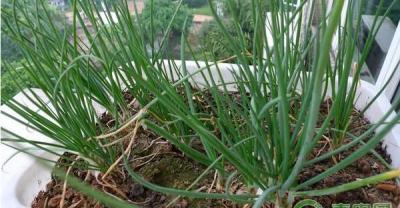
Ridge planting of peanuts changes the planting method and has a significant impact on soil structure and growth.
In high mountains, sowing is done by digging furrows or holes, which is mainly suitable for some fields with uneven terrain and incomplete watering conditions. Ridge planting is a planting method accepted for medium-grade and fertile-water land in the south, and is carried out in fields with flat terrain, deep soil layers, and complete drainage and irrigation conditions. In places like Southwest China, Hebei, and Shandong, ridge planting is mostly adopted.
-
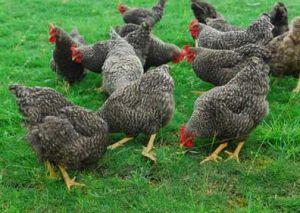
What is the difference between the Partridge chicken and the domestic chicken? Price and farming prospect analysis
The Partridge chicken is a high-quality chicken, with a large oval body, a single comb, and black-and-white mottled feathers; in roosters the white bars are wider than the black, while in hens the bars are uniform in width. What is the difference from the domestic chicken? The two differ in appearance: the Partridge chicken's feathers are black-and-white mottled, and apart from outward features, the two also differ in living habits.
条件筛选