What are the main technical measures for corn cultivation with wide ridges, double rows, and plastic film mulching?
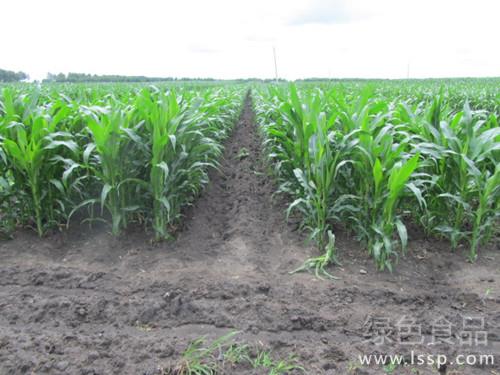
Wide-ridge double-row corn cultivation techniques
Wide-ridge double-row corn cultivation technology can not only bring the marginal effect into play and improve the utilization rates of light energy, water, and fertilizer, but also increase yield. According to relevant survey research, when the fertilization level is the same, using wide-ridge double-row corn cultivation technology increases yield by about 7% compared with conventional clean tillage cultivation technology, and if the planting density is increased, it can reach between 23% and 33%.
1. Technical standards and requirements
The concept of wide-ridge double-row corn cultivation technology is to plant two rows of corn on a wide ridge. Although the ridge spacing of wide ridges varies, it is generally between 90-110 cm. Wide-ridge double-row corn cultivation with plastic film mulching technology not only has a large yield increase range, high economic benefit, and stable yield-increasing effect, but is also highly practical. To implement this technology, the first step is to make wide ridges, changing small ridges of about 70 cm into wide ridges of about 100 cm. The next step is to plant double rows, planting two rows of corn on the wide ridge, with a small row spacing of 30 cm and a large row spacing of 67.5 cm. Then comes the film mulching work, covering a layer of polyethylene plastic film with a width of 75 cm or 80 cm and a thickness between 0.006-0.008 mm. However, in addition to doing the above points well, varieties should also be selected reasonably and a series of related measures such as reasonable close planting, increasing fertilizer, and fine management should be adopted. The main reason wide-ridge double-row corn cultivation technology increases yield is that wide ridges with double rows have better ventilation and light transmission. If late-maturing varieties are also selected reasonably, the yield-increasing effect will be ensured. Doing a good job of warming and moisture retention with wide-ridge film mulching will also increase planting density and raise the number of harvested plants and ears per unit area. At the same time, it also plays a certain role in changing the ecological environment of mulched plots, strengthening the decomposition and supply of soil nutrients, and increasing the growth and development speed of corn.
2. Key points of wide-ridge double-row cultivation technology
2.1 Select the preceding crop and change the ridges, apply fertilizer in the furrow
Because corn has strong adaptability, there are no special requirements for soil and crop rotation. As long as it is not sugar beet or sunflower, other plants can be planted. However, the plot needs good drainage. When carrying out land preparation and ridge changing work, the land should first be harrowed and then ridged. At the same time, summer and autumn land preparation should be done well, during which no less than 2 t of farmyard manure should be applied per mu.
2.2 Select good varieties and carry out proper treatment
Scientific variety selection is one of the main reasons for ensuring increased yield, and comprehensive consideration should be made when selecting seeds. For seed treatment, the first step is germination acceleration. During germination acceleration, the seeds should be turned frequently and the temperature should be kept even. Usually after 24 hours the seeds will grow small sprouts of about 1 cm, and at this point germination acceleration can be stopped. Then find a cool place and spread out the sprouted seeds to cool the sprouts. After they have fully adapted to the external environment, sowing can begin.
2.3 Reasonable close planting and ensuring yield through fertilizer
One of the key links in increasing corn yield is reasonable close planting. Reasonable close planting should be guided by classification, among which farmers with good soil fertility and higher input can use a plant spacing of 8 cun, while farmers with poorer soil fertility and lower input can use a plant spacing of 9 cun.
Because corn plants are tall and grow luxuriantly, correspondingly, their fertilizer requirement is not low either. Only on the premise of sufficient fertilization can corn achieve high yield. Moreover, while ensuring the amount of fertilizer required by corn, a fertilization model combining organic fertilizer and chemical fertilizer should also be achieved. In addition to 2 t of farmyard manure per mu, the specific fertilization method also requires 25 kg of diammonium as seed fertilizer, 2.5 kg of urea, and 2 kg of zinc fertilizer. For some farmers with the conditions, 3 kg of potassium fertilizer per mu can be used and 25 kg of urea can be topdressed per mu. If fertilizer deficiency occurs later, foliar fertilizer should be sprayed in time to ensure corn's fertilizer needs.
2.4 Sow at the right time and cover the film well
Corn can be sown early at the appropriate time, which will increase effective accumulated temperature, avoid soil moisture consumption, and play a role in increasing yield. According to relevant survey research, the best sowing period for film-covered cultivated corn should be 7-10 days earlier than that for open field, usually between late April and early May. This is not suitable for saline-alkali low wet land, where seeds will mildew and cause missing seedlings.
2.5 Pair tall and short crops and carry out reasonable intercropping
If the method of intercropping tall and short crops is adopted, it will effectively solve the problem of ventilation and light transmission, and at the same time it will also facilitate rotation and be very favorable for mechanical operations. The intercropping ratio adopted is best as 4 wide ridges planted with film-mulched corn and 6 small ridges planted with short crops.
2.6 Fine management to promote ripening and increase yield
Film-mulched corn sometimes suffers from seedling scald or freeze injury due to low seed germination rate or incorrect timing of seedling release, and may also have missing seedlings and broken rows due to incorrect fertilization methods or underground pests. When the above situations occur, relevant solutions must be adopted in time. The two main methods that can be used are reseeding and replanting.
Under normal circumstances, film-mulched corn is thinned to a fixed stand at the 3-5 leaf stage. If it is a plot with severe underground pests or in a wind gap, fixed-stand thinning can be done later according to the situation. The timing of fixed-stand thinning must be grasped well, and it must not be too early or too late. During fixed-stand thinning, weak seedlings should be removed to ensure that the seedlings in the whole field are roughly the same. At the same time, attention should be paid to the fact that around jointing, corn will grow tillers at the base of the stem that consume a large amount of nutrients. Inspection must be done at any time, and once found they should be removed in time.
For field management of film-mulched corn, the following aspects should be done. When damaged areas are found, they should immediately be compacted with soil to avoid air leakage and heat loss and harm from livestock and poultry. After small seedlings emerge, seedling release should be done immediately, the film holes should be small, and they should be tightly pressed with wet soil. Before sowing, some reserve seedlings should be left so that when missing seedlings are found, they can be replanted immediately. When corn seedlings grow to between 30-40 cm, the furrow should be plowed once, with the purpose of killing weeds, loosening soil, and receiving rainwater. When corn has 8-9 leaves, 25 kg of urea should be topdressed at one time, and operations such as punching holes, applying fertilizer, and covering soil should be done in one pass. When corn enters the hard dough stage, peeling and drying work should be done to promote dehydration and increase maturity, so as to improve commodity quality.
2.7 Weed control
Film-mulched corn should strengthen weed control work, and comprehensive control measures can be adopted in this regard. Attention should be paid to laying a good foundation for weed control before film mulching. The quality of land preparation should be improved, and chemical weed control should also be adopted. Only by ensuring that the soil on the ridge surface is fine, broken, and level can the film closely adhere to the ground. The high temperature generated by sunlight can scorch some weed seedlings to death, and the weed-killing rate can reach as high as 80%. Level ridge surfaces are also one of the prerequisites for chemical weed control. The specific application method should be considered according to local conditions and water source conditions. When water source conditions are good, the amount of pesticide used can be 750 kg/ha mixed with water and sprayed on the soil surface. If water source conditions are poor but soil moisture is good, the pesticide-soil method can be used to treat the soil surface. This is not only less difficult and faster, but also more favorable for extension. During this period, attention should be paid to increasing the amount of mixed soil. Fine soil should exceed 1800 kg/ha, which will help the pesticide-soil cover the ridges thoroughly and evenly. The effect obtained by this method is similar to that of the spray method. Common herbicide varieties mainly include Lasso, atrazine, and diuron, etc., which can be selected according to local conditions. The specific dosage standards should follow the requirements on the product instructions. When using mixed varieties, the dosage of each herbicide can be appropriately reduced. At the same time, during the seedling stage of corn, protection of the plastic film should be strengthened. Once damage is found, it can be sealed tightly with soil in time and the high temperature generated on the ground surface can be used to scorch most weeds. Cultivation and weeding can also be combined with topdressing. For plots with too many weeds, the plastic film can be removed and topdressing, weeding, and hilling can be carried out. This not only controls weeds but also plays a role in preventing lodging.
2.8 Disease and pest control
Control of the Asian corn borer should be strengthened. Asian corn borer eggs basically hatch before tasseling and are generally concentrated in the whorl stage, causing damage to corn and greatly affecting yield. According to relevant survey research, first-generation borer damage causes about a 10% yield reduction, and second-generation borer damage causes about a 0.7% yield reduction. Therefore, key control should be carried out for this.
The specific measure adopted for this is to use 7.5 kg/ha of 50% phoxim emulsifiable concentrate at the large trumpet stage of corn2mixed with water, then use 247.5 kg of fine sandy soil to make granules. Placing 7 or 8 granules in the trumpet of each corn plant can achieve the purpose of controlling the Asian corn borer. Trichogramma, Beauveria bassiana, and some other control technologies can also be used to control the Asian corn borer.
2.9 Harvest at the right time and remove waste film
Film-mulched corn usually matures with stalks still alive, so it should be harvested at the right time. After harvest, old plastic film should be picked up cleanly and handled uniformly, so as to purify the soil and ensure the ecological environment of farmland. On the other hand, agricultural plastic films such as photodegradable film and straw fiber film should also be vigorously promoted, which plays a certain role in preventing farmland pollution and public hazards while also reducing costs.