Soybean Ridge Three Cultivation Technique: Layered Fertilization with Double Rows on the Ridge
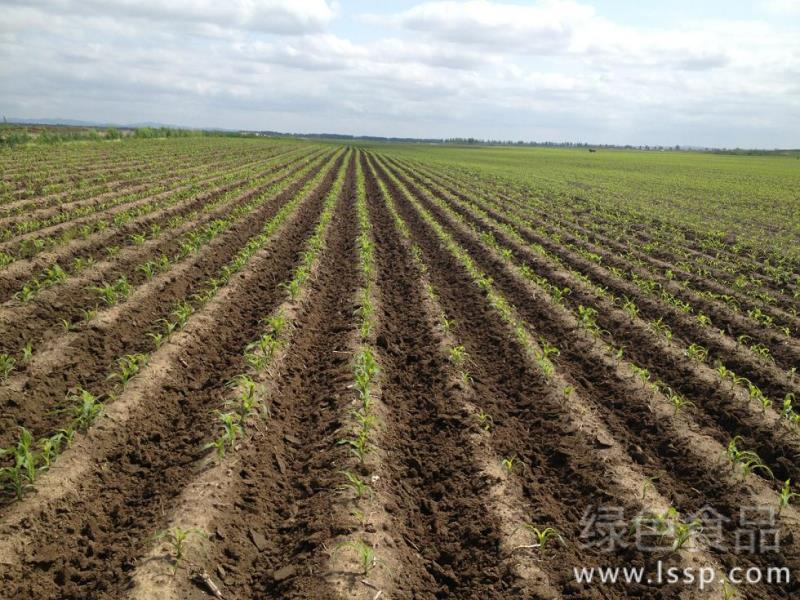
Soybean Ridge Three Cultivation
The Soybean Ridge Three Cultivation Technique was developed by Heilongjiang Bayi Agricultural University through the digestion and absorption of domestic and international soybean cultivation techniques, and is suitable for the ridge cultivation regions of Northeast China.
The so-called "Ridge Three" technique refers to the comprehensive adoption of three techniques on the basis of ridge cultivation: deep loosening, layered deep fertilization, and double-row planting on the ridge. In practical application, it must also be combined with other conventional techniques. The standardized seeders include: 2BT-2 and 2BTGL-2 small seeders, 2BTGL-6 medium seeder, and 2BTGL-12 large seeder.
Yield increase principle: Through deep loosening, the plow pan is broken, improving the compacted state of the plow pan, achieving a favorable state of loose structure, good water storage, and good root penetration; layered deep fertilization helps improve fertilizer utilization efficiency and promotes deep rooting of soybean; double-row planting on the ridge increases the growing space for individual soybean plants, making the field plant distribution more reasonable.
For many years, it has also been promoted and applied in eastern Inner Mongolia. From 2005 to 2007, Jalaid Banner implemented the national science and technology household project, with the Soybean Ridge Three Cultivation Technique as the main promotion. After three years of demonstration planting, yields increased by 20-30% compared with traditional planting methods. In high-yield plots, the yield per mu exceeded 250 kg, setting a high-yield record for soybean in Jalaid Banner.
This technique significantly increases yield, is highly operable, and has broad prospects for promotion.
The comprehensive techniques are as follows:
I. Main Recommended Varieties
Select varieties with a growth period at least 10 days shorter than the local frost-free period and at least 200°C less than the local effective accumulated temperature. In the southern part of Hinggan League, Hefeng 50 and Suinong 28 can be selected; in the central part, Mengdou 30 and Mengdou 14; in the northern part, Heihe 38 and Heihe 27.
II. Core Ridge Three Techniques
1. Deep loosening:
Deep loosening should be done to the standard of breaking the plow pan, generally at a depth of 20-30 cm. It should be completed during ridge formation and fertilizer application, that is, when opening furrows for fertilization, open furrows deeply to achieve deep loosening. For dryland cultivation, deep loosening and ridge formation should be carried out in autumn, and sowing can be done directly on the ridge in spring. For irrigated sowing, deep loosening and ridge formation can be done in spring, then furrows can be opened on the ridge for watering and sowing.
2. Layered deep fertilization:
During ridge formation and fertilizer application, half of the total chemical fertilizer can be applied at a depth of 8-10 cm below the seeds. At sowing, apply the other half of the chemical fertilizer 2-3 cm below the seeds. Apply about 20 kg of total chemical fertilizer per mu. Use a compound fertilizer containing nitrogen, phosphorus, and potassium, requiring 10% nitrogen, 22% phosphorus, and 8% potassium, i.e., N10, P22, K8. Alternatively, mix your own formula: per mu, use 10 kg diammonium phosphate + 5 kg urea + 5 kg potassium sulfate, mix evenly and apply.
3. Mechanical precision sowing, double rows on the ridge:
Use a double-row seeder for precision sowing, sowing double rows on the ridge. Row spacing 12 cm, plant spacing 12 cm, target stand of 17,000 plants per mu. The target stand should vary by variety and by region. Sparse planting is suitable for southern regions, dense planting for northern regions; sparse planting for high-fertility and high-moisture plots, dense planting for medium-fertility plots. Adjust plant spacing according to variety and plot. If soil moisture is insufficient at sowing, irrigate to combat drought before sowing.
The standardized seeders for the Soybean Ridge Three Technique include: 2BT-2 and 2BTGL-2 small seeders, 2BTGL-6 medium seeder, and 2BTGL-12 large seeder, which can be selected according to specific circumstances.
III. Conventional Supporting Techniques
With the Ridge Three Technique as the core, combine with the following conventional techniques.
1. Crop rotation and stubble selection
Implement a rotation of more than three years with gramineous crops; corn stubble, millet stubble, broomcorn millet stubble, and wheat stubble are best. Sunflower stubble and sugar beet stubble should not be selected, and poor soil is also not suitable for planting soybean.
2. Stubble cleaning and land preparation
Stubble cleaning and land preparation should be carried out in early April.
3. Application of farmyard manure and foliar fertilizer
Apply 2 cubic meters of decomposed farmyard manure per mu, spread evenly in the field. For foliar spraying, use 20 ml of Yunda 120 + 0.4 kg urea + 0.15 kg monopotassium phosphate per mu, dilute with 30 kg water, and spray on the leaves.
4. Seed coating
Seed coating can control root maggots, root rot, and underground pests, and supplement trace element fertilizers. 35% Keduofu seed coating agent can be selected, used according to the instructions.
5. Chemical weed control
Use 48% trifluralin emulsifiable concentrate for soil treatment, 150-200 ml per mu, dilute with 15 kg water, spray evenly on the soil surface, then immediately mix into the soil to prevent the liquid from volatilizing. Sowing can only be done 5-7 days after application. Spraying can be done before stubble cleaning, then mixed into the soil during stubble cleaning, or sprayed before ridge formation and mixed into the soil during ridge formation. Trifluralin has a broad weed-killing spectrum and is safe for the following corn crop.
For spraying at the seedling stage, quizalofop-p-ethyl + fluoroglycofen-ethyl can be used according to the instructions, with no phytotoxicity to the following crop.
6. Timely sowing
The optimal sowing period is May 5-15. Early sowing causes rusty seedlings and severe weed infestation. Late sowing easily leads to immaturity, reduced yield, and decreased quality.
7. Field management
Irrigation: Irrigate promptly in case of drought, especially in June and July during the soybean flowering and pod-setting stages. Water must not be lacking; irrigation is the main guarantee for high soybean yield.
Removing large weeds: Large weeds in the field at later stages should be pulled out by hand.
Pest control: Pay attention to controlling the meadow moth. During the meadow moth egg-laying period, clear weeds in the field to eliminate eggs. During the 1st-3rd instar larval stage, use pesticides such as Laifuling or Sumicidin for control, 75 ml per mu, dilute with 15-22 kg water, and spray on the leaves.
8. Harvest
In late September, harvest can be done after the soybean leaves drop. After harvesting, thresh promptly to reduce continued damage by the soybean pod borer and to reduce fire risk, ensuring that every grain is gathered in.