Is the rise in soybean prices related to China's massive demand?
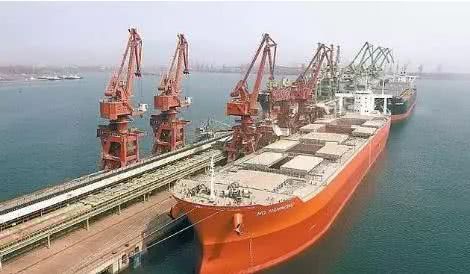
International soybean prices are indeed closely linked to China's soybean demand, but if the rise or fall of national soybean prices is attributed entirely to China, then we can only say we won't take the blame. In addition, the claim that South America grows soybeans mainly for the Chinese also seems not entirely correct. Let the data speak for itself below.
Soybean price fluctuations
Market fluctuations in prices are affected by many aspects, and simply attributing them to Chinese demand seems somewhat biased. It is true that China's demand for the international soybean market is huge. Take 2017 as an example: China purchased a total of 95.53 million tons of soybeans from the international market. Yet global total soybean production was only just over 300 million tons. That is to say, China alone purchased more than one third of the world's soybeans from the market.
However, the rise in soybean prices cannot be attributed entirely to China's purchasing; China can only be said to be one factor among them. In the current situation, the China-US trade issue has stimulatively accelerated the rise in soybean prices in China as well as in Europe, South America and other places.
And before that, there was the global rise in soybean prices stimulated by the large-scale production reduction caused by drought in Argentina. There are many such situations. China is merely a participant in the trade market, not a disruptor of prices. And a very key point is that if the market really did not have such huge demand, the world's soybean planting area would not be so large either.
In that case, supply and demand would still be in balance, and prices would still fluctuate within a reasonable range. So how can the rise in soybean prices be attributed to China just because China's soybean demand is large?
The South American soybean situation
Taking the situation in 2017 as an example, US soybean production was 119 million tons, accounting for 35% of global total production; Brazil's soybean production was 108 million tons, and Argentina's soybean production was 57 million tons. Last year, China imported 32.86, 50.93, and 6 million tons of soybeans from the above three countries respectively. In that case, among the above three countries, only Brazil's total soybean imports to China exceeded 50%, while the other two countries accounted for a very small proportion of soybeans.
If it can still be considered plausible that Brazil's soybeans serve China, then the cases of the US and Argentina are somewhat hard to justify. Take US soybeans: China imported one third of them, while the country itself kept half for its own consumption, and the additional one sixth was exported to other countries. Argentina is even less about growing soybeans for China. Based on this analysis, how can it be said that South American soybeans are grown for China?
China's soybean demand is indeed huge. Since China opened up soybean imports in 1996, soybean import volumes have increased year by year. However, we should also recognize a reality: not only is China's soybean demand increasing, global demand is increasing too, and global planting area is also rising. This is closely related to the improvement of people's economic levels worldwide. Moreover, in today's era of economic globalization, no country can shake or disrupt the entire global order by its own strength alone.
This is Science and Agriculture, welcome to follow and join us to grow your knowledge together.