-

What variety is WAB181-18 upland rice?
WAB181-18 upland rice is a new upland rice line developed by the West Africa Rice Development Association and stabilized in 1997. In the spring of 1998, it was distributed to relevant countries by the Upland Rice Group of the International Rice Research Institute, and the International Upland Rice Trial and Observation Nursery established at Xinghua Company undertook the trial and observation task. The characteristics and main advantages of this variety are: 1. Extremely early maturing. Sown on May 9, harvested on August 14, with a growth period of 97 days. Trial and observation continued in 1999, sown on May 2, harvested on August 6, with a total growth period still of 97 days, making it the earliest-maturing variety among more than 280 upland rice varieties provided by 15 countries.
-
Analysis of the Benefits of Rice-Water Bamboo Crop Rotation and Water Bamboo Cultivation Techniques
Chongxian Town, Yuhang District, Hangzhou City, is located in a plain water-network area and was originally mainly engaged in rice cultivation, along with some aquatic crops such as water bamboo, arrowhead, and lotus root. During agricultural development and industrial restructuring, Chongxian Town utilized local water and soil resources to vigorously expand the rice-water bamboo rotation area, and treated water bamboo production as a high-efficiency agricultural undertaking within the vegetable basket project. The district, town, and village invested 2 million yuan to establish the Chongxian Village water bamboo demonstration park. In 2005, the Hangzhou Municipal Agricultural Comprehensive Development Office designated it as a national agricultural comprehensive development high-tech demonstration
-
Detailed Introduction to the Fengdao No. 15 Rice Variety
Fengdao No. 15 is a new early-maturing japonica rice variety bred by the Dali Prefecture Agricultural Science Institute through crossbreeding, with 04-2865 as the female parent and the high-yielding variety Dianyul No. 1 as the male parent. Results from years of multi-site trials and demonstrations show that the standout characteristics of this variety are early maturity, strong cold tolerance, moderate resistance to rice blast and bacterial leaf blight, high and stable yield, and good quality. It is currently a new japonica rice variety with relatively outstanding comprehensive traits among the promoted varieties in the high-altitude areas of Yunnan Province. In July 2002, it passed the approval of the Yunnan Provincial Crop Variety Approval Committee, and it was determined to be promoted for planting in the cold cool rice areas of Yunnan Province at altitudes above
-
Disease Outbreaks and Emergency Treatment After Introducing Inferior Quality Rice Field Eels into Eel Ponds or Net Cages
(1) Disease outbreak situation: After inferior quality rice field eels are introduced into eel cages or eel ponds, they generally develop disease within 2 to 7 days, and mass mortality occurs around 12 days. When disease breaks out, a method combining Chinese herbal medicine and chemical fishery drugs should be used for treatment to control the infection. (2) Emergency handling: ① Search for and remove floating-head eels, exposed-body eels, and dead eels 2 to 3 times during the daytime each day; ② Change the water once every morning and thoroughly inspect for and remove dead eels; ③ At night each day, use electric light for illumination and search for and remove diseased eels from aquatic plants 1 to 2 times.
-
How do you make fish head in fermented rice wine sauce? A home-style recipe for fish head rich with the aroma of fermented rice wine
Appearance, aroma and taste: The fish head is fresh and fragrant, the broth is rich. Main ingredients: 1 bighead carp fish head (about 1500 g), 12 small cabbages, 5 g sliced ham, 15 g sliced fresh mushrooms. Secondary ingredients: appropriate amounts of fermented rice wine brine, monosodium glutamate, salt, raw oil, water caltrop starch and stock. Method: 1) Remove the gills from the bighead carp fish head and wash it clean, then steam it in a steamer until cooked and remove the bones (do not break it apart), and set aside; 2) Pour the stock into the pot, add the fermented rice wine brine, salt, monosodium glutamate and other seasonings, then add the fish head, sliced ham, sliced fresh mushrooms and small cabbages, bring to a boil, thicken with water caltrop starch, and drizzle with
-
What technical points must be mastered for polyculture of fish, shrimp, ricefield eel, loach, crab, and crayfish?
1. Pond selection. The pond is nearly square, with surrounding ditches 8 m wide and 0.6 m-0.8 m deep, the beach surface can be raised with water to 1.2 m, the pond bottom is sandy soil, the water source and water quality are good, and water inlet and drainage facilities are complete. On the inner side of the pond, fine-mesh polyethylene netting is buried in the soil to prevent ricefield eels, loaches, red swamp crayfish, crabs, etc. from burrowing. Asbestos tiles are used as an escape-prevention wall. The pond must be strictly disinfected with quicklime and other drugs, sufficient base fertilizer applied, natural feed cultivated, and aquatic plants such as tarragon and tape grass planted. Around Qingming, a large amount of live river snails
-
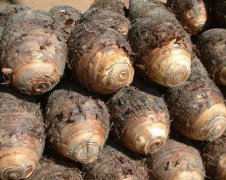
Organic rice costs too much, so is organic taro cultivation technology and yield better?
Do you know whether it is better to grow organic rice or organic taro? In fact, the organic rice market is now saturated. If you grow organic rice, you will not make much money. It would be better to try growing organic taro, which can bring high returns and is easier than growing
-
Introduction to the Huaidao 9 (Su Shen Dao 200607) rice variety
Huaidao 9, originally named "Huai 68", is a late-maturing medium japonica rice variety systematically bred by the Huaiyin Institute of Agricultural Sciences of the Xuhuai Region of Jiangsu from Huai 9712 (Yangdao 3 / 02428 // IR26 /// Zhongguo 45 / Lianjing 1), and was developed in 2000. It is suitable for planting under medium-to-high fertility conditions in central Jiangsu and the hilly areas of Nanjing, Zhenjiang and Yangzhou. Yield level and characteristics. It participated in the Jiangsu provincial regional trial from 2003 to 2004, with a two-year average yield of 586.0 kg per mu, compared with the control Wuyujing 3
-
What herbicide is used to control rice barnyardgrass? Rongjie is a highly effective herbicide.
Rongjie is a rice field herbicide newly developed by Dow AgroSciences of the United States, with penoxsulam (25 g/L oil suspension concentrate) as its main ingredient. Years of trials and demonstrations have proven that Rongjie is particularly outstanding in controlling rice barnyardgrass, a vicious weed in paddy fields in Northeast China. In the rice fields of the Fushun area, there are two types of barnyardgrass: water barnyardgrass and rice barnyardgrass. Water barnyardgrass has no auricle or ligule, while rice barnyardgrass, though also lacking an auricle and ligule, has fine hairs on the internodes between the leaf and leaf sheath. In recent years, after conventional barnyardgrass-killing herbicides were applied in rice fields, water barnyardgrass has been effectively controlled,
-
Introduction to the High-Quality Early Indica Rice Variety Jiayu 948
Variety characteristics: The whole growth period of this variety is 107-108 days, about one day earlier than Zhe 852, and it is suitable for light cultivation. Tillering is moderate, and the panicle shape is relatively large. The total number of grains per panicle is about 110, the number of filled grains is about 90, the seed-setting rate is 80-85%, and the 1000-grain weight is 22.5-23.0 grams. It has good cold tolerance at the seedling stage, is not prone to seedling rot, has a high rate of healthy seedling formation, and has moderate flexibility in seedling age. It is relatively tolerant to fertilizer and resistant to lodging. It is moderately resistant to rice blast and bacterial leaf blight, colors well in the later stage, and ripens with green stems and yellow grains. The grain quality is excellent. According to the determination by the Rice and Rice Products Quality Testing Center of the Ministry of Agriculture
条件筛选