-

Methods to Improve the Germination Rate in Licorice Cultivation
Methods to Improve the Germination Rate of Licorice
-
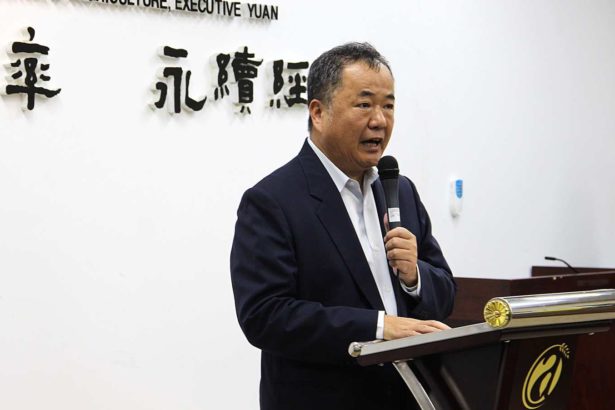
Egg prices rise because last year's floods reduced laying hens, not because of an epidemic; no need to panic-buy
The egg shortage has nothing to do with an epidemic, so don't rush to stock up on eggs! Last year's floods reduced the number of laying hens, and the price of one egg has risen by 0.3 yuan
-

Planting Performance and Application Prospects of Different Simplified Rice Cultivation Methods
1 Planting performance of several simplified rice cultivation methods 1.1.1 Actual harvested yield. The actual harvested yield was highest for machine-transplanted rice, with an average yield of 9000 kg/hm2; followed by hand-transplanted rice, with an average yield of 8850 kg/hm2; third was seedling-throwing rice, with an average yield of 8700 kg/hm2; fourth was wheat-intercropped rice, with a yield of 8400 kg/hm2; direct-seeded rice had the lowest yield, averaging 8250 kg/hm2. 1.1.2 Number of panicles per unit. Direct
-
What herbicide is used to control rice barnyardgrass? Rongjie is a highly effective herbicide.
Rongjie is a rice field herbicide newly developed by Dow AgroSciences of the United States, with penoxsulam (25 g/L oil suspension concentrate) as its main ingredient. Years of trials and demonstrations have proven that Rongjie is particularly outstanding in controlling rice barnyardgrass, a vicious weed in paddy fields in Northeast China. In the rice fields of the Fushun area, there are two types of barnyardgrass: water barnyardgrass and rice barnyardgrass. Water barnyardgrass has no auricle or ligule, while rice barnyardgrass, though also lacking an auricle and ligule, has fine hairs on the internodes between the leaf and leaf sheath. In recent years, after conventional barnyardgrass-killing herbicides were applied in rice fields, water barnyardgrass has been effectively controlled,
-
Introduction to the High-Quality Early Indica Rice Variety Jiayu 948
Variety characteristics: The whole growth period of this variety is 107-108 days, about one day earlier than Zhe 852, and it is suitable for light cultivation. Tillering is moderate, and the panicle shape is relatively large. The total number of grains per panicle is about 110, the number of filled grains is about 90, the seed-setting rate is 80-85%, and the 1000-grain weight is 22.5-23.0 grams. It has good cold tolerance at the seedling stage, is not prone to seedling rot, has a high rate of healthy seedling formation, and has moderate flexibility in seedling age. It is relatively tolerant to fertilizer and resistant to lodging. It is moderately resistant to rice blast and bacterial leaf blight, colors well in the later stage, and ripens with green stems and yellow grains. The grain quality is excellent. According to the determination by the Rice and Rice Products Quality Testing Center of the Ministry of Agriculture
-
Introduction to the new late japonica rice variety Jia 991
Jia 991 was approved in March 2003 at the 27th variety approval meeting of the Provincial Agricultural Crop Variety Approval Committee. In the 2000 and 2001 Jiaxing municipal trials, the average yields per mu were 537.2 kg and 563.7 kg respectively, a decrease of 4.38% and an increase of 3.19% compared with the control Xiushui 63 (both differences not significant), with a two-year average decrease of 0.60% compared with the control. The two-year average whole growth period was 158.5 days, the same as the control Xiushui 63. In the 2002 municipal production trial, the average yield per mu was 563.03
-
Moderate to slightly light occurrence of the second generation of rice stem borers in Suijiang County in 2007
Rice stem borers in our county include the yellow stem borer (Scirpophaga incertulas), the striped stem borer (Chilo suppressalis), and the giant stem borer (Sesamia inferens). In the riverside area, 3 generations occur per year; in the mid-mountain area, 2 generations occur per year. At present, the first generation in the riverside area has ended, and the second generation is beginning to occur successively. According to observations at our station's Fengchi pest and disease monitoring point, this year's second-generation moth flight began on June 10, 1 day earlier than last year and 2 days later than normal years, with the peak day on June 18, 1 day later than last year and 8 days earlier than the historical average; by June 25, a cumulative total of 234 moths had been trapped, with the yellow stem borer, striped stem borer, and giant stem borer accounting for 94.9
-
Luodao 998 rice variety approved at the national level
Approval number: Guoshen Dao 2006073Variety name: Luodao 998Breeding unit: Luoyang Institute of Agricultural Sciences, Henan ProvinceVariety source: Systematic selection from upland rice 277Characteristics: This variety is a japonica-type conventional upland rice. Grown as a wheat-stubble upland rice in the Huang-Huai-Hai region, its whole growth period is 108 days, 1 day earlier than the control upland rice 277. The plant type is relatively compact, tillering ability is medium, plant height is 94.6 cm, panicle length is 18.1 cm, effective panicles per mu are 19.
-
Shennong 014 Rice Variety Profile (Liaoning Rice Approval [2006] No. 174)
Bred by the Rice Research Institute of Shenyang Agricultural University in 1996 through artificial hybridization and line selection using Shennong 265 as the female parent and 9660 as the male parent. Approved by the Liaoning Provincial Crop Variety Approval Committee in 2007. Characteristics: The growth period of this variety is about 150 days, belonging to the medium-early maturing type. At the seedling stage, the leaf color is dark green and the leaves are erect. Plant height is 107 cm, the plant type is compact, tillering ability is medium to strong, the main stem has 15 leaves, the panicle type is erect, panicle length is 19 cm, grain number per panicle is 170, 1000-grain weight is 25 g, the glume color is yellow-white, occasionally with sparse short awns. According to
-
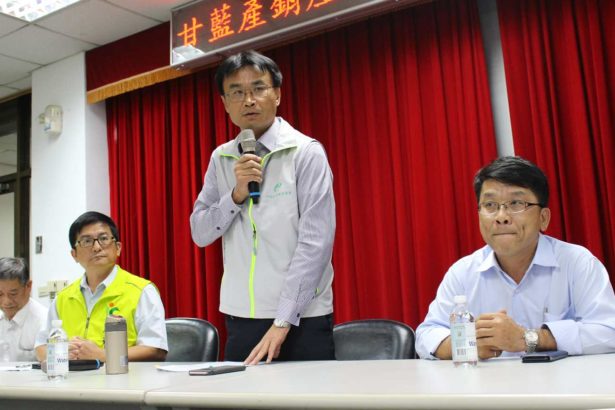
Cabbage Price Crash Crisis: Council of Agriculture and Farmer Groups Push for Registration, Unregistered Farmers Bear Their Own Profits and Losses
Completely Resolve the Cabbage Price Crash Crisis! Farmer Groups and the Council of Agriculture Reach Consensus, Push for Registration Controls, No Registration Means Bearing Your Own Profits and Losses
条件筛选