-

Why do old Phalaenopsis (moth orchid) plants need repotting, and can they survive without it?
Anyone who grows Phalaenopsis knows that after a year or two the plant becomes an old specimen: the leaves are no longer so perky and it blooms less. At this point some people say "it's time to repot," while others think "leave it alone, what if moving it kills it?" So why do old plants really need repotting? Can they truly not survive without it? Why do old plants have to move house? The
-

Can a Phalaenopsis with a flower spike be repotted? A detailed guide to repotting methods
Can a Phalaenopsis with a flower spike really be repotted? Plenty of orchid growers have probably agonized over this question. The answer is actually: yes, it can be repotted, but it depends on the situation, and you must be gentle, or a perfectly good flower spike may wilt in no time. Why do some people think it can't be done? When it has a flower spike, the Phalaenopsis is in its "sprint phase," with nutrients and
-

What pot size in centimeters is suitable for repotting a Phalaenopsis? A detailed guide to the soil and pot changing method
Generally speaking, when a Phalaenopsis's condition suddenly takes a nosedive, besides improper daily care, it may also be because the medium in the pot has become compacted, and the media commonly used for orchids include sphagnum moss and bark. When sphagnum moss becomes airtight, it easily develops mold and a foul smell inside, and the roots get dragged into it too
-
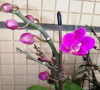
How to grow Phalaenopsis orchids and what to pay attention to? How do you repot a Phalaenopsis orchid?
The summer vacation is here, and I believe many friends have started paying attention to the plants on their balconies, and it's inevitable that some wilted plants will be discovered. And some plants are rather expensive when purchased, for example, if a "Phalaenopsis" flower just wilts and gets thrown away, it's inevitably a pity. In fact, as long as you can see in the transparent pot that the roots and seedlings are still healthy
-

When does a Phalaenopsis need repotting? Repotting time and method
When growing Phalaenopsis, repotting is a key step that affects their growth and flowering. To judge whether repotting is needed, you can observe three aspects comprehensively: the root system, the potting medium, and the growth performance. At the same time, managing the details before and after repotting is what keeps the plant in a vigorous state at all times. 1. Root system condition - root explosion phenomenon: when the roots are densely tangled inside the pot
-
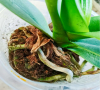
Phalaenopsis repotting tips and suitable light intensity after repotting
To grow plants well, besides daily watering, fertilizing, temperature control, and avoiding harsh sunlight, repotting is actually also a key point. I believe that for beginners, repotting is an unfamiliar term, and how to do it correctly? This inevitably seems like a distant matter. Follow along with the editor below to learn some repotting tips. Rare
-

Should Phalaenopsis (moth orchids) be kept indoors or outdoors in autumn, and can they be repotted and given fresh medium?
As soon as autumn arrives, that Phalaenopsis at home becomes the "focus of attention." Should this plant be kept inside or moved out onto the balcony? You want to give it a new home and some fresh "food," but you're afraid one slip of the hand will kill it - truly worrying. Actually, Phalaenopsis is just like people - it's picky about its "living environment." Its favorite temperature is 15
-

Sphagnum moss for Phalaenopsis needs replacing after long use: how beginners can clean out old moss, choose new moss, and solve yellowing leaves after repotting
Growers of Phalaenopsis know well that sphagnum moss becomes compacted and loses nutrients after long use, and only by promptly replacing it with fresh sphagnum moss can the roots breathe and the plant grow more vigorously. But changing the sphagnum moss is not as simple as just swapping the growing medium: you must first clean out the old sphagnum moss thoroughly, then give the roots a "trim + disinfect" treatment, and finally plant it properly with new sphagnum moss. Every step has its finer points.
-

Root rot in Phalaenopsis (moth orchid) after repotting: should you trim the roots and disinfect, or repot again?
I believe many people who grow Phalaenopsis have run into the frustrating problem of root rot after repotting. You meant to give the plant a comfortable new environment, but instead the roots ran into trouble. Watching a once-vigorous Phalaenopsis gradually go limp is enough to make anyone anxious. In fact, as long as you deal with it promptly and adjust your care routine, there is a good chance the Phalaenopsis will recover.
-

Want your Phalaenopsis orchids to grow more vigorously? Can you repot them in summer?
In Guangdong, it is basically already autumn, but temperatures remain high, and around noon it often hits about 32°C, so when caring for Phalaenopsis orchids, you still need to follow summer care standards. Along the way, many flower growers may develop a certain idea: they worry that the Phalaenopsis will be roasted by the high temperatures, so at this
条件筛选