-

Reasons for Yellowing Leaves on Phalaenopsis After Repotting and How to Fix Them
If Phalaenopsis (moth orchid) is not cared for properly after repotting, problems such as yellowing leaves can easily occur. Today we will explain the reasons for yellowing leaves on Phalaenopsis after repotting and how to fix them. Common reasons for yellowing leaves on Phalaenopsis after repotting. Nutrition: after repotting, the roots have not yet recovered their ability to absorb nutrients, so the plant consumes its own reserves. Light: after repotting, if shade is not provided in time,
-
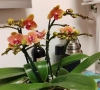
How to repot a Phalaenopsis orchid after blooming? The simplest method
After the Phalaenopsis orchid finishes blooming, repotting is a key step to make it burst into bloom again! Everyone, follow these super detailed steps to give your Phalaenopsis a comfortable "new home." 1. Preliminary preparation. Choosing a pot: a transparent plastic pot makes it easy to observe the state of the roots; a root-control pot helps root growth; a terracotta pot has excellent breathability. Remember, the pot must definitely
-

Should the original sphagnum moss be removed when repotting Phalaenopsis seedlings? A detailed guide to the potting method
Many flower lovers who grow Phalaenopsis seedlings get worried when it comes to repotting: should the original sphagnum moss be removed? How should you pot them so the seedlings survive well? Here are the key points straight away. Should the original sphagnum moss be removed or not? The answer is it must be removed, but not all of it! Phalaenopsis is an aerial-root plant, and in its native environment it relies on loose
-

Can Phalaenopsis seedlings be repotted? How soon after repotting should they be fertilized?
A flower enthusiast asked: can a newly acquired Phalaenopsis seedling be repotted right away? And after repotting, when should it be fertilized? For beginners, the care of Phalaenopsis, especially the repotting and fertilizing of new seedlings, is a key step that requires extra attention. If your Phalaenopsis seedling was bought from a flower market or online, just after arriving home
-

Key precautions after repotting a Phalaenopsis orchid and what it fears most
You finally finish repotting your Phalaenopsis orchid, only for its leaves to turn yellow and its roots to rot within a few days? Don't let all your hard work go to waste! Below, let's talk about the "major taboos" of aftercare following repotting. Beginners must avoid them! 1. Waterlogging Phalaenopsis orchid roots absolutely hate being smothered! After repotting, if the pot holds standing water, the roots will turn black and rot within a few days! Guide to avoiding pitfalls: 1. Choose one with large
-

Why do old Phalaenopsis orchids need repotting to survive?
Those of you who grow Phalaenopsis orchids have surely run into this question: your old plant at home has been growing for a year or two, looks fine on the whole, so does it still need repotting? Is it really true that it won't survive without repotting? The first reason old Phalaenopsis orchids need repotting is that the potting medium has "worn out." As we all know, Phalaenopsis orchids generally use bark, sphagnum moss and the like as potting medium. Over time, this medium becomes like an old worn-out rag: the bark crumbles into bits, the sphagnum moss rots into mud, and it completely loses its air permeability and drainage. After watering, the medium becomes stuffy and wet inside, and the orchid's roots simply can't breathe; over time, problems like root rot and black rot all come knocking.
-
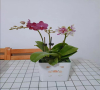
What is the best month to repot a Phalaenopsis, and should you use a transparent or an opaque pot?
Have you ever forgotten about your houseplants because of a short trip or frequent business travel? Have you also wondered whether your plant needs fertilizing today? In this article, we reveal several plants at once that are super suitable for modern people to grow; they can not only survive drought, but also bloom even when you are being lazy. ZZ plant (Zamioculcas zamiifolia)
-

Will a Phalaenopsis die if it is never repotted, and is repotting once every two years okay?
In recent years, Phalaenopsis has become a favorite for many people, because its flowers are beautiful and striking, and the blooming flowers look like dancing butterflies, leaving a deep impression on anyone who sees them. On the road of growing Phalaenopsis, usually watering should follow the principle of "water when dry, stop when wet," light should be placed in a spot with scattered light, and the temperature should be kept between 15-28 degrees Celsius.
-

The Best Time and Method for Repotting Phalaenopsis Orchids - Never Make These Big Mistakes
To grow flowers and plants well, besides daily watering, providing suitable sunlight, and fertilizing, you must not forget to give plants a "new home," especially for the Phalaenopsis orchid (Phalaenopsis spp.), whose roots are naturally quite sensitive. When growing Phalaenopsis orchids, how do you pinpoint the right time to repot? How often is it appropriate to repot? Actually,
-

Is it good to repot Phalaenopsis orchids frequently? What effects will it have?
Beginner growers always love to fuss, and when they see other people's Phalaenopsis orchids burst into bloom after repotting, they can't resist fiddling with their own too. In fact, frequently repotting Phalaenopsis orchids is not a good thing and may bring a series of problems. Phalaenopsis orchids really are not suited to frequent repotting! This flower is different from other plants; its root system is very delicate and belongs to the
条件筛选