-

Reasons Why Newly Purchased Dogs Are Prone to Illness and Prevention Methods
With the improvement of living standards, more and more people are keeping pets. For various purposes, people regard dog keeping as a fashion. But people generally report: dogs are difficult to raise, especially newly purchased dogs are prone to illness. In practical dog cases, newly purchased dogs account for more than 1/3, bringing a lot of trouble and losses to dog owners. Why are newly purchased dogs prone to illness and how should it be prevented and treated? Based on our years of clinical observation, we believe there are the following main reasons, and corresponding preventive measures should be taken. 1 Main reasons why newly purchased dogs are prone to illness 1
-
Why do dogs like to bury things? It turns out these are the reasons
Dogs kept in the yard often like to dig a hole and lie down when it is hot in summer, and if there is leftover food they also like to put it in the hole and hide it. This is because in wild times dogs often dug a hole about 3 m wide on hillside slopes to live in, and their hoarding habit was also formed at that time. In order to keep the hole used for sleeping clean, they will also choose another place to defecate. Animals generally have a special habit, and different animals have different habits. Some animals, in order to prevent a "food shortage," will store some food in advance,
-
What are the reasons for soybean plants flowering but not setting pods?
Liu Dezheng, a farmer from Xihe in Xinpu Town, Xiaonan District, and some farmers from Xiaogang Town and other places ask: Why did soybeans (yellow beans) flower but not set pods this year, or produce empty pods and shriveled seeds? According to our field surveys, in fact, the vast majority of soybeans this year did set pods; the cases of flowering without pod set or empty pods and shriveled seeds occurred only in scattered areas and among a minority of farmers. Through field investigation and analysis, the main reasons are as follows. First, from the perspective of varieties. This year, early and medium-maturing varieties generally flowered and set pods well, while among late-maturing varieties, some soybeans sown relatively late showed flowering without pods or empty pods and shriveled seeds.
-
Reasons for Yield Reduction in Continuous and Alternate Soybean Cropping and Yield-Preserving Techniques
I. Reasons for Yield Reduction in Continuous and Alternate Soybean Cropping Continuous and alternate soybean cropping causes plants to grow slowly and become short, with yellowing leaves, fewer pods, and fewer seeds, ultimately leading to a significant reduction in yield. In the short term, continuous and alternate cropping intensifies the damage from cyst nematodes, root maggots, root rot, pod borers, gray leaf spot, and malignant weeds, causes unbalanced depletion of soil nutrients, leads to deficiencies in soil nutrient elements, increases pathogenic fungi and decreases beneficial bacteria in the soil, and produces certain toxins, resulting in a severe decline in soybean yield and quality. In the long term, after long-term accumulation and reproduction, diseases, insects
-
What are the reasons for the recent surge of yellow mushrooms?
Recently, many mushroom growers have called in, saying that the edible fungi they cultivated have shown yellowing and death, and they do not know the cause. After investigation, the author believes that the following aspects can be provided as reference for mushroom growers. 1. The disease types occurring recently are mostly brown rot, brown spot, yellow spot, etc. The pathogens are Mycogone perniciosa, Verticillium, Cladobotryum varium, etc. These pathogens have strong survivability, tolerate low temperatures, and prefer high humidity. They can grow normally at around 10°C, and are common pathogens from late autumn to early spring. 2.
-
What are the reasons and functions of adding salt to chicken feed?
Chlorine and sodium are present in the body fluids, soft tissues, and eggs of chickens. They help maintain the acid-base balance of the chicken's body, keep the osmotic pressure balance between cells and blood, and enable the chicken's tissues to retain a certain amount of moisture. In addition, they are the raw materials for forming gastric juice and gastric acid, can promote the activity of digestive enzymes, and play a major role in the digestion and absorption of fat and protein. Salt can improve the palatability of the diet, stimulate appetite, and increase feed utilization. Therefore, salt is both an essential nutrient and a flavoring agent. If the chicken's diet lacks sufficient salt, it will cause
-
What are the reasons for pig immunization failure?
(1) The immunization program is unreasonable. Only a scientific immunization program will produce good immunity; if the immunization program is unreasonable, the immunity will be correspondingly reduced. With the conventional rush immunization injections in spring and autumn, because of missed prevention and missed injections, some pigs that should have been immunized do not receive immunization, causing some pigs to become ill. (2) The epidemic prevention system is not strict. Some epidemic prevention workers and pig raisers, fearing that piglets will have a reaction and die after vaccination, do not carry out immunization injections, resulting in a decline in the immunization coverage rate of the pig herd
-
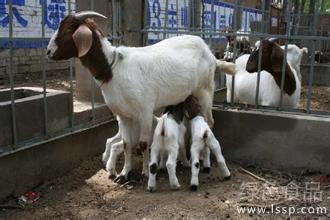
How should ewes in late pregnancy be fed to be reasonable?
Reasonable feeding methods for ewes in late pregnancy
-
Reasonable Use Methods and Key Points of Feed Additives for Deer
Feed additives are classified into nutritional additives and non-nutritional additives. Commonly used nutritional additives for deer include: mineral additives, vitamin additives, amino acid additives, etc.; commonly used non-nutritional additives include: Chinese herbal medicine additives, probiotics, silage improvers, enzyme preparations, antibiotic additives, appetite stimulants, etc. There are many types of feed additives with different properties, and the dosage is very small. Using them directly in feed is not only technically difficult, but also makes it hard to guarantee the effect. Generally, additives are added to carriers or diluents to produce various
-
Reasons for Feeding Rabbits Salt and the Appropriate Amount to Add
Sodium: widely distributed throughout the rabbit's body, it maintains the balance of water, electrolytes and acid-base levels in the body, so that the rabbit will neither become "shrunken and dry" nor develop edema; sodium also regulates normal cardiac physiological activity, and to a certain extent promotes nerve conduction and gastrointestinal motility. Chlorine: mainly distributed in the extracellular fluid, it is the raw material for forming gastric acid and a component of gastric juice. Gastric acid can stimulate appetite, enhance digestion, and increase the digestion and absorption rate of protein and fat. If the rabbit's diet lacks salt, it will cause loss of appetite in the rabbit
条件筛选