-

Detailed Explanation of Key Points for Integrated Pest Management of Edible Fungi
I. Eliminating pests starts from the source. Before the growing season each year, thoroughly clean the mushroom yard and eliminate pest breeding grounds. The cleaning scope includes mushroom houses and courtyards. All spent mushroom bags, straw pile garbage, compost and all organic waste from the previous year should be centrally burned or transported away, and weeds and peat soil should be removed. In the evening, spray with 15 ml of 80% dichlorvos and 5 ml of 1.8% abamectin mixed with 40 kg of water. After an interval of 1 week, apply once more, and after another week, whitewash the mushroom house with bleaching powder and lime slurry, and spread dry lime powder throughout the courtyard
-
How to prevent and control pests and diseases of edible fungi? A detailed explanation of integrated control techniques
Edible fungi belong to the macrofungi, and the environmental conditions required for their growth and development are also suitable for the occurrence, growth and reproduction of many pests and diseases. If the control of the ecological environment is not taken seriously, and necessary preventive measures are not taken in the early stage, contaminant microorganisms and various insect pests will occur in large numbers. In cultivation, following the integrated control policy of giving priority to agricultural control, reasonably combining biological and physical methods, and using chemical control as a remedial measure, and giving full play to the complementary advantages of various control methods, will be of very great significance for achieving high quality and high yield of various edible fungi. 1 Edible
-
Control Methods for Mushroom Mycelium Failing to Grow into the Substrate
About 10 days after spawning, the mushroom mycelium should visibly grow into the substrate. If this is not the case, it is due to causes such as the compost being too wet or too thick, the interior of the substrate being too dry, or the substrate layer being compacted. The cause should be identified promptly to create favorable conditions for mycelial growth. Although a dry surface is not a problem, never spray water on the bed surface while cultivating the mycelium. If the interior of the substrate is too dry, supplemental nutrient water should be added to the substrate: for every 100 sq m, use 0.9 kg of soybeans, soak them until swollen and grind them into about 90 kg of juice, add 45 yeast tablets, 27 vitamin B1 tablets, and 0.45 kg of white sugar
-
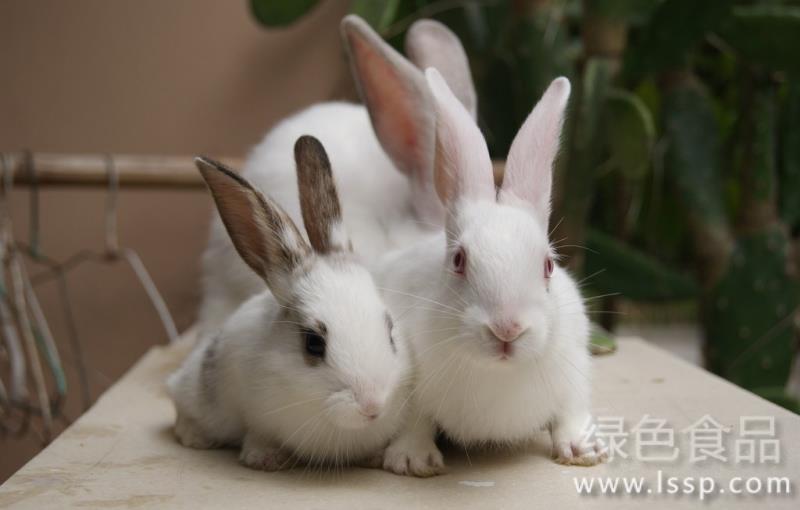
To improve the survival rate of baby rabbits, you need to grasp the "five key stages"
To improve the survival rate of baby rabbits, you need to grasp the "five key stages"
-

Illustrated Tutorial on How to Plant and Grow Bowl Lotus
Bowl lotus, as the name suggests, is a lotus grown inside a bowl. According to the description in "Illustrated Book of Chinese Lotus Varieties," bowl lotus refers to lotuses that can bloom normally in flower pots with a diameter of no more than 26 cm, and must also meet the following three criteria: the average flower diameter does not exceed 12 cm, and the average height of the standing leaves does not exceed 33 cm
-
Prevention Methods for the Decline in Laying Rate of Laying Ducks in Early Winter
"Daodan" (laying stop) in laying ducks refers to mother ducks raised in spring entering the laying period in November, when the temperature gradually turns colder and the temperature difference between day and night is too large, or due to insufficient nutrition, causing ducks that have just started laying to stop production and "take a vacation." If laying ducks "daodan" and begin molting, once they molt they will not lay eggs again until the following spring. If duck "daodan" can be controlled during this period, the laying period can be greatly extended and the economic benefits of raising ducks can be increased. When the ducks show signs of "daodan" such as eggs becoming smaller, eggshells becoming thinner, delayed laying time, wet feathers after coming ashore from drinking water, and burrowing into the duck house
-
Detailed Explanation of Disease Prevention and Control Strategies for 4- to 6-Week-Old Chickens
1. Lock down and isolate the brooding area to prevent disease transmission via personnel, supplies, vehicles, other chicken flocks, and other routes. Maintain hygiene inside and outside the chicken house; persist with disinfecting the chickens in place and disinfecting the environment outside the house. When no live vaccine immunization is being carried out, ensure disinfection twice a day to reduce the pathogen load in the environment. 2. At this stage, the flock transitions from having a preliminary ability to regulate body temperature to being fully able to regulate body temperature. Therefore, in the relationship between temperature and ventilation, it should gradually shift from prioritizing warmth during 0 to 3 weeks to placing equal emphasis on temperature and ventilation, and finally to prioritizing ventilation. In the later period
-
What to Do About the High Egg Breakage Rate in Hot Weather
The problem of egg breakage has always plagued every chicken farm, especially in hot weather, when high temperatures shorten the storage time of eggs, and broken and contaminated eggs spoil within 2 days and cannot be sold. Therefore, here are several methods for reducing the breakage rate in hot weather: Environment and temperature. The physiological characteristics of chickens determine that the ideal temperature for laying hens is 18°C-23°C, within which production performance is best; when the temperature exceeds 30°C, laying hens eat less, drink more water, and produce more droppings; when the house
-
Feeding concentrate to rabbits requires care: master the scientific feeding method
Concentrates include energy-based feed ingredients such as corn, barley, wheat, sorghum, wheat bran and fine rice bran, as well as feed ingredients with high protein content such as soybean meal, rapeseed cake, fish meal, silkworm pupae and blood meal. Their common characteristics are low crude fiber content, low moisture content and high nutritional value. To increase the weight gain rate of meat rabbits, make wool rabbits produce more wool and rex rabbits produce more high-grade fur, concentrates are indispensable. The principle for using concentrates is to follow the nutritional needs of different types of rabbits and, according to the different regions and different
-
What are the integrated pest and disease control measures for mushrooms?
Mushrooms are the main cultivated edible fungus variety in Zhangpu County, Zhangzhou City, Fujian Province. However, pests and diseases have long plagued the vast number of mushroom growers. The integrated control measures are described below: (1) Strengthen cultivation management. 1. Disinfection of the cultivation house. For disinfection of the cultivation house, a mixed solution of formalin and dichlorvos can be used for fumigation. Before fumigation, first moisten the floor, walls, bed frames and daily tools by spraying, and seal up cracks. For every 100 sq m, use 1 jin of formalin and 150-200 g of dichlorvos in a pot, add 5 times the amount of water, then place it on a stove and heat. After lighting the fire
条件筛选