-

Fertilization Methods for Gastrodia: Can Diammonium Phosphate, Superphosphate, and Ammonium Nitrate Be Applied?
Yes, they can be applied. This is because all three fertilizers are acidic fertilizers and can increase soil acidity. In terms of their properties, they suit the growth and development requirements of Armillaria mellea and Gastrodia; in terms of composition, all three fertilizers contain phosphorus and nitrogen components; in theory, Armillaria mellea requires a certain amount of phosphorus and nitrogen during its growth and development. During the growth and development of Gastrodia, as it absorbs water from the substrate, it can take up some trace elements and phosphorus along with the water. Therefore, when cultivating Gastrodia, applying an appropriate amount of acidic fertilizer can increase Gastrodia yield. According to Dan Cunzhi and Wang Yingkui, Gastrodia specialists in Wangjiayuan Village, Siping Township, Danfeng County, Shanxi Province
-
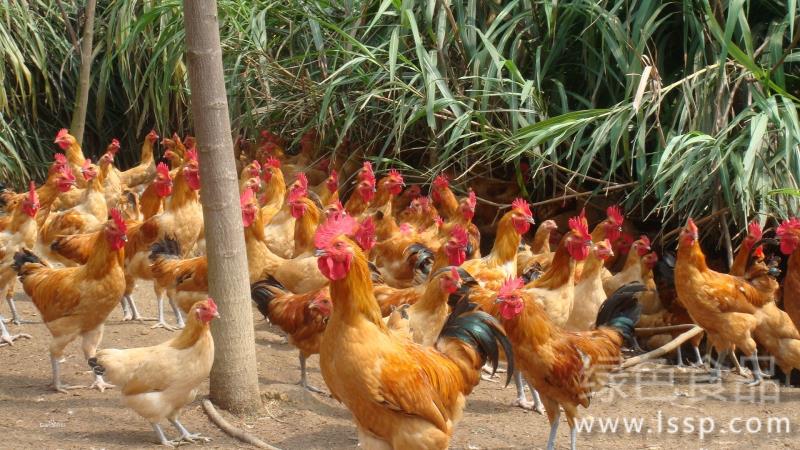
How should free-range chickens be raised and managed during the laying period to ensure the laying rate?
Key points for feeding and management of free-range chickens during the laying period to ensure the laying rate
-
In early winter, laying ducks are prone to "reverse molting", so farmers should beware of a drop in egg production rate
"Reverse molting" in laying ducks refers to female ducks raised in spring that enter the laying period in November, when the temperature gradually turns colder, and the day-night temperature difference is too large or nutrition is insufficient, causing ducks that have just started laying to stop producing and go on "vacation". If laying ducks begin "reverse molting", they start to molt, and once molting begins they will not lay eggs again until the following spring. If duck "reverse molting" can be controlled during this period, the laying period can be greatly extended and the economic benefits of duck farming increased. When ducks show signs of "reverse molting" such as eggs becoming smaller, eggshells becoming thinner, delayed laying time, wet feathers after drinking water and coming ashore, and crowding into the duck house, measures should be taken promptly
-
Technical Measures to Reduce the Mortality Rate of Induced Spawning Broodfish
Reducing the death of induced spawning broodfish is an important technical task in fry aquaculture. There are two main factors causing the death of induced spawning broodfish. First, broodfish consume a great deal of physical energy during the spawning and reproduction process, which increases the side effects of the inducing drugs and lowers the body's resistance. If the fish is severely injured, various pathogens will take the opportunity to infect the fish body, causing disease and leading to the death of the broodfish. Second, the broodfish has a poor physique, or the water temperature fluctuates greatly during induction, or the dosage of the inducing drugs is improper (too high or too low), so the broodfish cannot spawn normally or experiences difficult spawning, and this in turn causes its own physiological activities to become disordered and leads to death.
-
Introduction to a free-stone flat peach variety: the flesh separates easily from the stone
The fruit is flat in shape, with a sunken apex and two symmetrical halves; the average single fruit weight is 130.4 grams, and the largest fruit weighs 250 grams. The ground color of the skin is greenish-white, and the fruit surface is covered with 20% red speckles or blush; the skin peels easily. The flesh is white with little red pigment, soft and melting, juicy, sweet in flavor, and aromatic; the soluble solids content is 14%. Free-stone. In the Zhengzhou area of Henan, the fruit ripens on August 4, and the fruit development period is 122 days.
-
Six Methods to Improve Licorice Germination Rate
Licorice is a perennial herbaceous plant of the Fabaceae family, with its dried roots and rhizomes used as medicine. It has the effects of tonifying the spleen and replenishing qi, resolving phlegm and relieving cough, clearing heat and detoxifying, relieving urgency and stopping pain, harmonizing the properties of various medicines, and neutralizing the toxicity of a hundred medicines. Licorice is not only a major medicinal material, but also an excellent calorie-free sweetening additive in food, and an important auxiliary material for cigarettes and other industries, so the demand for licorice is growing ever larger. As natural licorice resources are increasingly depleted, artificial cultivation is necessary. Due to reasons such as the dense structure of the licorice seed coat and protein dehydration and denaturation, cultivating licorice suffers from problems such as slow germination, uneven germination, and low germination rate.
-
Key Integrated Management Techniques for Soybeans During the Flowering and Podding Stage
When soybeans enter the flowering and podding stage, vegetative growth and reproductive growth proceed together, requiring sufficient water, nutrients and light. In terms of cultivation measures, vegetative growth and reproductive growth should be coordinated to achieve many pods and many seeds. The main measures should include the following "three preventions" and strengthened management during the seed-filling and maturation stage. The "three preventions" measures during the flowering and podding stage (1) Preventing excessive vegetative growth: when soybeans have shown 2 tillers and are flowering, use 30 grams of 15% paclobutrazol wettable powder per mu, mix with 40 kg of water, and spray to top the plants, which can shorten internodes, control top vine growth, increase flowers and preserve pods, so that pods cover the top; (2) Preventing drought and waterlogging: during the soybean flowering period, attention should be paid to summer drought, seepage and moisture retention, and in case of severe waterlogging, drain promptly to reduce waterlogging damage; (3) Controlling pests: from the end of July to mid-August is the peak outbreak period for soybean semi-looper, bean hawk moth, leaf roller, alfalfa noctuid and other pests. Pesticides with contact and stomach poison effects such as fenvalerate or cypermethrin plus dimethoate emulsion or dichlorvos can be used for control, eliminating pests at the 1st-2nd instar stage.
-
New soybean topping technique for higher yields: operate this way to get a bigger harvest
Soybean terminal buds have strong growth vigor and consume a lot of nutrients. Removing the terminal buds of soybean transfers nutrients to the pods, which helps increase yield. This is especially true for soybean with higher soil fertility and vigorous growth; timely removal of the terminal buds makes the yield-increasing effect even more pronounced. The method for removing soybean terminal buds is: at the early flowering stage, the peak of soybean growth, pinch off the 2-3 cm tender tip at the top of the main stem, so that apical growth is inhibited and nutrients are concentrated for reproductive growth, promoting more flowering and more pod setting, and helping to make the plants shorter and sturdier and enhance stress resistance. Soybean topping should follow the “three
-
Mushroom spent substrate can be used to feed fish; fish farmers should stop throwing it away as waste
In places where mushrooms are cultivated, a large amount of discarded mushroom spent substrate is produced every year. This mushroom spent substrate is rich in crude protein, crude fat and nitrogen-free extract, and also contains minerals such as calcium, phosphorus, potassium and silicon, so it is quite nutritious. Therefore, it can be used as a good feed for fish. The method for feeding fish with mushroom spent substrate is: each time the mushroom house removes mushroom spent substrate, first pick out mud clumps, gravel, iron nails, broken glass and other miscellaneous items from the substrate, then move it into sunlight to dry, and crush it into powder with a grinder; then, according to the proportion of feed
-
Key Points for Integrated Control of Powdery Mildew on Schisandra chinensis
1. Field symptoms Powdery mildew mainly damages the leaves of Schisandra chinensis, and in severe cases the fruit, petioles and stems are also affected. In the early stage of leaf infection, small white powdery mildew spots appear, gradually expanding and merging into patches, and the mildew layer thickens, like a layer of flour scattered on the leaf surface. On the underside of the mildew spots, small chlorotic spots initially form, expanding into irregular patches as the disease develops. In the late stage of the disease, black particles are produced in the mildew layer, causing moldy staining and fruit drop, reducing yield while also lowering quality. 2. Disease occurrence The powdery mildew pathogen of Schisandra chinensis belongs to the genus Erysiphe in the Ascomycota, and the conidia are mostly cylindrical, with a few being cylindrical-columnar, elliptical or long-oval. In the Fengcheng area, the pathogen overwinters as cleistothecia on diseased plant residues, and in May to June of the second year produces ascospores and conidia for infection, with July to August being the peak period of disease occurrence. The disease can occur at temperatures of 20-28°C, with 25-26°C being the most suitable. The disease is severe in mountainous areas above 1000 m in altitude; it is severe where management is poor, nitrogen fertilizer is applied excessively, and planting is too dense; 1-2 year old Schisandra chinensis plants are lightly affected, while those over 3 years old are severely affected.
条件筛选