Detailed Guide to Preparing Substrate for White King Oyster Mushroom
How do you mix substrate for White King Oyster Mushroom? Is there anything to watch out for? We ask knowledgeable readers to help explain. If you want a good yield when growing White King Oyster Mushroom, the substrate ratio is crucial. Zhongdiwang has compiled the substrate preparation methods for White King Oyster Mushroom, listed in detail below for readers' reference. Substrate for White King Oyster Mushroom...
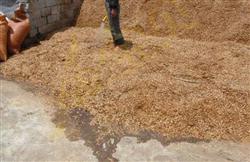 How do you mix substrate for White King Oyster Mushroom? Is there anything to watch out for? We ask knowledgeable readers to help explain.
If you want a good yield when growing White King Oyster Mushroom, the substrate ratio is crucial. Zhongdiwang has compiled the substrate preparation methods for White King Oyster Mushroom, listed in detail below for readers' reference.
Preparation of substrate for White King Oyster Mushroom:
The nutrients in the substrate should be mainly organic, with inorganic nutrients as a supplement, which helps strengthen the mushroom's staying power for fruiting. Organic nutrients are generally based on wheat bran, cornmeal, rice bran, etc., usually accounting for 20%-30%; the amount added must not be too large.
If the organic nutrient content is too high, one drawback is that the contamination rate rises greatly, and another is that it affects the air permeability of the substrate, causing slow mycelial growth and delayed fruiting. Inorganic nutrients are generally monopotassium phosphate, magnesium sulfate, etc., usually accounting for 0.2%-0.5%. Too many inorganic nutrients will affect the mycelium's water absorption capacity.
Points to note about substrate for White King Oyster Mushroom:
To increase the yield of White King Oyster Mushroom, besides raising the nutrient content of the substrate, you must also ensure the substrate has strong water absorption capacity. Current conventional cottonseed hulls generally have relatively short cotton lint, and cottonseed hulls with short lint have weak water absorption. If you cultivate White King Oyster Mushroom with this kind of material, during the fruiting period the fruiting bodies cannot get a sufficient water supply, so it is hard to guarantee the marketability and grade of the fruiting bodies, let alone maintain a very high yield.
In this case, the substrate can be adjusted appropriately by adding 30%-50% of materials with strong water absorption, such as cotton linter and corn cobs, to the cottonseed hulls. This both strengthens the substrate's water absorption capacity and saves costs, achieving two goals at once. For cultivating White King Oyster Mushroom, the suitable moisture content of the substrate should be 60%-65%. Specifically, before fermentation of the substrate, the material-to-water ratio can be controlled at 1:1.5 to 1:1.6, and before inoculation the material-to-water ratio can be controlled at about 1:1.3.
Some readers report that adding a certain amount of lime to the substrate can promote rapid growth of White King Oyster Mushroom mycelium. The amount of lime added can be controlled at 2%-5%, so that after fermentation of the substrate is complete, the pH value can generally be maintained at 8-9. It is also fine not to add lime, but mycelial growth will become slow, which will have a relatively large impact on the reasonable arrangement of the fruiting season.
Click to get more White King Oyster Mushroom cultivation techniques
Click to get more edible mushroom cultivation techniques