-

How to grow potatoes with hotbed seedling raising and transplanting for high-yield cultivation?
Using the "plastic hotbed seedling raising and transplanting potato high-yield cultivation measures", the yield per plant generally reaches 1.8 kg, with a maximum of 3 kg, and the yield per mu can reach 5000-7000 kg. The specific measures are as follows: 1. Careful selection and treatment of seed potatoes. Select large potatoes with regular shape, free of pests and diseases, and free of frost damage as seed. The seed potatoes are taken out of the cellar on March 10-13, placed on the normal-temperature ground of a greenhouse for 6-9 days in spring, and cut into seed pieces when white dots appear at the buds. Each potato piece weighs about 30 g, and generally 36-40 pieces are cut per kg of seed potatoes.
-
How to use paclobutrazol and uniconazole for raising strong rice seedlings
Paclobutrazol and uniconazole are both plant growth regulators. When applied in rice seedling raising, they have good effects on controlling growth and promoting tillering, preventing seedling stiffness and seedling rot, and increasing panicles, grains and yield. The method for using paclobutrazol is: when the seedlings have one leaf and one heart, evenly spray 100 kg of paclobutrazol solution at a concentration of 300 ppm per mu of seedling field, ensuring no missed spraying and no repeated spraying. When spraying, drain the water from the seedling field and keep the field surface free of standing water. The method for using uniconazole is: soak the seeds with uniconazole solution at a concentration of 50-200 ppm for 24-48 hours, with a ratio of seeds to chemical of 1:1.2-1.5. During soaking, stir 3-4 times so that the seeds absorb the chemical evenly. After soaking, rinse with clean water before sprouting. For seeds treated by soaking with uniconazole, soak and sprout 1 day earlier than conventional practice.
-
High economic returns from raising adult crabs as a supplementary crop in fingerling ponds
Raising adult crabs as a supplementary crop in fingerling ponds, relying on high density for success, practicing ecological farming, and replacing concentrated feed with coarse feed, is a new low-input, high-output farming model that the author has summarized from years of practice. Last year, in a pond of two mu, the author invested a total of 1,000 yuan in fingerling costs and feed costs. The result was an output of 70,000 "huopian" fingerlings worth 3,000 yuan, 20,000 one-year-old fingerlings worth 4,000 yuan, and 40 kg of adult crabs worth 1,000 yuan, for a total output value of 8,000 yuan. After deducting costs, the per-mu
-
Technical method for raising ground beetles (Eupolyphaga sinensis) with cottonseed hulls
If there is no place for bee keeping, ground beetles can be raised according to the principle that cottonseed hulls ferment and generate heat. The method is simple, and is briefly introduced as follows. In a jar 30 cm in diameter, put prepared cottonseed hulls, press them tight, and place inside a small basin 20 cm in diameter; in the small basin put a layer of loose soil with moisture suitable for the growth of small ground beetles, then put the small ground beetles into the basin, and on top put some feed for the small ground beetles to eat; then cover the mouth of the jar tightly with old cotton wadding. Preparation method of the cottonseed hulls: generally, according to the temperature needed, add
-
Raising red worms as feed for turtles and soft-shelled turtles delivers high economic returns
In turtle and soft-shelled turtle breeding ponds, small red worms often appear, swimming in clusters and sheets on the pond surface and in the corners, forming a layer of red water bloom on the water surface. The real name of the red worm is Cladocera, and it is a type of zooplankton in water bodies. It is composed of many planktonic flea species, with an average body length of about 1 mm. The normal body color of Cladocera is grayish white; it turns red only when the water is lacking oxygen, which is why red worms are mostly found in foul ditches. When large numbers of red worms are found in a turtle or soft-shelled turtle pond, it indicates that the pond water has begun to deteriorate,
-
Method for building a greenhouse for raising Schisandra chinensis seedlings in nutritional pots
Build a plastic greenhouse of a suitable size according to the number of seedlings to be raised (or use a solar greenhouse). For general vegetable (cucumber) cultivation, a plastic greenhouse is used, with a width of about 12 m, a length of 80-100 m per greenhouse, and a height of more than 2 m, with doors at the front and rear, welded from steel bars. A small shed can also be set up, using materials such as steel bars, bamboo strips or wooden poles. Building a simple shed costs little but has a short service life.
-
Detailed Introduction to a New Method for Raising Schisandra Seedlings
Schisandra is a perennial vine of the genus Schisandra in the family Magnoliaceae. Its mature dried fruit is used as medicine, commonly known as northern schisandra, and it has the effects of strengthening the lungs and relieving cough, nourishing the kidneys and astringing essence, and tonifying qi and promoting fluid production. Plants of the same genus also include southern schisandra and western schisandra, and among them Liaoning schisandra has the best medicinal efficacy and commercial value. Judging from the current market conditions, the prospects for developing Liaoning schisandra are very broad. A new method for raising schisandra seedlings using vacant land is now introduced. The experimental site is in Tumen Villager Group, Yongquan Village, Jiucaigou Township, Xiuyan County. The trial area is 1 mu, and the soil is sandy loam.
-
Detailed Explanation of Key Techniques for Schisandra Seedling Raising and Cultivation
Schisandra [Schisandra chinensis (Turcz.) Baill.] belongs to the Magnoliaceae family, genus Schisandra. It is a famous traditional Chinese medicinal herb and has been listed as one of the important medicinal materials in Heilongjiang Province's northern medicine development strategy. It is mainly distributed in Northeast China, and also found in North China, Hubei, Hunan, Jiangxi, and Sichuan. Schisandra uses its fruit as medicine; the berry is fleshy, spherical, and dark red, and can treat lung deficiency, cough and asthma, diarrhea, night sweats, etc. After the state implemented the Natural Forest Protection Project, people's attention to the development and utilization of Schisandra was aroused
-
Six things you must do when raising rabbits in autumn
1. Adjust the daily ration. According to the different ages of rabbits, prepare it according to feeding standards, appropriately increase the protein level, reduce energy feed, and require the feed to be nutritious, palatable and easy to digest. Ensure that rabbits have sufficient green feed every day, such as green grass, green vegetables, etc. 2. Build up autumn fat. With abundant feed and complete nutrition, build up good autumn fat to survive the winter safely. Therefore, prepare complete and abundant feed and supply high-quality green feed; feed at fixed times and in fixed amounts, following the principle of feeding breakfast early, feeding dinner late, feeding more green feed at lunch, and feeding at night. Young rabbits should be fed 5-6 times a day
-
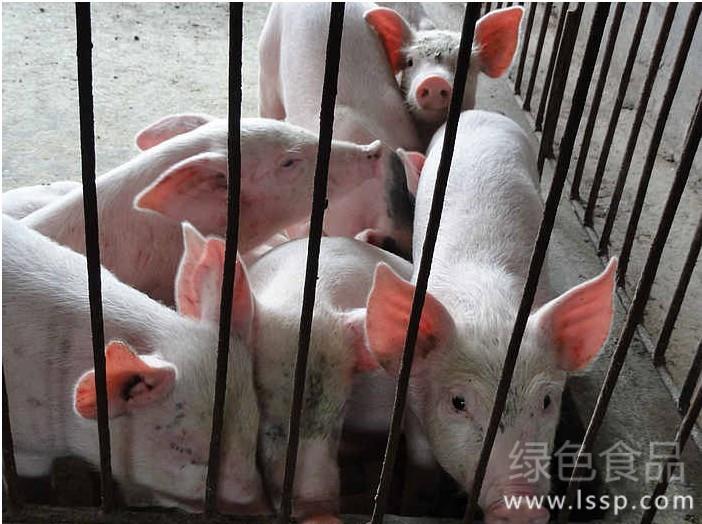
Key points for raising pigs in winter: cold protection and warmth must be done well
Key points for raising pigs in winter: strengthen cold protection and warmth
条件筛选