-

5 practical tips for choosing a young rabbit
Check the build. A young rabbit with good physical development has a well-proportioned body and firm muscles, with no protruding bones visible at the shoulders, back or hindquarters; when touched, the chest is wide and deep, and the back is also wide. Check nutrition. A well-nourished young rabbit has full muscles, smooth fur, and no sharp, protruding bone edges, and can weigh more than 500 grams at weaning. Check posture. A healthy young rabbit has a natural posture and moves flexibly and coordinately. When crouching, the front legs are extended and the hind legs are placed under the body; when sleeping, the eyes are closed and breathing is faint; in summer it often lies on its side, lies prone and stretches out
-
Belgian Rabbit (also known as the Giant Grey Rabbit, Flemish Giant)
Breed characteristics: This breed is a relatively old large meat breed. It originated from the wild European rabbit in Belgium and was later improved and developed in England. Its body shape and appearance closely resemble the wild hare, with coat color in dark red with yellowish-brown or sesame (agouti) shades, a large body, and long body and limbs. The eyes are dark brown, the ears are large, long, and erect, with bright black fur edging along the ear rims. The coat texture is tough. Adult weight is 5-6 kg, with a maximum of up to 9 kg. During the kit and young rabbit stage, growth and development are fast; at 6 weeks of age, weight can reach 1.2-1.3 kg, and at 3 months of age, weight can reach 2.8-3.
-
What are the prevention and treatment methods for Clostridium perfringens diarrhea in rabbits?
The disease is an acute intestinal infectious disease of rabbits caused by Clostridium perfringens type A, characterized by severe diarrhea, foul-smelling excreta and rapid death. Etiology The pathogen is Clostridium perfringens type A. Epidemiology Except for suckling young rabbits, domestic rabbits of different ages, breeds and sexes are all susceptible to this pathogen. The incidence is highest in young rabbits aged 1 month to 3 months. Infection occurs mainly through the digestive tract or damaged mucosa. Predisposing factors include improper feeding and management, shortage of green feed, low crude fiber content,
-
Why do rabbits eat their own soft droppings?
In the process of raising domestic rabbits, we see that the hard fecal pellets they excrete are formed through a second round of digestion. Domestic rabbits eat grass and feed during the day, and excrete soft droppings at night or before dawn, and as soon as the soft droppings are excreted, they immediately eat them, and only through the second round of digestion and absorption are the residues formed into hard fecal pellets and excreted from the body. When domestic rabbits eat the soft droppings they excrete at night, it is not coprophagia caused by a lack of some nutrient in their body, but a normal physiological phenomenon. This instinct of domestic rabbits has two major benefits: first, it can keep the rabbit hutch and rabbit farm
-
Feeding and Management Methods for Keeping Caged Rabbits Safe Through the Summer
Heat dissipation and temperature control: Plant some vine-type plants such as melons, beans, grapes, and pumpkins around the rabbit hutch to prevent direct sunlight, and you can also apply a layer of lime slurry to the inner and outer walls of the rabbit hutch so that direct sunlight does not reach the rabbit cages; open-air rabbit hutches should have a shade canopy set up, with doors and windows opened to allow air convection; for wool rabbits, the wool should be cut short along with the hair on the head and face, and the rabbit cages should not be too crowded; when the room temperature exceeds 30°C, sprinkle some cool water every 2-3 hours, or use a new brick, soak it in cool water for several minutes, and once it has absorbed enough water (no longer bubbling), place it in the rabbit cage,
-
Special attention must be paid to preventing coccidiosis when raising rabbits in summer
Rabbit coccidiosis is one of the most common and most harmful diseases of domestic rabbits. Rabbit coccidia are single-celled protozoa that parasitize the liver, bile duct epithelial cells, and intestinal epithelial cells of rabbits. When coccidia parasitize the body, the rabbit becomes emaciated, anemic, has rough fur, and its development stalls, ultimately leading to death. This disease has no obvious seasonality and can infect and cause illness throughout the year, but it occurs more frequently in the hot and humid seasons of summer and autumn, and its distribution and prevalence are extremely widespread. To prevent coccidiosis: 1. Maintain the sanitation of the rabbit hutch, frequently disinfect the cages and
-
4 Things to Note When Introducing Pet Rabbits
As the pet rabbit market grows increasingly prosperous, more and more people are introducing pet rabbits, but all kinds of problems have followed. Some people spend a lot of money to buy so-called pet rabbit breeding stock, only to find that when the breeding season arrives, the rabbits do not come into heat. After inquiring carefully, they learn that the rabbits have been sterilized and simply cannot reproduce, so half a year has been wasted for nothing. Some buy rabbits home but the rabbits cannot survive at all, because no breeding techniques were provided, and they just feed them like ordinary rabbits. The result is that the sudden change in living conditions, combined with the abrupt switch in feed, causes the young rabbits to fall ill and die one after another.
-
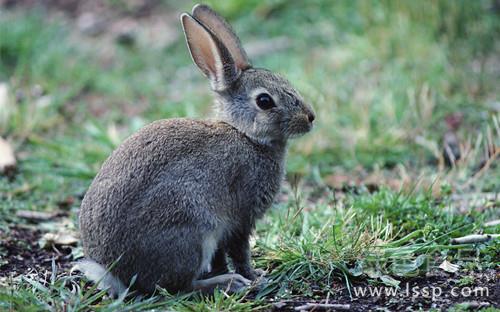
Rabbit epizootic enteritis is highly prevalent in winter; be on guard against refusal to eat, abdominal bloating, severe watery diarrhea and dehydration
Refusal to eat, abdominal bloating, severe watery diarrhea and dehydration; be on guard against rabbit epizootic enteritis in winter
-
Why do rabbits eat their own soft feces?
During the raising of domestic rabbits, we see that the hard fecal pellets they excrete are formed through a second round of digestion. Domestic rabbits eat grass and feed during the day, and at night or before dawn they excrete soft feces, and as soon as the soft feces are excreted, they immediately eat them; only through the second round of digestion and absorption do the residues form hard fecal pellets that are excreted from the body. When domestic rabbits eat the soft feces they have excreted at night, it is not a coprophagia habit caused by a lack of some nutrient in their body, but rather a normal physiological phenomenon. This instinct of domestic rabbits has two major benefits: first, it can keep the rabbit hutches and rabbit farms
-
Ten Practical Recipes for Fattening Thin Rabbits in Autumn and Winter
After enduring the hot summer, most domestic rabbits are weak and thin, so as soon as autumn begins you must quickly increase feed to fatten them up, in order to improve the rabbits' physical strength and production performance. The following methods can be used to fatten thin rabbits in autumn and winter. 1. For rabbits with rough, messy fur and poor spirits, take an appropriate amount of tea leaves, plus 15 grams each of Boschniakia rossica and honeysuckle (Lonicera japonica), decoct the juice for oral administration, 2 times a day, 10-15 milliliters per rabbit each time, for 3-5 consecutive days, with marked effect. 2. Dissolve 5-7 grams of white sugar per rabbit per day in warm water and let the rabbit drink it freely. Generally, after 15-2
条件筛选