-

How to prevent rabbit breed degeneration? Master these practical methods
Causes of degeneration: Extensive management and inbreeding. Only emphasizing the rabbit's trait of eating grass without supplementing with concentrated feed causes nutritional deficiency and breed degeneration. Ignoring the blood relationship of breeding rabbits and mating closely related animals causes poor disease resistance in offspring rabbits, slow growth, smaller body size, deformities, and breed degeneration. Lack of strict selection measures: not paying attention to selecting and retaining breeding rabbits according to breed characteristic requirements, often selling off the large, fast-growing, well-conditioned ones first and keeping the small, thin, weak ones to continue raising, causing gradual breed degeneration. Mating
-
Adding fat to rabbits' feed in winter has many benefits
In winter, the weather is cold and temperatures are low. If 2%-3% fat (rendered lard is best, vegetable oil is second best) is added to the rabbit diet, feeding it to rabbits not only improves palatability and promotes healthy growth, but also increases body fat and fat reserves, thereby improving the rabbits' resistance to winter cold. According to many years of practice at the author's rabbit industry base: adding fat to the feed of pregnant does can increase the survival rate of kits by about 10%; adding fat to the diet of does during lactation can significantly increase the weaning survival rate of kits; adding fat to the diet of meat rabbits
-
How to slaughter rabbits, take the hides and tan them more efficiently
Rex rabbit fur has the characteristics of being short, fine, flat, dense and beautiful, is in great demand on the market and commands a high price, but the market also has very high quality requirements when purchasing rex rabbit fur. To sell rex rabbit fur at a good price, raisers should master the following six tips: 1. Feed formulation. The rex rabbit is a dual-purpose rabbit for both fur and meat, and must both grow fur and grow meat. Feed nutrient levels must be high, generally with digestible energy of 11.4-11.9 MJ/kg, crude protein of 18%-19%, crude fiber of 6%-8%, crude fat of 3%-4%, calcium of 0.88
-
How to treat a sneezing rabbit? Learn the correct way to handle it
Answer: Many kinds of diseases can cause a rabbit to sneeze. For example, the common cold, pneumonia, rhinitis, and so on; a further diagnosis should be made before treatment. For the common cold, oral cold granules, Ganmaotong, and similar medicines can be given, while for pneumonia and rhinitis, streptomycin, kanamycin, florfenicol, and similar drugs are used by intramuscular injection or nasal drops.
-
There's a right way to feed rabbits: keep these three dos and three don'ts in mind
Feed a complete mixed ration. The nutrient composition of a rabbit's daily ration is: 10% crude protein and 10% crude fiber, 5% fat, 2800 kcal of digestible energy per kilogram of ration, and 10% amino acids. If there is no way to feed a complete mixed feed, appropriately add concentrated feeds such as soybeans, soybean cake, wheat bran and corn, along with succulent feeds such as carrots. Feed heavily at night. Rabbits have a strong tendency to eat at night, and nighttime intake can account for more than 75% of their total daily intake. Therefore, provide rabbits with enough feed and drinking water at night. Change feed gradually. When one kind of feed has been fed for a long time, the rabbit has
-
Diagnosis and Treatment Methods for Cold Medicine Poisoning in Rabbits
In October 2005, 120 young rabbits raised by Liu in Fangzheng County, Heilongjiang Province, developed symptoms similar to the common cold, including runny noses and sneezing, in most of them due to the influence of a cold wave. The rabbit owner ground up "Ganmaotong" (a human medication produced by Zhengzhou Kangli Pharmaceutical Co., Ltd.) at a dose of 1 tablet per 2 young rabbits and mixed it into the feed. The rabbits were fed at 9 AM, and by 10 PM, 55% of the young rabbits showed abnormalities; by the next morning, 7 had died. The owner then came to my clinic for diagnosis and treatment, during which 8 more died successively. After a systematic examination, the diagnosis was "Ganmaotong" poisoning. Because
-
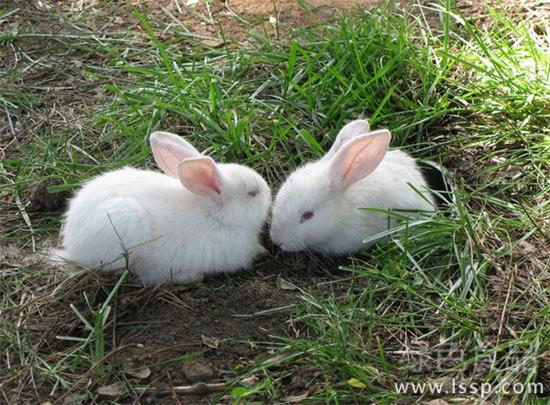
Young rabbits have weak constitutions and poor disease resistance, and are prone to death: an analysis of key points in feeding and management
Young rabbits have weak constitutions and poor disease resistance and are prone to death: key points in the feeding and management of young rabbits
-
How to detect suspicious sick rabbits early? A must-read for rabbit keepers
Examine the ear color of a healthy rabbit: pink, with bright eyes. If the ears are red or light purple, it means the rabbit is overheated; placing it in a ventilated hutch to rest a while will relieve it. If the ears are pale and feel cool to the touch, it means the rabbit has drunk too much cold water or has caught a chill; on auscultation there will be a sloshing sound in the abdominal cavity, and placing the sick rabbit on a heated kang to warm its belly will suffice. If a young rabbit's ear tips bend forward or droop slightly, it means its body temperature is high; let it move about freely for a while to help bring the temperature down. If a rabbit's eyeballs look dull, it indicates the air in the hutch is foul, and ventilation should be carried out promptly. A rabbit running clear watery nasal discharge is a precursor of common cold,
-
How to Identify a Sick Rabbit? Learn the Nine Observations to Easily Judge Rabbit Illness
Discovering sick rabbits and diagnosing rabbit diseases is the foundation for controlling the spread of disease. Whether a rabbit is healthy should be observed from the following aspects: Appearance: A healthy rabbit is full of energy, has smooth fur, moves nimbly, holds a proper posture, and grows quickly. Sick rabbits, however, are mostly listless or extremely excitable (such as with rabbit plague), have rough, messy fur (such as with chronic wasting diseases, nutritional deficiency disorders, etc.), move slowly, and have abnormal postures. For example, when suffering from pododermatitis and foot ringworm, the hind limbs dare not touch the ground; with "splay legs" and "O-shaped legs," they cannot stand normally; with pneumonia, breathing is difficult; with wry neck, the head and eyes are tilted and the rabbit rolls over.
-
How to prevent and treat ear mange in rabbits? Practical advice is here
Rabbits in breeders' homes showed symptoms such as restlessness and scratching their ears. After follow-up investigation, they were diagnosed with ear mange. Some prevention and treatment suggestions for this disease are now proposed for reference. Affected rabbits mainly show unbearable pain and itching in the ear area, often constantly scratching with their forelimbs and shaking their heads, while also showing symptoms such as lethargy, restlessness, reduced appetite or refusal to eat, and weight loss. Physical signs include redness and swelling of the ear skin, scaling and hair loss, with the affected area gradually expanding, inflammation of the external ear canal, discharge, scabbing, and thickening of the skin. Because the rabbit keeps scratching, it often causes skin infection, making the injury worse and leading to
条件筛选