-

4 Things to Note When Introducing Pet Rabbits
As the pet rabbit market grows increasingly prosperous, more and more people are introducing pet rabbits, but all kinds of problems have followed. Some people spend a lot of money to buy so-called pet rabbit breeding stock, only to find that when the breeding season arrives, the rabbits do not come into heat. After inquiring carefully, they learn that the rabbits have been sterilized and simply cannot reproduce, so half a year has been wasted for nothing. Some buy rabbits home but the rabbits cannot survive at all, because no breeding techniques were provided, and they just feed them like ordinary rabbits. The result is that the sudden change in living conditions, combined with the abrupt switch in feed, causes the young rabbits to fall ill and die one after another.
-
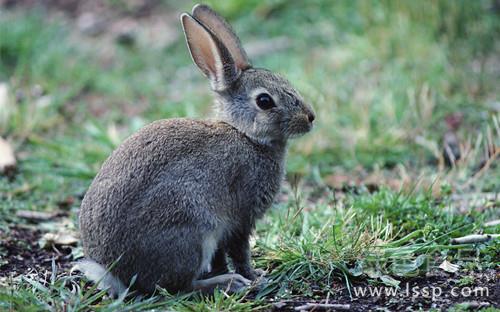
Rabbit epizootic enteritis is highly prevalent in winter; be on guard against refusal to eat, abdominal bloating, severe watery diarrhea and dehydration
Refusal to eat, abdominal bloating, severe watery diarrhea and dehydration; be on guard against rabbit epizootic enteritis in winter
-
Why do rabbits eat their own soft feces?
During the raising of domestic rabbits, we see that the hard fecal pellets they excrete are formed through a second round of digestion. Domestic rabbits eat grass and feed during the day, and at night or before dawn they excrete soft feces, and as soon as the soft feces are excreted, they immediately eat them; only through the second round of digestion and absorption do the residues form hard fecal pellets that are excreted from the body. When domestic rabbits eat the soft feces they have excreted at night, it is not a coprophagia habit caused by a lack of some nutrient in their body, but rather a normal physiological phenomenon. This instinct of domestic rabbits has two major benefits: first, it can keep the rabbit hutches and rabbit farms
-
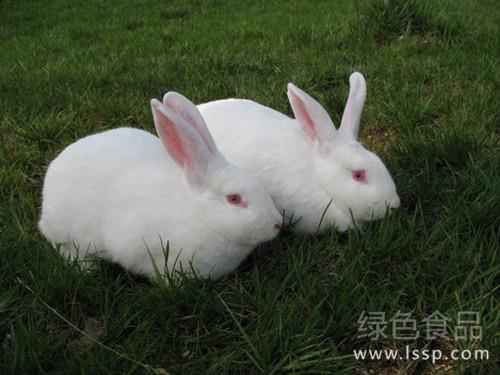
How to prevent and treat rabbit mucoid enteritis? Be on alert for abdominal distension, drooling, and mucus in the feces
Prevention and treatment methods for rabbit mucoid enteritis with abdominal distension, drooling, and mucus in the feces
-
What are the emergency rescue methods for frozen kits (baby rabbits)?
Causes of kits freezing: one is that the due date was not recorded properly or the doe kindled early for some reason, and the kindling box was not put in place in advance; another cause is that the doe's maternal instinct is weak, and she kindled outside the box; a further cause is that after nursing, when the doe jumps out of the kindling box, individual kits that are not getting enough milk clamp onto the teat and will not let go, so they are dragged out and become frostbitten because the weather is relatively cold. Regardless of the cause, a frostbitten kit must not be left too long; if its heart is still beating, emergency measures will generally succeed. The methods are as follows: 1. Immerse the kit
-
Correct Technical Methods for Feeding Rabbits Vegetables
Vegetables have a water content of about 85%, low crude fiber content, and good palatability, so rabbits tend to overeat them. Feeding vegetable leaves to young rabbits under 90 days of age will cause diarrhea in just a few days. If rabbits develop diarrhea after eating vegetables, stop feeding vegetables, increase the feeding of green hay and dry leaves, and mix 2% charcoal powder or 2% medicinal charcoal into the mixed feed or compound feed for treatment. When vegetables are grown in soil heavily fertilized with nitrogen, treated with herbicides, or affected by pests, drought, or insufficient sunlight and turn red, their nitrate content increases. Rabbits overeat vegetable leaves and take in more
-
Why Do Rabbits Eat Their Own Soft Droppings?
During the raising of domestic rabbits, we can see that the hard fecal pellets they pass are formed through a second round of digestion. Domestic rabbits eat grass and feed during the day, and at night or before dawn they pass soft droppings, and as soon as the soft droppings are passed, the rabbit immediately eats them. Through this second round of digestion and absorption, only the residue is formed into hard fecal pellets and passed out of the body. When domestic rabbits eat the soft droppings they have passed at night, it is not coprophagia caused by a lack of some nutrient in their bodies, but a normal physiological phenomenon. This instinct of domestic rabbits has two major benefits: first, it can keep the rabbit hutch,
-
Symptoms and Prevention and Treatment Methods of Rabbit Mange
Rabbit mange, also known as rabbit acariasis, is an external parasitic disease caused by sarcoptic mites or psoroptic mites that parasitize the surface of rabbits. It has a wide range of invasion, a high incidence rate, cross-infection, and is relatively difficult to control. The disease is highly contagious. If not treated in time, sick rabbits may die due to gradual emaciation and weakness, making the harm very serious. Prevention and treatment methods: Do not buy sick rabbits with ear mite mange, and do not breed using rabbits with mange. Keep cages and housing dry, and frequently disinfect rabbit cages with a flame. Every quarter, use 5% dicofol and 2% trichlorfon aqueous
-
What are the treatment methods for heatstroke in rabbits?
① Plant vines around the rabbit hutch to provide shade, splash cool water on the ground at noon to lower the temperature, give the rabbits lightly salted water to drink over the long term, and let them rest fully. ② When summer arrives, shear wool rabbits once, and try to stop both male and female rabbits from breeding. ③ If a rabbit is found with heatstroke, immediately place it in a cool, well-ventilated spot, provide 1% saline, and at the same time apply a cold compress to its head or bleed it from the ear vein, then administer 3 drops of Shidishui. ④ Put garlic juice in its nose, or apply cooling oil to its temples, or soak a brick in cool water and let the rabbit lie on it to cool down.
-
What are the prevention and treatment methods for rabbit hemorrhagic septicemia?
The pathogen of rabbit "hemorrhagic septicemia" belongs to Pasteurella multocida. When the external environment changes, or feeding and management are poor, the rabbit's resistance weakens, and the Pasteurella on the respiratory tract mucosa seizes the opportunity to become active and cause disease. The body tissues suffer hemorrhagic septicemia, hence the name "hemorrhagic septicemia" disease, abbreviated as "hemorrhagic septicemia." (1) Symptoms 1. Acute type: the affected rabbit suddenly falls to the ground and dies, showing no clinical symptoms. But most diseased rabbits show: listlessness, cessation of eating, difficulty breathing, body temperature rising above 41°C, serous discharge flowing from the nasal cavity,
条件筛选