-

How to Identify a Sick Rabbit? Learn the Nine Observations to Easily Judge Rabbit Illness
Discovering sick rabbits and diagnosing rabbit diseases is the foundation for controlling the spread of disease. Whether a rabbit is healthy should be observed from the following aspects: Appearance: A healthy rabbit is full of energy, has smooth fur, moves nimbly, holds a proper posture, and grows quickly. Sick rabbits, however, are mostly listless or extremely excitable (such as with rabbit plague), have rough, messy fur (such as with chronic wasting diseases, nutritional deficiency disorders, etc.), move slowly, and have abnormal postures. For example, when suffering from pododermatitis and foot ringworm, the hind limbs dare not touch the ground; with "splay legs" and "O-shaped legs," they cannot stand normally; with pneumonia, breathing is difficult; with wry neck, the head and eyes are tilted and the rabbit rolls over.
-
How to prevent and treat ear mange in rabbits? Practical advice is here
Rabbits in breeders' homes showed symptoms such as restlessness and scratching their ears. After follow-up investigation, they were diagnosed with ear mange. Some prevention and treatment suggestions for this disease are now proposed for reference. Affected rabbits mainly show unbearable pain and itching in the ear area, often constantly scratching with their forelimbs and shaking their heads, while also showing symptoms such as lethargy, restlessness, reduced appetite or refusal to eat, and weight loss. Physical signs include redness and swelling of the ear skin, scaling and hair loss, with the affected area gradually expanding, inflammation of the external ear canal, discharge, scabbing, and thickening of the skin. Because the rabbit keeps scratching, it often causes skin infection, making the injury worse and leading to
-
Detailed Explanation of Prevention and Treatment Methods for Common Diseases in Large-Scale Rabbit Farms
A large-scale rabbit farm mainly follows the immunization program, injecting vaccinations against three diseases: rabbit hemorrhagic disease, pasteurellosis, and clostridial disease. Secondly, prepare complete nutritional pelleted feed according to the nutritional needs of rabbits; feeding moldy feed is prohibited. As long as the feed is stabilized on a rabbit farm, the rabbit herd will stabilize. Rabbit diseases are fewer compared to chicken and pig diseases. However, rabbits are delicate animals with poor resistance; if a rabbit falls ill, it is very difficult to cure. For example, if a pig has diarrhea for 2 to 3 days it will not die, but if a rabbit has diarrhea for 2 to 3 hours it will die. Therefore, it is particularly important for rabbit farms to carry out epidemic prevention and hygiene, and to do a good job in feeding and management.
-
How to manage a rabbit farm? Keep these 4 key points in mind
1. Vigorously tackle disease prevention and control: In addition to controlling infectious diseases through preventive injections, coccidiosis in particular, which occurs mostly in spring, has a very high mortality rate and poses a great threat to rabbit farms. We should persist in combining prevention and treatment, with prevention as the priority. Veterinary drugs such as Qiu Ke can be mixed into the feed, and the whole farm can be sprayed once every 10 days with Baidusha, which can control the occurrence of coccidiosis. 2. Do a good job in rabbit breeding: Does have a short reproductive cycle and a high kindling rate, and breeding is highly technical and meticulous work. Timely mating and regular breeding should be carried out to improve the survival rate of young rabbits. 3. Seed
-
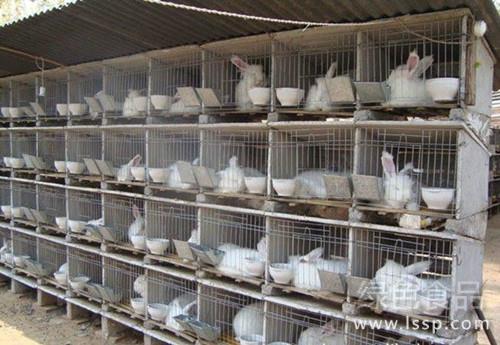
Seven key elements of fattening domestic rabbits, which can effectively improve meat quality and increase output
Fattening can improve meat quality and increase output: the seven key elements of fattening domestic rabbits
-
Sulfur Liniment Is Effective in Treating Rabbit Mange
Rabbit mange is a common and frequently occurring disease. It is an ectoparasitic disease caused by the rabbit itch mite (Sarcoptes scabiei var. cuniculi) parasitizing the skin of domestic rabbits, and it is highly contagious. If feeding and management are poor, it is easily overlooked, and it tends to break out during the rainy seasons of winter and spring, causing significant economic losses. In previous years, the author treated it with turpentine, camphor oil, 2% trichlorfon and other drugs. Although somewhat effective, multiple treatments were needed for a cure, and there were certain side effects. In recent years, by consulting elderly folk traditional Chinese veterinary practitioners and through repeated practice, the author has used compound sulfur to treat rabbit mange, with very good results.
-
Belgian Rabbit (also known as the Giant Grey Rabbit, Flemish Giant)
Breed characteristics: This breed is a relatively old large meat breed. It originated from the wild European rabbit in Belgium and was later improved and developed in England. Its body shape and appearance closely resemble the wild hare, with coat color in dark red with yellowish-brown or sesame (agouti) shades, a large body, and long body and limbs. The eyes are dark brown, the ears are large, long, and erect, with bright black fur edging along the ear rims. The coat texture is tough. Adult weight is 5-6 kg, with a maximum of up to 9 kg. During the kit and young rabbit stage, growth and development are fast; at 6 weeks of age, weight can reach 1.2-1.3 kg, and at 3 months of age, weight can reach 2.8-3.
-
Why do rabbits eat their own soft droppings?
In the process of raising domestic rabbits, we see that the hard fecal pellets they excrete are formed through a second round of digestion. Domestic rabbits eat grass and feed during the day, and excrete soft droppings at night or before dawn, and as soon as the soft droppings are excreted, they immediately eat them, and only through the second round of digestion and absorption are the residues formed into hard fecal pellets and excreted from the body. When domestic rabbits eat the soft droppings they excrete at night, it is not coprophagia caused by a lack of some nutrient in their body, but a normal physiological phenomenon. This instinct of domestic rabbits has two major benefits: first, it can keep the rabbit hutch and rabbit farm
-
Feeding and Management Methods for Keeping Caged Rabbits Safe Through the Summer
Heat dissipation and temperature control: Plant some vine-type plants such as melons, beans, grapes, and pumpkins around the rabbit hutch to prevent direct sunlight, and you can also apply a layer of lime slurry to the inner and outer walls of the rabbit hutch so that direct sunlight does not reach the rabbit cages; open-air rabbit hutches should have a shade canopy set up, with doors and windows opened to allow air convection; for wool rabbits, the wool should be cut short along with the hair on the head and face, and the rabbit cages should not be too crowded; when the room temperature exceeds 30°C, sprinkle some cool water every 2-3 hours, or use a new brick, soak it in cool water for several minutes, and once it has absorbed enough water (no longer bubbling), place it in the rabbit cage,
-
Special attention must be paid to preventing coccidiosis when raising rabbits in summer
Rabbit coccidiosis is one of the most common and most harmful diseases of domestic rabbits. Rabbit coccidia are single-celled protozoa that parasitize the liver, bile duct epithelial cells, and intestinal epithelial cells of rabbits. When coccidia parasitize the body, the rabbit becomes emaciated, anemic, has rough fur, and its development stalls, ultimately leading to death. This disease has no obvious seasonality and can infect and cause illness throughout the year, but it occurs more frequently in the hot and humid seasons of summer and autumn, and its distribution and prevalence are extremely widespread. To prevent coccidiosis: 1. Maintain the sanitation of the rabbit hutch, frequently disinfect the cages and
条件筛选