-

Key Technical Points and Management Methods for Raising Hyplus Rabbits
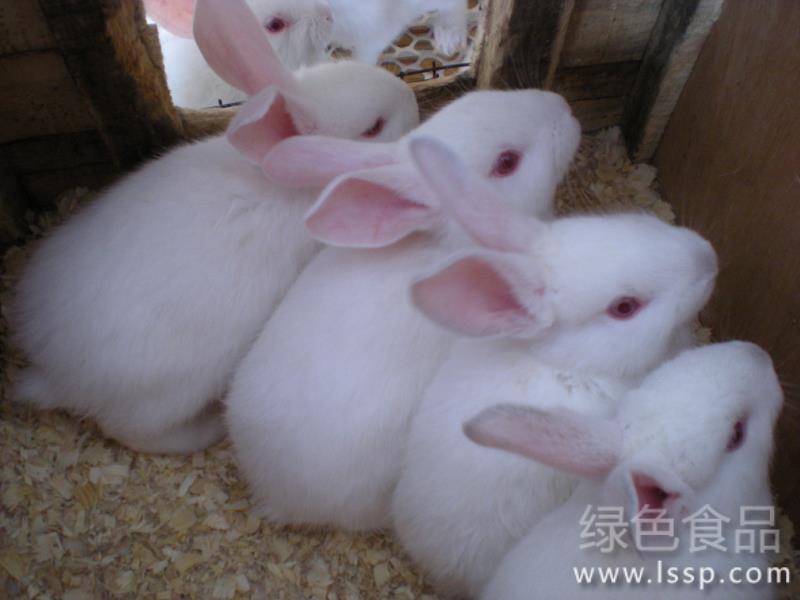
The Hyplus composite strain meat rabbit is a hybrid breed developed by the French company Euro Rabbit in the late 1970s. It was bred from nine original breeds through different crossbreeding combinations and selection trials. One of the most notable characteristics of this breed is its high meat yield, reaching up to 59%, which is the highest among current meat rabbit breeds. The meat is tender, and adult commercial rabbits weigh an average of 4.5 kg. After decades of breeding, it has become one of the main breeds in the current meat rabbit market. Yuncheng City was among the earlier areas in our province to develop it, and Hyplus rabbit raising is currently developing well. Housing
-
How to raise rabbits well in winter? Good feeding management is key
Keeping warm: In a low-temperature environment, rabbits lose a lot of heat and grow slowly, which affects their development and reproduction. Therefore, the rabbit hutch should be well maintained, windows sealed tightly, and cracks plugged to keep the hutch warm. Supplementary greens: Feeding green, juicy feed in winter can enhance rabbits' appetite and promote their growth, development and reproduction. Commonly used green, juicy feeds include cabbage, radish, bean sprouts, etc., but the daily feeding amount should not be too large, otherwise it easily causes diarrhea in rabbits. Add night grass: Rabbits have nocturnal habits. In winter, the days are short and the nights are long, so night grass should be added. At the same time, increase
-
Angora rabbits cannot tolerate high summer temperatures; how can summer management be done well?
Summer heat is unsuitable for Angora rabbits; how can summer management of Angora rabbits be done well
-
How to prevent and treat rabbit ear mange? A comprehensive introduction to practical methods
Symptoms: Sick rabbits have reduced appetite, gradually lose weight, constantly shake their heads, scratch their ears with their feet, and are restless and agitated. Inside the external ear canal there is dry yellow crust, which fills the entire ear. A few rabbits show head tilt, and finally develop convulsions and die. Diagnosis: Based on the symptoms, a diagnosis of rabbit ear mange can be confirmed. Prevention and treatment measures: 1. Treatment: ① Isolate and treat sick rabbits promptly when found, and strictly disinfect cages and equipment by spraying with 1-2% trichlorfon solution. ② Use Chongkexing liniment to apply inside the ear canal, every
-
Symptoms and Prevention and Treatment Methods of Rabbit Rotavirus Disease
It is a digestive tract infectious disease of young rabbits caused by rotavirus and characterized by severe diarrhea. It occurs mostly in 2-6 week old rabbits, with the highest morbidity and mortality in 4-6 week old rabbits, while adult rabbits are mostly subclinically infected. Symptoms: The incubation period is 1-3 days, with elevated body temperature, lethargy, severe diarrhea, semi-liquid or watery thin feces, brown, grayish white or light green and accompanied by mucus or blood, dehydration and emaciation, and death in 2-4 days. Lesions: Diffuse hemorrhage of the small and large intestinal mucosa, the intestinal mucosa sloughs easily, and the contents are thin and gray
-
There is more to feeding rabbits than meets the eye: do these five checks for scientific feeding
First, check the rabbit's size. An adult rabbit weighing about 3.5 kg needs 150-200 g of feed per day; a young rabbit weighing about 1.75 kg needs 100-150 g of feed per day. The feed should be of a moisture level that it forms a ball when gently squeezed and falls apart when the hand is released. Second, check whether the rabbit is fat or thin. For a fat rabbit, appropriately reduce the amount of concentrate feed and increase green feed or roughage; for a thin rabbit, supplement nutrition and feed more concentrate, and you can also feed some soaked soybeans, or mash bean dregs, mix them with boiling water, and stir them into the feed to give to the rabbit. Third, check whether the droppings are dry or wet. If the rabbit's drop
-
Symptoms and Prevention and Treatment Methods of Rabbit Treponematosis
Pathogen Rabbit Treponema is a slender spiral-shaped microorganism, Gram-negative, but stains poorly. Fixing smears of exudate or lymph from the affected area and staining with Giemsa gives good results. Tissue sections can be stained using the Warthin method. Dark-field microscopy can clearly observe the morphology and movement of Treponema, thus allowing a definitive diagnosis of the disease. Epidemic characteristics This disease occurs only in domestic rabbits and wild rabbits, and the pathogen mainly exists in the tissues of the affected area. Contaminated bedding, equipment, and feed are the media of transmission. It is mainly transmitted through the genital tract during mating, so it is mostly seen in adult rabbits, and very rarely in young rabbits. The incidence rate in breeding-age female rabbits is higher than in male rabbits, and the incidence rate in free-range rabbits is higher than in caged rabbits. When this disease spreads within a rabbit population, the incidence rate is high, but almost none die.
-
Silkworm droppings work well as rabbit feed, and rabbit farmers should give them a try
Silkworm droppings have high nutritional value, with a crude protein content of 15.4%, second only to wheat bran and higher than rice bran and green grass, making them an excellent feed for livestock and poultry. Feeding silkworm droppings to livestock and poultry often produces very good results. 1. Feeding silkworm droppings to pigs can save large amounts of concentrated feed; pigs gain weight quickly per unit of time and have a high marketable rate. After sows eat silkworm droppings, milk secretion increases. 2. Feeding silkworm droppings to sheep increases the amount of milk secreted and yields more wool; sheep wool length can reach more than 14 cm. 3. Feeding silkworm droppings to cattle can make
-
There's a right way to feed rabbits: keep these three dos and three don'ts in mind
Feed a complete mixed ration. The nutrient composition of a rabbit's daily ration is: 10% crude protein and 10% crude fiber, 5% fat, 2800 kcal of digestible energy per kilogram of ration, and 10% amino acids. If there is no way to feed a complete mixed feed, appropriately add concentrated feeds such as soybeans, soybean cake, wheat bran and corn, along with succulent feeds such as carrots. Feed heavily at night. Rabbits have a strong tendency to eat at night, and nighttime intake can account for more than 75% of their total daily intake. Therefore, provide rabbits with enough feed and drinking water at night. Change feed gradually. When one kind of feed has been fed for a long time, the rabbit has
-
Diagnosis and Treatment Methods for Cold Medicine Poisoning in Rabbits
In October 2005, 120 young rabbits raised by Liu in Fangzheng County, Heilongjiang Province, developed symptoms similar to the common cold, including runny noses and sneezing, in most of them due to the influence of a cold wave. The rabbit owner ground up "Ganmaotong" (a human medication produced by Zhengzhou Kangli Pharmaceutical Co., Ltd.) at a dose of 1 tablet per 2 young rabbits and mixed it into the feed. The rabbits were fed at 9 AM, and by 10 PM, 55% of the young rabbits showed abnormalities; by the next morning, 7 had died. The owner then came to my clinic for diagnosis and treatment, during which 8 more died successively. After a systematic examination, the diagnosis was "Ganmaotong" poisoning. Because
条件筛选