-
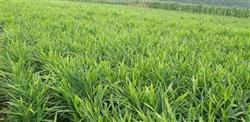
Ginger Cultivation Techniques: How to Fertilize Large Ginger Properly?
How to fertilize properly when growing large ginger? What other micronutrients does ginger need? We would also like experienced readers to share their advice. According to the summary of several readers, producing 1000 kg of fresh ginger requires roughly 6.3 kg of nitrogen, 1.3 kg of phosphorus and 11.2 kg of potassium. It is said that fertilization is the primary method for increasing ginger yields, so Zhongdi Network has compiled the ginger...
-
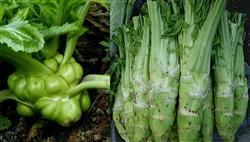
How to fertilize stem mustard properly? Detailed planting techniques
How to fertilize stem mustard properly? Is there anything to watch out for? Experienced netizens, please help explain the method. Stem mustard (zha cai, Sichuan pickled mustard tuber) is a very good crop for winter agricultural production, but in production it has been found that once farmers transplant it, if they do not pay attention to later topdressing, it leads to low yields. Generally speaking, producing 1000...
-
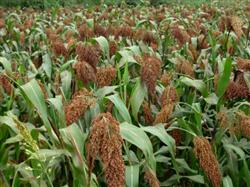
How to fertilize sorghum properly for planting? Detailed methods and techniques
How to fertilize sorghum properly for planting? Please allow me to explain. Sorghum has wide adaptability to soil and strong nutrient uptake capacity. When planted on sandy loam rich in organic matter and with relatively high fertility, it is relatively easy to obtain high yields. On lean and barren dry land lacking phosphorus and low in potassium, fertilizer must be added to obtain a good harvest. During the seedling stage, sorghum plants are small and do not need much fertilizer...
-
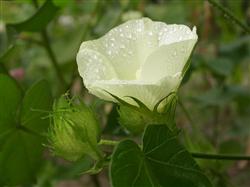
How to apply cotton bud fertilizer properly? Detailed explanation of fertilization methods and techniques
How to apply cotton bud fertilizer properly? Please give an introduction. After cotton squaring, it enters a period of simultaneous vegetative growth and reproductive growth, while still being dominated by vegetative growth. During this period, a framework must be built for high cotton yields. The supply of nutrients must not only meet the needs of the cotton plant's vegetative growth, but also prevent excessive or too heavy fertilization, which can cause cotton...
-

How to harvest lotus root properly? Master the correct harvesting method
How is lotus root best harvested? Please give guidance. Harvesting lotus root too early affects yield, while harvesting too late lowers quality. Therefore, the harvest time should be determined according to how early or late the plants develop and the intended use. ① Huaxiang lotus root. The newly formed lotus root is called huaxiang lotus root, also known as tender lotus root. This kind of lotus root has a very low starch content and features a fresh, tender, sweet and crisp flavor. When the lower-layer leaves of huaxiang lotus root are yellow-green, the middle-layer leaves are dark green, the upper leaves have all taken shape, and no new leaves appear in the whole plant, it can be harvested. Early September is the best time, but harvesting at this time affects yield, so only a small amount should be harvested. ② Mid-Autumn lotus root. Mid-Autumn lotus root can be harvested around the Mid-Autumn Festival, when the lower-layer leaves in the whole field have withered, the middle-layer leaves are yellow, and the upper-layer leaves are yellow-green. Harvesting Mid-Autumn lotus root is mainly to meet people's needs for the Mid-Autumn Festival and National Day. ③ Red-rust lotus root and white-rust lotus root. Red-rust lotus root is generally harvested in mid-October, named because the surface of the lotus root has a rust color at this time. At this stage the lotus root contains more starch and can be used for cooked food or processed into lotus root powder. By the end of October, the redness of the lotus root fades and turns white, and it is called white-rust lotus root. At this time the lotus root is rich in starch, suitable for processing and eating, and can also be stored until after the beginning of spring the following year.
-

How to fertilize sunflowers properly? A detailed guide to scientific fertilization methods
How to fertilize sunflowers properly? Please give guidance. When growing sunflowers, you can refer to the following methods for fertilization: 1. Nutrient requirements of sunflowers. Sunflowers are a crop with relatively high nutrient demands. The period from flower head formation to flowering is the peak period of nutrient demand for sunflowers. From emergence to flower head formation, phosphorus demand is relatively high; from flower head formation to...
-
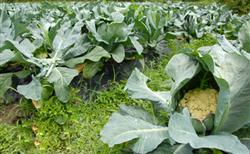
How to Fertilize Cauliflower Properly? A Detailed Guide to Scientific Fertilization Methods
How to fertilize cauliflower properly? Please give guidance. Cauliflower, also known as cauliflower (Brassica oleracea var. botrytis), has an edible portion that is a malformed flower head, and fertilization techniques differ depending on the variety. 1. Given that early-maturing varieties have a short growing season, the base fertilizer should be a quick-acting nitrogen fertilizer, applying about 8 kg of urea and about 8 kg of superphosphate per mu; for mid- and late-maturing varieties with a long growing season, the base fertilizer should be 1500 kg of barnyard manure, applied into the soil when tilling and preparing the land, followed by transplanting the seedlings. 2. Topdressing. In the early growth stage of cauliflower, frequently apply light applications of quick-acting chemical fertilizer as a 2% to 4% ammonium sulfate aqueous solution, about 700 kg per mu each time, or 10% to 30% human feces and urine, about 700 kg each time, applied around the roots. When the flower head begins to form, heavy topdressing should be applied to promote leaf and flower head growth. Apply about 800 kg of 40% human feces and urine per mu, or 10 kg of urea, about 20 kg of superphosphate, and about 8 kg of potassium sulfate, watered on.
-
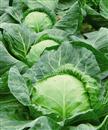
How to top-dress head cabbage properly? Detailed explanation of the correct method
How should you top-dress head cabbage when growing it? Please explain the method. Head cabbage's fertilizer requirements are mainly nitrogen and potassium, with a suitable amount of phosphate fertilizer. Throughout the entire growth process, the combined ratio of the three major elements N:P:K is 3:1:4. Analyzing by growth stage, the seedling stage needs more chlorine, reaching a peak at the rosette stage. By...
-
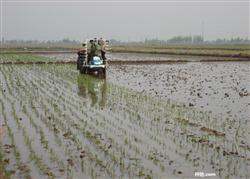
How to transplant rice seedlings properly? A detailed explanation of the key technical points
How to transplant rice seedlings well? Please guide: according to climate characteristics, the following work should be done well in rice transplanting techniques: 1. Transplant early at the right time, speed up progress, and expand the transplanting area. When the daily average temperature steadily passes 13°C and the field water temperature reaches 18°C, transplanting can begin. This year transplanting started on May 8 and [ended] before May 28...
-
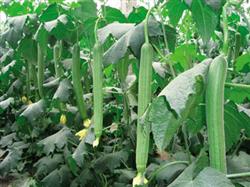
How to fertilize loofah properly? A detailed guide to the correct fertilizing methods
How should loofah be fertilized? Please help explain. For fertilizing loofah, you can refer to the following methods: 1. Growth characteristics: Loofah is a herbaceous plant of the Cucurbitaceae family. It is cultivated in Guangdong, Guangxi, Hainan and other places. Loofah has a strong root system, a long growing period, high yield, and a large demand for water and nutrients. Therefore, applying sufficient base fertilizer and frequently applying topdressing is...
条件筛选