How can deworming be done properly during meat donkey farming?
As the market for meat donkeys expands, the value of meat donkey farming has also increased, and more and more people are raising donkeys. In the farming process, parasites have always been the number one killer of meat donkey health. If deworming work is not done properly, it is extremely unfavorable to the growth of meat donkeys and affects farming profits. So how should deworming be done in meat donkey farming? Let's find out together.
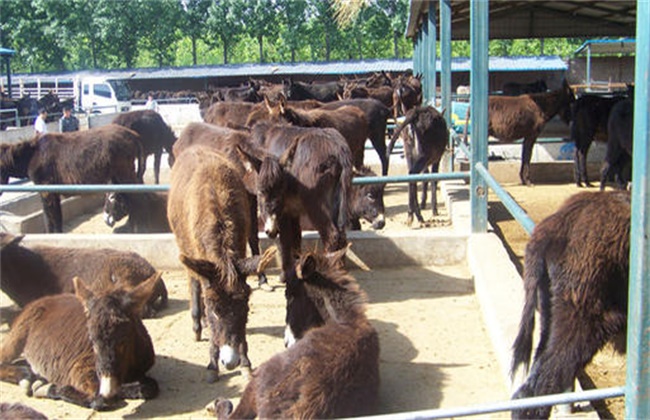
1. Formulate a deworming plan
For deworming, the first thing is to make a detailed deworming plan, so that problems can be prevented before they occur. Generally speaking, meat donkeys can be dewormed once each in spring and autumn. If they are changed from grazing to pen feeding, or if they are newly introduced meat donkeys, deworming should be strengthened 1-2 times. Common parasites in meat donkeys include sarcoptic mites, pinworms, filarial worms, and so on. Corresponding medicines should be prepared, and at the same time, dosage standards must be strictly observed, because too low or too high a standard is unfavorable to the deworming effect and may also cause side effects.
2. Avoid drug poisoning
Deworming drugs on the market are still quite toxic, and improper use may very likely cause poisoning in meat donkeys. Therefore, when carrying out large-scale deworming, a small group should first be used for a deworming trial, and large-scale deworming should be carried out only if there are no other symptoms. During deworming, markers should be made to avoid repeated deworming. In addition, drugs such as atropine and epinephrine should be prepared for accidental poisoning incidents, so as to detoxify in time.
3. Maintain good barn hygiene
Parasites and their eggs generally hide in meat donkey excrement and crevices, so keeping the donkey barn environment clean and hygienic is the best way to prevent parasites. Farmers should clean manure and other filth from the barn and transport it to a place far from the donkey barn for piling, decomposition, and sterilization. After fermentation and sterilization, it can also be used as fertilizer. In addition, the donkey barn should be disinfected regularly, and disinfection should try not to leave dead corners, so as not to affect the final disinfection effect.
4. Cut off transmission routes
Parasites are mainly transmitted through blood, cats, dogs, and other animals, so around the farm, animals such as cats and dogs should be kept as little as possible. At the same time, rodent control and mosquito and fly control should be done well, so as to cut off the transmission routes of parasites as much as possible.
The above is an introduction to how deworming should be done in meat donkey farming. We hope it can help you. To learn more related knowledge, please stay tuned to us.