-
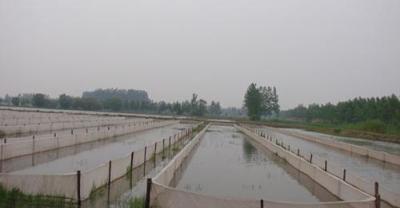
How to quickly identify successful conception in sows? Practical tips for novice farmers
If you can determine early that a sow has conceived, you can take corresponding measures and management to avoid accidents. If she is not pregnant,...
-

How to diagnose pests when growing vegetables on a balcony? Practical tips to teach you
Smart tips for growing vegetables on a balcony: learn how to diagnose pests
-

The Complete Guide to Potato Storage Methods: Many Practical Tips Worth Saving
Save This! Many Ways to Store Potatoes
-
Practical Tips for Cleverly Using Garlic in Fish Farming
I. Garlic Can Be Used as a Feed Additive for Fish (1) Fresh garlic. Take fresh garlic and make it into garlic paste, then mix it directly into the bait for feeding, or take 1%-5% fresh garlic and add it to the fish compound feed, crush it into powder with a grinder, mix evenly, and use directly. After peeling the garlic, grind it with an equal amount of cool boiled water into a slurry and filter it, then mix 3% of the filtrate into the feed to prevent feed mold.
-
How to formulate feed for pigs during lactation? Sharing practical formulation tips
Sows during lactation need large amounts of nutrients to support milk production. At peak lactation, the sow's milking capacity exceeds the nutrients she takes in through feed and the nutrients excreted in milk are greater, so the sow's body condition declines rapidly. Formulating high-quality, high-nutrient-density feed for lactating sows is the best way to resolve this contradiction. Feed Formula 1: Lactation Feed Formula 1 in Table 4-3 avoids as much as possible the use of bulky feeds such as alfalfa and rice hull bran. In the design of lactation feed formulas, unknown nutritional factors appear less important
-
How to Supplement Nutrition for Edible Fungi? A Full Analysis of Practical Tips
In the process of cultivating edible fungi, reasonably supplementing various nutrients is an effective measure to increase the yield of edible fungi, but improper supplementation can also backfire. Therefore, the following tips should be noted when supplementing nutrition for edible fungi. Pay attention to the supplementation method. The methods for supplementing nutrition for edible fungi include spraying, pouring, and soaking. The most commonly used method is to prepare a nutrient solution of a certain concentration and spray it on the mushroom bed and mushroom blocks while supplementing water. When spraying during the young bud stage, care should be taken to spray the nutrient solution on areas without mushrooms or near small young buds, and after spraying
-
Practical Tips for Making Money from Conventional Fish Farming
In recent years, the market price of conventional fish has kept falling, sometimes even approaching the cost price, and fish farmers can make a loss with the slightest carelessness. Can money still be made from farming conventional fish? With this question in mind, our reporter visited some of the more profitable large-scale fish farmers in the province, and based on a summary of their successful experience, here are 10 production recommendations. 1. Advocate pollution-free farming. With the introduction of the pollution-free agricultural product market access system, the production of pollution-free aquatic products will inevitably receive a high degree of attention. Whoever wants to remain invincible in the great tide of the future market economy
-
4 Practical Ventilation Tips for Mushroom Bags
Mushroom bag cultivation has low cost, high efficiency and is easy to manage, making it a major method of mushroom production. However, when directly tying the bag opening with string during bag cultivation, poor ventilation occurs, affecting mycelial growth, causing contamination, and even leading to cultivation failure. Here are four ventilation tips: First, the ventilation plug method. Use wheat straw, cotton lint, sunflower stalks, corn cobs, etc. as materials, and tie them at both ends of the mushroom bag to make ventilation plugs. Note that wheat straw and sunflower stalks should be cut into 3 cm long segments; cotton lint should be folded into a cotton column with one flat end and one fuzzy end; corn cobs should be crushed to bean-sized pieces
-
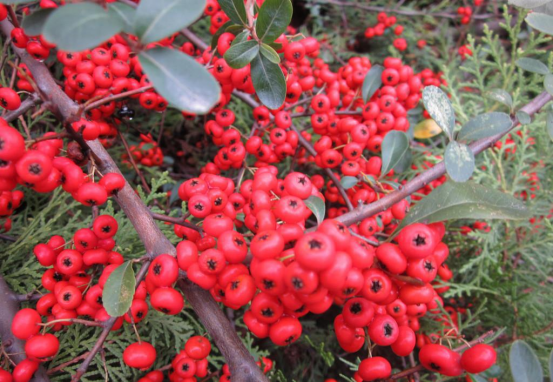
How to Grow a Firethorn Bonsai? Practical Care Tips Shared
1. Firethorn (Pyracantha) likes moisture and fertilizer, and prefers a climate with ample sunlight, good ventilation, and a warm, humid environment. Firethorn loves fertilizer, so during the growing season we should appropriately add cake fertilizer. Firethorn is cold-tolerant, with temperatures able to drop to 0°C-5°C or even to the roots. Firethorn has a well-developed root system, sprouts shoots quickly, grows rapidly, and tolerates pruning.
-

条件筛选