-
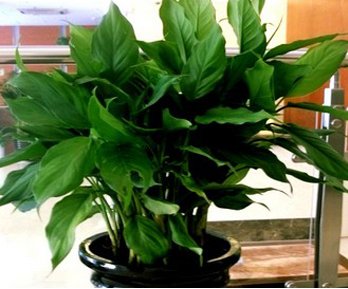
How to Divide and Overwinter Rohdea japonica? A Complete Guide to Care Techniques
When it comes to Rohdea japonica, many people love to grow it, and it looks the same all year round. Let's take a look at how to divide Rohdea japonica and how to overwinter it: How to divide Rohdea japonica: 1. Prepare the potting soil. The potting soil suitable for Rohdea japonica must be loose and breathable.
-

Detailed Explanation of Key Management Techniques for Angelica sinensis During the Overwintering Period
For directly sown Angelica sinensis (Chinese angelica), in combination with topdressing before winter, cover the seedlings with manure-enriched soil or add a layer of fine soil about 1 cm thick over the seedlings to protect them from frost damage; for seedling-raised and transplanted Angelica sinensis, seedling storage work must be done well in winter; for seed-bearing Angelica sinensis, in order to improve seed yield and quality, before harvest, robust and uniform seedlings grown on high mountains or mid-mountain slopes must be selected for seed production. Afterwards, cut off the aboveground parts of the seed-bearing plants, remove all weeds, let them overwinter naturally, and keep watch frequently to prevent livestock from entering and trampling them, which would cause gaps in the seedlings. In early spring of the following year, if weeds are seen growing, they can be pulled out by hand; at this time, the root system covers the soil surface, so hoeing for weed control and fertilization must not be used, to avoid cutting the root system and hindering plant growth.
-
Key Techniques for Overwintering Management of Panax notoginseng Seedling Fields
Panax notoginseng is a perennial herbaceous plant. Once winter arrives, its above-ground parts all die back. At this time, the above-ground parts should be cut off 3 cm above the ground, and all dead branches, fallen leaves, diseased plants and weeds in the field should be cleared away and burned outside the field. The soil should be thoroughly sprayed and disinfected with 0.2-0.3 degrees Baume lime-sulfur mixture, and then a layer of decomposed farmyard manure should be applied at about 1500 kg per mu to keep warm and prevent freezing. If exposed roots are found, soil should be banked up when the winter fertilizer is applied, and finally a layer of grass should be spread on top to ensure the buds overwinter safely.
-
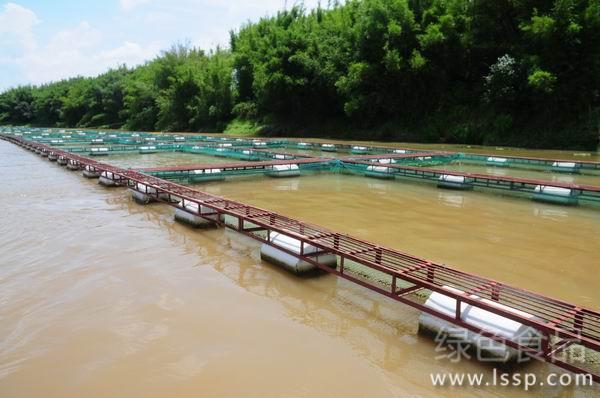
What are the key points for production management during the overwintering stage of freshwater aquaculture
Key points for production management during the overwintering stage of freshwater aquaculture
-
How to store Gastrodia elata seeds for safe overwintering
The seeds can be stored in a pit dug inside a cellar. First dig a pit in the cellar; the size of the pit depends on the amount of seeds, and the pit depth is 45-50 cm. The vegetative propagation stems should be removed from the seeds, and they should be air-dried for 1-2 days before being put into the cellar. Sand with a moisture content of 20% should be chosen as the filling material. Sand that is too wet or too dry is harmful to the seeds. After the pit is dug, place a layer (3 cm thick) of sand with grains ranging in size from millet to sorghum at the bottom, lay out one layer of seeds, and arrange 4-5 layers of seeds in total, with the topmost layer covered by 5-6 cm of sand. Each layer of seeds must be laid out singly, with no contact between
-
Overwintering management of Panax notoginseng, Coptis chinensis, Morinda officinalis, and Ligusticum chuanxiong
Panax notoginseng: In winter, when the leaves turn yellow and wither, cut off the above-ground stems and leaves about 3 cm above the ground, collect the dead stems and leaves, remove weeds and diseased plant residues from inside and outside the garden, and burn them all outside the garden to clean the field. Then spray the bed surface with 1:1:200 Bordeaux mixture or 0.2-0.3 degrees Baume lime-sulfur mixture to fully disinfect the soil. If exposed roots are found, add appropriate soil covering. In addition, after cleaning the garden in November, apply 2000 kg of decomposed mixed fertilizer per mu at the plant roots to protect the buds through the winter safely. Before the seedlings emerge
-
Key technical points for winter management of tea plants to help tea gardens overwinter safely
1. Carry out the garden-closing work by spraying the whole tea plant with 0.4-0.5 degrees Baumé lime-sulfur mixture. 2. Apply 150 kg of decomposed cake fertilizer in holes or furrows, or 100 kg of special compound fertilizer for tea, and finish applying the base fertilizer by November. 3. In conjunction with fertilization, clear weeds inside and around the garden to reduce overwintering habitats for pests. 4. For expanding tea gardens, select good varieties, deeply plow furrows in the tea garden, apply base fertilizer deeply, adopt double-row single-plant planting, low-hole cultivation, and low-position pruning, and strive to complete planting in this winter and next spring.
-
How to safely overwinter shiitake mushrooms through summer? These management points must be mastered
The quality of summer management for shiitake mushrooms directly affects yield and profitability. Doing a good job of summer management is a key step in shiitake mushroom production, and two methods can be used: indoor and outdoor. I. Indoor spawn running for summer survival (1) Minimize the number of shiitake bags indoors and the number of bag layers. Stack two bags in a cross pattern, with no more than 5 layers at most, and keep the spacing between stacks at more than 20 cm to facilitate ventilation and heat dissipation. (2) Build a shade canopy outside the window so that sunlight does not shine directly onto the window or indoors. (3) In hot weather, close doors and windows at 7 a.m. to prevent outside hot air from entering indoors, and in the evening
-
Control Recommendations for the Overwintering Generation of the Box Tree Pyralid Moth
The box tree pyralid moth (Glyphodes perspectalis) is one of the important leaf-eating pests of forestry plants in this district, mainly damaging Chinese box (Buxus sinica var. parvifolia) and Japanese box (Buxus bodinieri). Since early spring this year, the whole district has carried out 2-3 rounds of comprehensive control against this pest, effectively bringing the damage under control; however, since the damage period of this pest is long and can last until the end of October, continued follow-up monitoring of this pest is still needed. According to monitoring at two sites, the Anting Ginkgo Garden and the Fangtai Flowers and Plants Horticultural Farm, a moth peak appeared under the forecasting lamp in early to mid-September, with the highest moth numbers on September 7-9, averaging 22.3 moths per lamp per day
-
Feeding and management methods for autumn lambs to safely overwinter
Sheep estrus and mating occur mainly in spring and autumn, and the gestation period averages around 150 days, so spring and autumn are also the seasons when lambing is more concentrated. According to surveys, the overwintering survival rate of autumn lambs born in various places is significantly lower than that of spring lambs. The main reasons: 1. Environment. When autumn lambs overwinter, they are in the suckling period or weaning period. In winter, green fodder is scarce, forage quality is poor, ewes' milk is insufficient, and lambs are malnourished, weak in constitution, and poor in disease resistance. Moreover, the long dry and cold winter climate very easily causes respiratory infections in lambs, and many lambs die from pneumonia infection. Due to the cold climate
条件筛选