-

Angelica sinensis with shade net coverage: high yield increase and quality improvement benefits
The shade cultivation technique for Angelica sinensis starts from the three-leaf stage of its growth (that is, from mid-May to early August after summer begins, when temperatures are high and light is intense). A shade net with a 50% shading rate is timely placed over Angelica sinensis, providing a suitable micro-environment of moderate temperature, weak light, and moisture that mimics its original ecological growing conditions. By lowering temperature, increasing humidity, and reducing light, it reduces the early bolting rate of Angelica sinensis in dry flatland cultivation to about 30%; moreover, shade cultivation of Angelica sinensis also helps prevent and reduce pest and disease damage, thus improving the quality of Angelica sinensis.
-
B ag-cultivated shiitake mushroom off-season soil-covering cultivation technique
B ag-cultivated shiitake mushroom cultivation has always adopted the spring-planting, autumn-and-winter-mushroom model, with the fruiting period mainly concentrated from October to March of the following year, while April to September is a blank period for mushroom production. The total amount of fresh mushrooms cannot meet the growing consumer demand at home and abroad. In recent years, Zhukou Town, Qingyuan County, has explored a set of new techniques for off-season soil-covering cultivation of bag-cultivated shiitake mushrooms, achieving very good economic benefits and being very suitable for mushroom farmers' large-scale production. The technique is introduced below for reference by colleagues only: 1 Advantages The advantages of off-season soil-covering cultivation of shiitake mushrooms can be summarized in the following 5 aspects: 1.1 Year-round nature
-
Four things to note when harvesting rice, don't overlook these details
The following four points should be noted before and after rice harvest. 1. Drain early. Drain the water in the paddy field as much as possible; if necessary, dig ditches to drain the water in low-lying areas early and dry the field. 2. Harvest at proper maturity. For manual harvesting, do it when more than 95% of the rice husks in the field have turned yellow, the grains have hardened, and the rice grains are translucent. Mechanical harvesting can be a few days later. 3. Mind the method. Manual cutting and drying can increase the 1000-grain weight and raise yield, while the rice grain has good market quality and a high germination rate. When using a combine harvester, it is best
-
An overview of the distribution of wild resources and cultivation of Angelica sinensis
Angelica sinensis prefers a cool, humid climate. Its wild resources are found only in the remote high-mountain forests within Zhang County and Zhouqu in Gansu. Angelica sinensis is always a cultivated species, and it is suited to growing in cold, damp mountainous areas at altitudes above 2000 m. All commercial Angelica sinensis comes from cultivated plants, distributed across Gansu, Ningxia, Qinghai, Yunnan, Guizhou, Shaanxi, Hubei and other provinces. It is mainly produced in Min County, Tanchang, Weiyuan, Zhang County, and Wudu, Wen County, Zhuoni, Lin County and other places in Gansu, with a long history of cultivation. Normal annual output is around 10,000 tons, accounting for about
-
Key Techniques for Overwintering Management of Panax notoginseng Seedling Fields
Panax notoginseng is a perennial herbaceous plant. Once winter arrives, its above-ground parts all die back. At this time, the above-ground parts should be cut off 3 cm above the ground, and all dead branches, fallen leaves, diseased plants and weeds in the field should be cleared away and burned outside the field. The soil should be thoroughly sprayed and disinfected with 0.2-0.3 degrees Baume lime-sulfur mixture, and then a layer of decomposed farmyard manure should be applied at about 1500 kg per mu to keep warm and prevent freezing. If exposed roots are found, soil should be banked up when the winter fertilizer is applied, and finally a layer of grass should be spread on top to ensure the buds overwinter safely.
-
Peach Tree Post-Harvest Management Like This, Heavy Fruit Covering the Branches Next Year
After peaches are harvested, the remaining nutrients produced by their leaves are redirected to supply the branches and trunk, promoting branch thickening, tissue maturation, and the accumulation of nutrients, creating better conditions for flower bud differentiation the following year. If managed properly during this period, it can not only increase tree nutrition and improve the tree's resistance to adverse environments, but also play an important role in flowering and fruiting and tree growth the following year. Therefore, the following technical measures should be effectively implemented: 1. Reasonable fertilization After peaches are harvested, fruit-picking fertilizer should be applied promptly. Fertilization
-
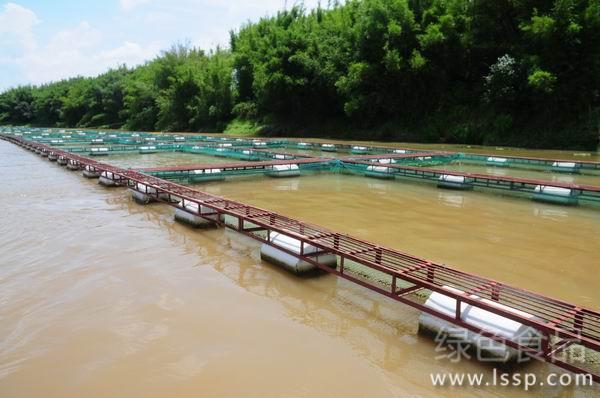
What are the key points for production management during the overwintering stage of freshwater aquaculture
Key points for production management during the overwintering stage of freshwater aquaculture
-
Cyanobacteria in mussel ponds tend to overproliferate in midsummer; pay attention to prevention and control
Summer has high water temperatures and strong light, making it a season of high cyanobacteria incidence. Once cyanobacteria proliferate heavily on the water surface, the water quality becomes lean; after pearl mussels ingest cyanobacteria, it is not easy for them to digest (cyanobacteria have thick cell walls), and cyanobacteria adhere to the mussels' gills, affecting respiration. At the same time, after cyanobacteria die, protein decomposition produces hydroxylamine, which combines with toxic substances such as hydrogen sulfide in the water and can poison the pearl-culturing mussels to death. Therefore, in summer, the excessive proliferation of cyanobacteria must be strictly controlled, with targeted prevention and treatment. 1. Summer temperatures are high, and at the bottom
-
Cultivation Techniques for Sweet Clover and Methods for Feeding It to Rabbits
Sweet clover (scented sweet clover, pennyroyal-like melilot) is an annual or biennial herbaceous plant of the genus Melilotus in the Fabaceae family. This herb has relatively high nutritional value, a fine and tender texture, and is green and succulent, making it a good feed for livestock. 1. Site Selection and Land Preparation 1. Site selection: Choose a site with few weeds from the previous crop, preferably a plot that has been plowed year after year. 2. Land preparation: Careful land preparation is required, with 1500 kg of organic base fertilizer applied per mu and 20 kg of superphosphate as seed fertilizer. 2. Sowing and Management 1. Sowing: Use 1.5-2.5
-
Dianthus acicularis is an excellent drought-tolerant, water-saving groundcover plant
Most parts of northern China are resource-based severely water-scarce regions, with per capita water resources of less than 300 cubic meters, only 1/8 of the national average, and far below the international water-scarcity threshold of 1,000 cubic meters per capita. With the vigorous development of landscaping, water consumption for greening is growing ever larger, and this contradiction with the scarce water resources of northern China is becoming increasingly prominent. Dianthus acicularis has good drought tolerance and is an excellent water-saving plant material in landscaping. According to calculations, Dianthus acicularis consumes only 0.
条件筛选