-
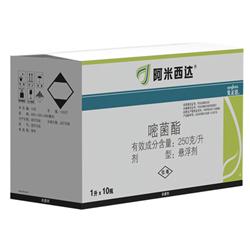
What kind of pesticide is Amistar? A comprehensive guide in one article
What is another name for Amistar? How does the Amistar fungicide work? What are the characteristics of the Amistar fungicide? Which diseases can Amistar control? The following brief introduction from Gengzhongbang Planting Network is for readers' reference. Amistar is also called azoxystrobin, English common name: Azoxyst...
-
What are the three certificates for pesticides? A detailed explanation of their specific contents in one article
What are the three certificates for pesticides? Which three certificates are the three certificates for pesticides? The following simple introduction is provided by Gengzhongbang Planting Network for netizens' reference. The "three certificates" for pesticides refer to the pesticide production license or pesticide production approval document, pesticide standards, and pesticide registration certificate. The "three certificates" are issued on a product-by-product basis, that is, each pesticide product...
-
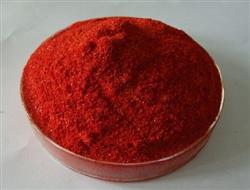
What are the effects of sodium nitrophenolate? A comprehensive analysis in one article
What are the effects of sodium nitrophenolate? How is sodium nitrophenolate used? We ask knowledgeable netizens to help explain. Sodium nitrophenolate is a powerful cell activator; after contact with plants it can quickly penetrate into the plant body, promote the flow of cell protoplasm, and improve cell vitality; but some netizens' understanding of sodium nitrophenolate is...
-
What types of herbicides are there? A detailed explanation of common types in one article
What are the common types of herbicides? What varieties are there under these types of herbicides? We ask knowledgeable readers to help explain. Herbicides can be classified by mode of action into systemic translocated herbicides and contact herbicides; if classified by action, they can be divided into selective herbicides and non-selective herbicides; Zhongdiwang has...
-
What are the effects of applying fungicides? Understanding the main functions of fungicides in one article
What are the effects of applying fungicides? What are the differences? We ask knowledgeable readers to help explain. The effects of applying fungicides can be classified according to the effect of the agent on disease control, and are broadly divided into three categories: protective, eradicant, and curative. Zhongdiwang has compiled the effects of the above three categories of fungicides, listed below for...
-
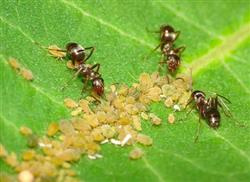
What are the methods for controlling aphids? Read this one article to understand the techniques
What are the methods for controlling aphids? Is there a netizen who can help explain? Zhongdiwang has compiled the methods for controlling aphids, and the following is a detailed list for netizens' reference. Method 1: Make reasonable use of aphids' natural enemies: There are many kinds of natural enemies of aphids, mainly the seven-spot ladybird, green lacewing, aphid hoverfly, flower bug and aphid braconid...
-
How effective is paraquat as a herbicide? Explained clearly in one article
How effective is paraquat? How should paraquat be used for good results? At the request of readers, Zhongdi Network has compiled the characteristics and usage methods of the herbicide paraquat, listed below for readers' reference. Characteristics of paraquat: 1. Kills anything green on contact - weeds and crops alike are wiped out. 2. Fast weed-killing speed...
-
What types of plant growth regulators are there? Understanding the classification in one article
What types of plant growth regulators are there? An introduction. Plant growth regulators refer to synthetic chemical substances with hormone activity. According to their growth effects on plants, they are divided into three major categories: plant growth promoters, plant growth retardants, and plant growth inhibitors. Plant growth promoters: mainly include...
-
What is the difference between glyphosate and glufosinate? Explained clearly in one article
What is the difference between glyphosate and glufosinate? Compared with glyphosate, glufosinate acts faster, and it can also control some weeds that have developed resistance to glyphosate. Glufosinate is a phosphinic acid non-selective contact herbicide and a glutamine synthetase inhibitor with partial systemic activity. After application...
-
What are plant growth regulators? Explained clearly in one article
What growth regulators are commonly used on flowers? Please advise. Plant growth-regulating substances are divided into plant hormones produced internally by plants and chemically synthesized substances with hormone-like activity. As long as a trace amount of such a substance is present, it can promote or inhibit the growth and development of plants, but excessive use can also cause...
条件筛选