What are the effects of sodium nitrophenolate? A comprehensive analysis in one article
What are the effects of sodium nitrophenolate? How is sodium nitrophenolate used? We ask knowledgeable netizens to help explain. Sodium nitrophenolate is a powerful cell activator; after contact with plants it can quickly penetrate into the plant body, promote the flow of cell protoplasm, and improve cell vitality; but some netizens' understanding of sodium nitrophenolate is...
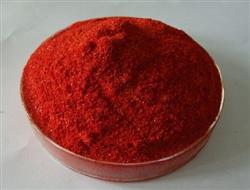 What are the effects of sodium nitrophenolate? How is sodium nitrophenolate used? We ask knowledgeable netizens to help explain
Sodium nitrophenolate is a powerful cell activator; after contact with plants it can quickly penetrate into the plant body, promote the flow of cell protoplasm, and improve cell vitality; but some netizens do not know sodium nitrophenolate very well, so Zhongdi Network has compiled the effects and usage methods of sodium nitrophenolate, listed in detail below for netizens' reference.
Classification of sodium nitrophenolate
1. Sodium o-nitrophenolate: the pure product is generally red needle-like crystals, easily soluble in water.
2. Sodium p-nitrophenolate: the pure product is generally odorless yellow leaf-like crystals, with a melting point of 113~114 degrees in the free acid state, and it is soluble in water only in the free acid state; it is easily soluble in organic solvents such as acetone, ether, ethanol, and chloroform.
3. Sodium 5-nitroguaiacolate: the pure product is odorless orange-red flake-like crystals, with a melting point of 105~106 degrees in the free acid state, and it is soluble in water only in the free acid state; it is easily soluble in organic solvents such as acetone, ether, ethanol, and chloroform.
Effects of sodium nitrophenolate:
Sodium nitrophenolate is a mononitrated guaiacol sodium salt plant cell revival agent; sodium nitrophenolate can quickly penetrate into the plant body, promote the flow of cell protoplasm, and has varying degrees of promoting effects on plant developmental stages such as rooting, growth, reproduction, and fruiting.
Functional characteristics of sodium nitrophenolate:
Characteristic 1.Sodium nitrophenolate can be widely applied to grain crops, cotton crops, oil crops, melons, fruits and vegetables, and many other crops as well as livestock and fishery. For plants, it can be applied at any period from sowing to harvest.
Characteristic 2.Adding just a little sodium nitrophenolate to pesticides and fertilizers can increase pesticide (fertilizer) efficacy by more than 40%, reduce the amount of pesticide and fertilizer used by 20%, and make the fertilizer (pesticide) effect even more remarkable.
Characteristic 3.After applying sodium nitrophenolate, grain crop seeds are plump and the 1000-grain weight increases; vegetable crop leaves are thick and the leaf color is dark green; solanaceous fruit crop flesh is full, nutrient content is high, and taste is good.
Characteristic 4.Sodium nitrophenolate can promote the flow of cell protoplasm, improve cell vitality, accelerate plant growth and development, enhance detoxification function, and improve crops' stress resistance such as disease resistance, resistance to deterioration, cold resistance, drought resistance, saline-alkali resistance, and lodging resistance.
Characteristic 5.After being absorbed by plants, sodium nitrophenolate can regulate the balance of endogenous hormones in the plant body such as gibberellins, cytokinins, auxins, abscisic acid, and ethylene, promote the disease-resistance metabolic process in the plant body, increase the activity of defense enzymes, and enhance resistance.
Usage methods of sodium nitrophenolate:
1. Use on rice: 1.8% sodium nitrophenolate aqueous solution can be used to soak seeds for 36~72 hours before rice sowing, or 5~7 days before rice transplanting, spray the seedlings with sodium nitrophenolate at a 6000-fold concentration. A 1000~2000-fold sodium nitrophenolate solution can also be sprayed once each at the young panicle formation stage and full heading stage of rice, and once each at the flowering panicle stage and before and after flowering.
2. Use on wheat: before wheat sowing, soak seeds with 1.8% sodium nitrophenolate aqueous solution for 12 hours; when wheat young panicles form and heads fully emerge, spray the leaves with a 3000-fold solution of 1.8% sodium nitrophenolate aqueous solution.
3. Use on fruit trees: after fruit trees sprout new buds, from 20 days before flowering to just before flowering, and after fruiting, spray 1~2 times respectively with a 5000~6000-fold aqueous solution of 1.8% sodium nitrophenolate aqueous solution; this concentration can be used on grapes, plums, persimmons, Japanese apricots, and papaya. If it is varieties such as pears, peaches, citrus, oranges, and lychee, the concentration is 2000-fold.
In addition, sodium nitrophenolate can also be used as a synergist for foliar fertilizers:
1. Sodium nitrophenolate can increase the permeability of the leaf surface waxy layer, improve the penetration rate of nutrient elements and the fertilizer utilization rate of foliar fertilization.
2. Sodium nitrophenolate can increase leaf respiration, enlarge stomata, allow more nutrients to enter the stomata more quickly, and improve fertilizer efficacy.
3. Sodium nitrophenolate can promote plant leaves to become greener, larger, and thicker, increase the contact surface of leaves with nutrient elements; the larger the contact surface, the higher the absorption rate of nutrient elements by leaves.
4. Sodium nitrophenolate can increase the penetration, adhesion, and spreading of fertilizers, break the plant's own limitations, and enhance the ability of fertilizers to enter the plant body.
Precautions for using sodium nitrophenolate:
Precaution 1. When the concentration of sodium nitrophenolate is too high, it will inhibit crop buds and growth.
Precaution 2. 1.8% sodium nitrophenolate aqueous solution can be used at most 2 times on tomatoes, and the safety interval is 7 days.
Effects of sodium naphthaleneacetate
What is swelling agent