What are the methods for controlling aphids? Read this one article to understand the techniques
What are the methods for controlling aphids? Is there a netizen who can help explain? Zhongdiwang has compiled the methods for controlling aphids, and the following is a detailed list for netizens' reference. Method 1: Make reasonable use of aphids' natural enemies: There are many kinds of natural enemies of aphids, mainly the seven-spot ladybird, green lacewing, aphid hoverfly, flower bug and aphid braconid...
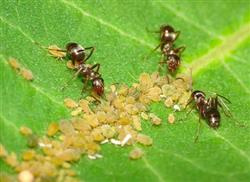 What are the methods for controlling aphids? Is there a netizen who can help explain
Zhongdiwang has compiled the methods for controlling aphids, and the following is a detailed list for netizens' reference.
Method 1: Make reasonable use of aphids' natural enemies:
There are many kinds of natural enemies of aphids, mainly the seven-spot ladybird, green lacewing, aphid hoverfly, flower bug, aphid braconid wasp, aphid mold, etc. Wherever there are aphids, these natural enemies are present. If these natural enemies are numerous, aphid damage can be controlled.
Therefore, when the number of aphids in the field is not very large and the natural enemies are present in a certain number, absolutely do not apply pesticides blindly, so as not to kill the natural enemies and instead invite aphid damage. When the ratio of the total number of natural enemies in the field to the total number of aphids is within 1:80-100, pesticides need not be applied in the field, and the aphid-killing effect of natural enemies can be fully brought into play.
Method 2: Carry out scientific fertilization and do not apply nitrogen fertilizer in a one-sided way:
Aphids like to feed on carbohydrate food materials. In cultivation management, applying too much nitrogen fertilizer at one time, especially excessive urea, will cause the carbohydrate content in the crop to suddenly increase sharply, leading to a sudden outbreak of aphids in a short period. Therefore, controlling excessive nitrogen fertilizer application is an effective method for controlling aphids.
Method 3: Carry out timely control before the aphid migration stage:
Aphids mainly rely on winged adult aphids to migrate and spread to cause damage. Therefore, seizing the peak occurrence period of winged nymph aphids before migration for control is one of the economical and effective ways to control aphids.
Method 4: Master the application site:
Aphids generally gather on the tender tips, tender leaves, young stems and undersides of leaves of plants. Therefore, pesticides should be applied precisely to the young tender parts in the middle and upper parts of the damaged crop, so as to have a clear target and be economical and effective.
Method 5: Alternately use pesticides:
Aphids have a very strong reproductive capacity and many generations occur, so they are extremely prone to developing pesticide resistance. If a certain pesticide is used alone for a long time to control aphids, this pesticide will soon no longer have an effect on them. Therefore, aphid-control pesticides cannot be used continuously for a long time. Generally, one pesticide can be used at most 2 times consecutively in the same place. This can effectively overcome and delay the development of aphid resistance, achieving the goal of using less pesticide and obtaining high benefits.
Method 6: Choose the right control pesticide:
Every pesticide variety has its specific control target. If selected improperly, the effect will be poor and losses may also be suffered. At present, the pesticides with relatively good aphid control effects mainly include Yibianjing, Kuaiishaling, dichlorvos, high-permeability monocrotophos, omethoate, aphid-killing fungus, pirimicarb, Dagongchen, etc. Generally, it is best to give priority to selecting high-quality new pesticide varieties suitable for the local area.
Click to get more insecticide application techniques
Click to get more pesticide application techniques