-
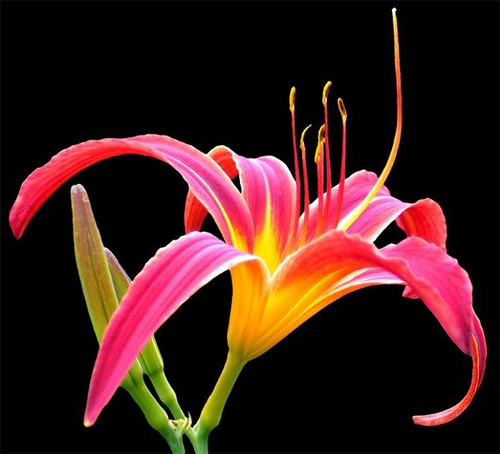
How to grow daylilies and points to note, and what other names do they have?
Daylilies are known in China as the mother's flower. Daylilies look much like what we usually call yellow flowers, the kind we normally see that can be used to make soup. So what are the growing methods and points to note for daylilies? And what other names do daylilies have? Daylily growing method: prefers a warm, humid environment
-
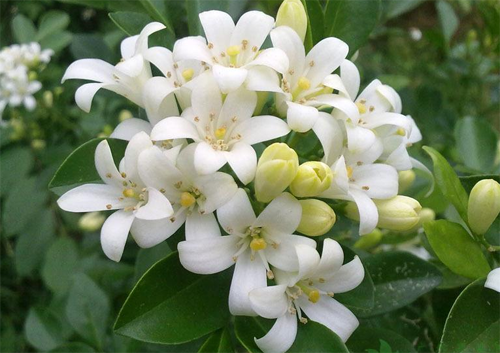
How to grow night-blooming jasmine (Cestrum nocturnum) and points to note: is its fragrance toxic?
Night-blooming jasmine - this flower is so fragrant at night you just cannot get enough of it, and many people love this scent; having one at home is a real pleasure. Let's look at how to grow night-blooming jasmine and what points to note. Is the fragrance of night-blooming jasmine toxic?
-
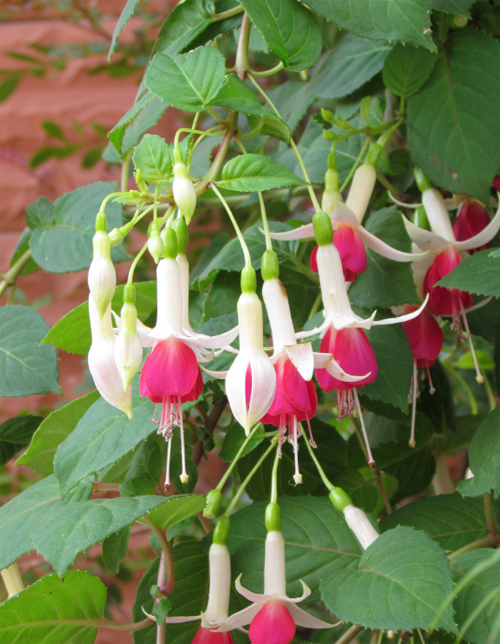
How to grow lantern flowers (fuchsia) and points to note, plus pest and disease control methods
Many people are very fond of lantern flowers, because they look extremely beautiful, like little lanterns. What are the methods and points to note for growing lantern flowers? What are the pest and disease control methods for lantern flowers?
-
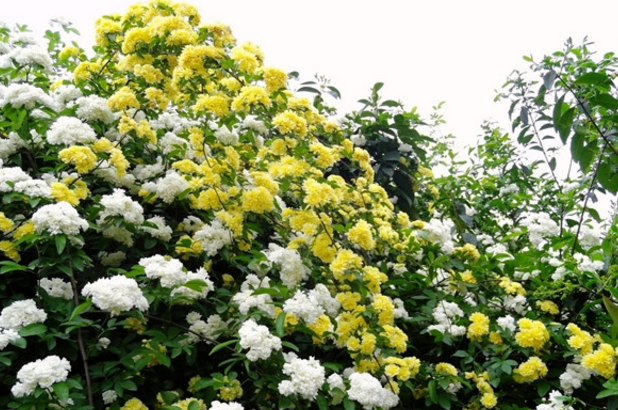
How to grow Orange Jessamine (Murraya paniculata) and things to note, and when does it bloom?
Orange Jessamine is famous for its fragrance, with a rich, highly enticing floral scent. Orange Jessamine (Murraya paniculata) has a graceful plant shape and elegant branches and leaves, with high ornamental value, and can also be made into bonsai for viewing. Do you still remember the song "Orange Jessamine" that Jay Chou made famous back in the day? Hearing this name now brings back a wave of memories. So you know the song,
-
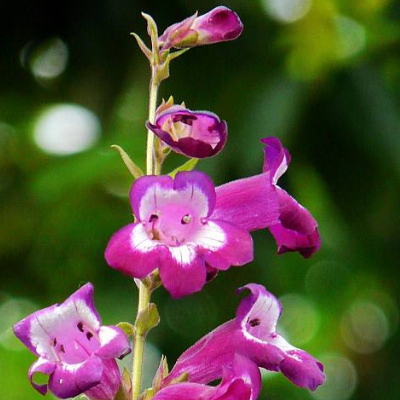
A Detailed Guide to Care Notes for Penstemon During Its Blooming Period
Penstemon is truly super beautiful when it blooms. When is its blooming period? What are the care notes for Penstemon during its blooming period: Penstemon's blooming period can actually be divided into two stages, one in spring and the other in summer and autumn.
-
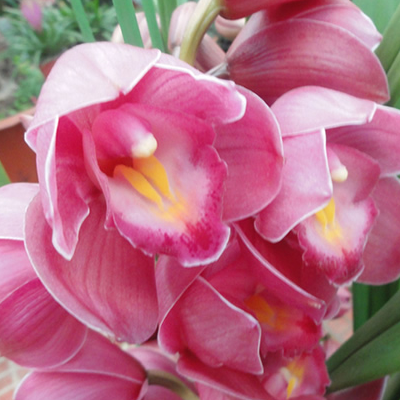
How to grow Cymbidium orchids and points to note, and how much does one pot cost?
Cymbidium orchid is a plant, and you should not underestimate this Cymbidium orchid; this Cymbidium orchid is truly beautiful when it blooms. What are the growing methods and points to note for Cymbidium orchids?
-
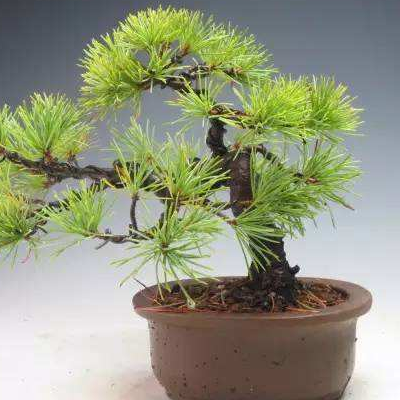
How to grow Asparagus fern and points to note, what to do when the leaves turn yellow?
Asparagus fern, many people like to grow it, it grows quite luxuriantly, and just looking at it makes you happy. What are the growing methods and points to note for Asparagus fern? What to do when the leaves of Asparagus fern turn yellow: Growing methods and points to note for Asparagus fern. Growing methods for Asparagus fern: (1) Asparagus fern likes a warm and humid
-

What technical points should be noted when introducing tea plants?
Tea plant introduction is simple and easy to achieve results. Since the 1950s, the area planted with improved varieties has been expanded. For example, the Yunnan large-leaf variety was introduced to Guangdong, Guangxi, Sichuan, Guizhou and other provinces and autonomous regions, and the area has reached more than 1 million mu. Fujian, Zhejiang and other provinces used introduced and acclimatized Yunnan large-leaf varieties as original material to breed a group of excellent high-yield new varieties. New progress has been made in introducing tea from the south to the north. The northernmost boundary of tea plant distribution in China has shifted from about 34°40'N to near 37°49'N, advancing northward by more than 350 km. Tea varieties have also been introduced successively from the former Soviet Union, Ja
-
What should be noted when advancing the cotton sowing date?
Can the cotton sowing date really be advanced? Based on many years of cotton sowing practice, the lessons in this regard are very profound. It is true that using plastic film mulching for nutrient-pot seedling raising can also allow sowing in mid-to-late March and produce cotton seedlings in early April, and large-scale demonstrations have been carried out in production, but the result is that management is very difficult, and it is also hard to ensure full stands and strong seedlings. First, cold waves are frequent in early to mid-April, temperature fluctuations are large, north winds occur many times, and it is very difficult to judge when to uncover and cover the seedbed film; second, if continuous rainy weather occurs, it is difficult to ventilate the cotton seedlings on the seedbed, which very easily leads to spindly seedlings and causes cotton seedlings to lodge; third, low temperature and rain also easily induce diseases such as damping-off, anthracnose, and seedling blight, causing patches of dead seedlings in the seedbed; fourth, early sowing prolongs the seedling age of cotton seedlings, forcing them to be transplanted into the field too early. When early-transplanted cotton seedlings encounter cold waves, missing plants and broken rows often result from dead seedlings, generally 10%-20% missing plants, and in severe cases 30%-50% missing plants. In recent years, many new varieties have been introduced in cotton production, especially hybrid insect-resistant cotton, which is relatively expensive. If the area of missing plants is too large, it will not only cause economic losses, but also make it difficult to achieve one sowing, one transplanting, and one full stand of cotton. The planned cotton field area often cannot be realized, and it is even harder to ensure that excellent cotton seed is planted to achieve a high and bumper harvest.
-
Eight requirements to note when using a precision dibble seeder on cotton mulched film
In 2005, our regiment introduced 1 unit of the 2BMJ-12 precision dibble seeder on cotton mulched film produced by the Shihezi Agricultural Machinery Research Institute, and that year trial-sowed 30 hectares. The application of precision dibble sowing technology on cotton mulched film saved costs on seed and manual thinning, and at the same time had advantages such as simple mechanical adjustment and operation, stable performance; and after sowing, the cotton seedlings grew uniformly and neatly. The eight requirements to note when using this machine are introduced below. 1. Requirements for land plowing quality: plow when soil moisture is suitable, plowing depth reaching 28-30 cm, with consistent plowing depth;
条件筛选