How to grow daylilies and points to note, and what other names do they have?
Daylilies are known in China as the mother's flower. Daylilies look much like what we usually call yellow flowers, the kind we normally see that can be used to make soup. So what are the growing methods and points to note for daylilies? And what other names do daylilies have?
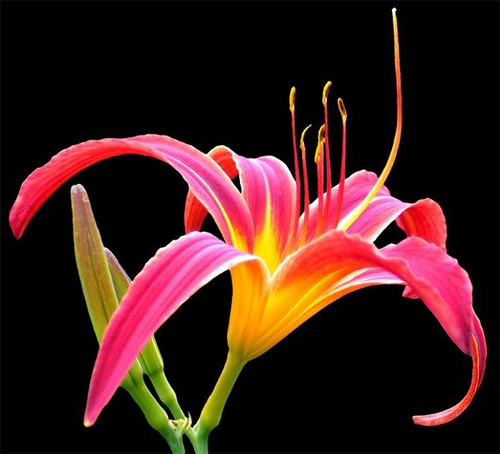
Daylily growing method:
It prefers a warm, humid environment, and soil that is slightly clayey is better. It can be grown in fields, beside ditches, next to homes, or in pots, and is propagated by division.
From October to November, after the above-ground parts wither, or in spring before the plants sprout, dig up the whole plant.
Daylilies are mostly cultivated in early spring, in early March, before sprouting. For cultivation, they should be planted in soil that drains well, does not waterlog in summer, and is rich in organic matter.
Its tillering ability is fairly strong, so when planting, keep the spacing between plants and rows at more than 30cm.
Cultivation and management of the large-flowered daylily is relatively simple. Because the flowering period is long, besides applying sufficient base fertilizer at planting time (well-rotted cow manure or pig manure is preferable), 2 to 3 supplementary feedings are needed before and during the flowering period, mainly to supplement phosphorus and potassium fertilizer. You can also spray 0.2% potassium dihydrogen phosphate to promote larger flowers and extend the flowering period. After flowering, cut the flower stems off at ground level and promptly remove dead and leftover leaves at the base of the clump.
The large-flowered daylily can also be grown in pots, but a dwarf variety must be chosen when planting, such as “Jinjinwa”.
The potting soil can be prepared with peat, pine needles, cow manure, and garden soil at a ratio of 4:3:2:1. After planting, pay attention to shaping so the clump grows evenly.
Points to note in daylily cultivation and pest and disease control:
Common daylily pests mainly include red spider mites, aphids, thrips, leafminers, and so on.
For good control, after the daylily buds are picked, the above-ground parts soon wither, so the crowns (the roots and stems near the roots) should be cut promptly and moved out of the daylily growing area to reduce sources of fungi and insects;
During the growing period, supplementary feeding should be timely and winter cultivation should be done to strengthen disease resistance, and old crowns should be renewed and rejuvenated in good time.
Apply pesticides at the right time for control. For diseases, spray with 75% chlorothalonil at 800 times dilution; for pests, spray with 3000 times dilution of Aimeile.
Daylily is not the same as daylily buds. Daylily buds are one kind of plant in the Hemerocallis genus, but most plants in the Hemerocallis genus other than daylily buds are not edible.
Daylily propagation methods:
1. Division propagation
Division propagation is carried out after the leaves wither or before sprouting in early spring. Dig up the roots and crowns, cut off dead roots and excess fibrous roots, and divide them. After one division, they can be divided again 4 to 5 years later, and divided plants can bloom in the same year. Generally each mother plant can produce 3 to 4 divisions; for some varieties, such as “Jinjinwa”, 6 to 7 divisions can be produced.
2. Seed propagation
Seed propagation is best done by autumn sowing, and seedlings generally emerge about 4 weeks after sowing. If seeds collected in summer and autumn are sown immediately, they emerge in about 20 days. Seed-grown plants bloom after 2 years of cultivation.
For seed propagation, it is best to stratify the seeds in sand in autumn or winter; after spring sowing they sprout quickly and evenly, and seedling plants generally bloom in 2 years. Young flower buds can also be used for cuttings in summer, inserted in vermiculite; they root in about 1 month and can bloom the following year.
Other names for daylily:
Other names: daylily buds, golden needle vegetable, Sichuan grass flower, wangyu, forget-sorrow grass, yinan grass, and so on. It is a perennial herbaceous plant with a perennial root system, and of course it has short rhizomes.
During the flowering period it grows slender green flowering branches; the flowers are orange-yellow, with very long flower stalks, and are tubular like lily flowers. The fruit it produces has wings. It is commonly cultivated throughout the country, and grows wild in the provinces and regions south of the Qinling Mountains.
That is the introduction to daylily growing methods and points to note. This mother's flower is really very beautiful, so hurry and plant one in your own yard.
Daylily growing methods and points to note
Chinese scientific name: daylilyLatin scientific name: Hemerocallis fulva (L.) L.Other names: daylily buds, golden needle vegetable, deer scallion, Sichuan grass flower, wangyu, danji, and so onKingdom: PlantaePhylum: AngiospermsClass: MonocotyledonsOrder: LilialesSuborder: LiliineaeFamily: LiliaceaeTribe: HemerocallideaeGenus: HemerocallisSpecies: daylilyDistribution area: native to China, Siberia, Japan, and Southeast AsiaDaylily (scientific name: Hemerocallis fulva) is a perennial herbaceous plant with a perennial root system. It has short rhizomes and thick, spindle-shaped fleshy roots. Daylily has many other names, including "golden needle", "daylily buds", "forget-sorrow grass", "yinan grass", "liaochou", "lujian", and so on. In English, daylily is called "Tiger Lily" (which is also the English name of Lilium lancifolium). When eaten, it is often called "golden needle". Its leaf shape is flat and long-linear, and it is slightly toxic along with the underground stem, so it cannot be eaten directly. As for the flower form, during the flowering period it grows slender green flowering branches; the flowers are orange-yellow, with very long flower stalks, and are tubular like lily flowers. The fruit it produces has wings. It is commonly cultivated throughout the country, and grows wild in the provinces and regions south of the Qinling Mountains. Although daylily flowers originated mainly in China, they were not much improved for a long time. After the 1930s, some botanical gardens and gardening enthusiasts in the United States collected Hemerocallis plants from China, Japan, and other countries for cross-breeding. There are now more than ten thousand varieties, making them important ornamental and cut-flower flowers, and also the group with the most varieties among Liliaceae flowers. At the same time, the daylily is also China's mother's flower.1. Morphological characteristics
Perennial herb, rhizome thick and short, with fleshy fibrous roots, most enlarged into narrow, long spindle shapes. Leaves basal, forming clumps, strip-lanceolate, 30 to 60cm long, about 2.5cm wide, with white powder on the back. In summer it produces large orange-yellow flowers; the scape is longer than the leaves, reaching more than 1m tall; the panicle is terminal, with 6 to 12 flowers, the pedicel about 1cm long, with small lanceolate bracts; the flower is 7 to 12cm long, the base of the perianth short and thick, funnel-shaped, up to 2.5cm, the perianth in 6 segments, spreading and recurved outward, the outer whorl 3 segments 1 to 2cm wide, the inner whorl 3 segments up to 2.5cm wide, the margins slightly wavy; stamens 6, filaments long, borne at the throat of the perianth; ovary superior, style slender.The main features of this species are: roots nearly fleshy, with spindle-shaped swelling in the middle and lower parts; leaves generally relatively wide; flowers open in the morning and wither at night, without fragrance, orange-red to orange-yellow, and the lower part of the inner perianth segments generally has a ∧-shaped marking. These features can distinguish it from other species native to this country. The flowering and fruiting period is May to July.
2. Geographic distribution
Native to China, Siberia, Japan, and Southeast Asia.3. Growing environment
It is vigorous, cold-resistant, and can overwinter outdoors in North China. It is highly adaptable, likes humidity and also tolerates drought, likes sunlight and also tolerates half shade. It is not selective about soil, but soil rich in humus and well drained and moist is preferable. It adapts to growing at an altitude of 300-2500 meters.4. Variety classification
Daylily is also the collective name for plants in the Hemerocallis genus. There are about 20 natural species, and China has 8.1、Yellow daylily(golden needle vegetable) H. flava: native to China, leaves dark green and band-shaped, 30-60cm long, 0.5-1.5cm wide. Arching and curved. Flowers 6 to 9, lemon yellow, shallow funnel-shaped, scape about 125cm tall, flower diameter about 9cm. The flower buds are the famous "daylily buds" and are edible.
2、Daylily buds(yellow flower) H. citrina: leaves relatively wide, dark green, 75cm long, 1.5 to 2.5cm wide, the inflorescence bears as many as about 30 flowers, the bracts below the inflorescence are narrowly triangular; distributed throughout the country, especially most abundantly in Guanjiazui Town, Qidong County, Hunan Province, which is the national place of origin for daylily buds.
3、Midday daylilyH. middendo: leaves 30 to 45cm long, inflorescence with 2-4 flowers, yellow, fragrant, petals 8 to 10cm long, pedicels very short, flowers compact, with large triangular bracts. Flowering period July
4、Thunberg's daylilyH. thunbergh: leaves 74cm long, scape 120cm tall, the top branches bear 12 to 24 flowers, apricot-yellow, the throat relatively deep, short funnel-shaped, fragrant.
5、Small yellow daylilyH. minor: 30 to 60cm tall. Leaves green, about 50cm long, 6cm wide. Bears 2 to 6 flowers, yellow, with a brownish halo outside, 5 to 10cm long, fragrant. Blooms in the evening. Flowering period June to September, the flower buds are edible.
6. Red Pirate daylily: extremely strong disease resistance, very low soil requirements, tolerates waterlogging and drought. Height 25 to 30 centimeters, flowering period late May to early October, annual tillering rate 8.
7. Haierfan daylily: height 40--45 centimeters, color is bicolor, flowering period June to September, annual tillering rate 5-7 times, can overwinter naturally in an environment of minus 20 degrees.
8. z300 daylily: height 30-35 centimeters, flowering period late May to early October, flower color red,
annual tillering rate 15-20 times, low soil requirements, strong resistance to pests and diseases, can overwinter naturally in an environment of minus 30 degrees, and is an excellent daylily variety for landscaping!
9. Autumn Red daylily: height 35-40 centimeters, flowering period May to October, annual tillering 6.
10. Orange Flower daylily: height 30-35 centimeters, flowering period May to October, annual tillering rate 12; Children's Day daylily, height 35-40 centimeters, flowering period June to October, annual tillering rate 6.
5. Cultivation techniques
Propagation methods
The propagation method is mainly division propagation, and seed propagation is used in breeding. Division propagation is carried out after the leaves wither or before sprouting in early spring. Dig up the roots and crowns, cut off dead roots and excess fibrous roots, and divide them. After one division, they can be divided again 4 to 5 years later, and divided plants can bloom in the same year. Seed propagation is best done by autumn sowing, and seedlings generally emerge about 4 weeks after sowing. If seeds collected in summer and autumn are sown immediately, they emerge in about 20 days. Seed-grown plants bloom after 2 years of cultivation.Cultivation management
Cultivation management is simple and extensive, with a plant and row spacing of about 0.5 x 1 meter, planting 3 to 5 plants per hole. Apply sufficient base fertilizer before planting. Because daylilies are highly adaptable and can be planted almost anywhere, left to grow on their own, the clumps can expand year after year. However, when arranging them in a garden, they should be matched according to plant height and flower color to improve the ornamental effect.Cultivation points
It prefers a warm, humid environment. Soil that is slightly clayey is better. It can be cultivated on field ridges, beside ditches, beside homes, and so on. Propagate by division. From October to November, after the above-ground parts wither, or in spring before the plants sprout, dig up the whole plant and divide it into clumps of 2 or 3 equal parts.
Before planting, dig holes at a row and plant spacing of 40cm each, with holes 17 to 20cm deep, and plant one clump per hole, spreading the roots evenly in all directions, then cover with soil and press firm. Water, or irrigate with human and livestock manure water. From the second year on, cultivate and weed and apply supplementary fertilizer 3 times each year: the first in March when seedlings emerge, the second in June before flowering, and the third in October after the plants die back. After each cultivation and weeding, apply human and livestock manure water.
Pest and disease control
Common daylily diseases include leaf spot, leaf blight, rust, anthracnose, and stem blight, and so on; pests mainly include red spider mites, aphids, thrips, leafminers, and so on.Pest and disease control: first do good agricultural control. After the daylily buds are picked, the above-ground parts soon wither, so the crowns should be cut promptly and transported away from the daylily field to reduce sources of fungi and insects; do good work on supplementary feeding and winter cultivation of daylily buds to strengthen disease resistance; renew and rejuvenate old crowns in good time; and select disease-resistant varieties, and so on. Apply pesticides at the right time for control. For diseases, spray with 75% chlorothalonil at 800 times dilution; for pests, spray with 3000 times dilution of Aimeile.
6. Identification
Daylily is not the same as daylily buds. Daylily buds are one kind of plant in the Hemerocallis genus, but most plants in the Hemerocallis genus other than daylily buds are not edible. The daylily flowers we grow daily for enjoyment are not daylily buds, but large-flowered daylilies, Lilium lancifolium, and the like; daylily buds generally appear in vegetable plots, not in flower beds. Never pick "daylily" from a flower bed to eat, to avoid poisoning.
Daylily bud flowers are relatively slender and long, with narrower petals and a tender yellow color. The flowers of ornamental daylilies are closer to somewhat funnel-shaped lilies, and the flower color is generally orange-yellow, with some even close to red.
Fresh daylily buds contain a small amount of colchicine, so they should first be made into a dried product and then cooked at high heat or stir-fried before eating.
Orange-yellow and orange-red daylilies contain a large amount of colchicine, and even if blanched in hot water again and again, they cannot be eaten. If you accidentally eat them, they will irritate the stomach and intestines and the respiratory system, and also cause dry mouth, diarrhea, and dizziness.
Because the flower shapes are similar, many documents confuse daylily and daylily buds. Please remember firmly: if a text says daylily can be eaten, it definitely refers to the daylily buds in a vegetable plot, not the daylily flowers in a flower bed.
7. Main value
Medicinal value
Functions and indicationsClears heat and promotes urination, cools the blood and stops bleeding. Used for mumps, jaundice, cystitis, blood in the urine, difficult urination, lack of milk, irregular menstruation, nosebleeds, and bloody stools. For external use, it treats mastitis.
Promotes urination and cools the blood. Treats edema, difficult urination, strangury with turbid urine, leukorrhea, jaundice, nosebleeds, bloody stools, abnormal uterine bleeding, and breast abscess.
① "Bencao Shiyi": Treats sandy strangury, promotes water metabolism, mainly for those with alcoholic jaundice and yellowing of the whole body; pound and squeeze the juice to take.
② "Bencao Yanyi": Grind the juice, one cup, mix with half a cup of ginger juice, and sip slowly from time to time; treats high fever with nosebleeds.
③ "Diannan Bencao": Treats red, swollen, hard, and painful breast nodules, obstructed milk flow, breast abscess, breast cancer, and attacks of sores and boils. The kind produced in Hanzhong nourishes yin and blood, stops waist pain, treats abnormal uterine bleeding, and stops bleeding from the large intestine.
④ "Bencao Mengquan": Chewed and decocted with wine, it is an important medicine for breaking brain injury and wind.
⑤ "Bencao Zheng": Treats turbid leukorrhea.
⑥ "Bencao Congxin": For difficult urination, decocting in water and drinking frequently is very good; it is also effective for generalized edema.
⑦ "Fenlei Caoyaoxing": Nourishes yin and supplements spirit and qi, unblocks women's blood and qi, reduces swelling, and treats cough in children.
⑧ "Tianbao Bencao": Treats bladder hernia and qi-fire scrofula.
⑨ "Guizhou Minjian Fangyaoji": Unblocks menstruation, treats irregular menstruation in women, red uterine bleeding and white leukorrhea, waist soreness and abdominal pain when menstruation comes, and can also strengthen the stomach and supplement the spleen.
Usage and dosage
2 to 4 qian, appropriate amount for external use, pounded and applied to the affected area.
Attached formulas
① To treat generalized edema: deer scallion roots and leaves, sun-dried and ground into powder, take two qian each time, taken with rice water before meals. ("Sheng Hui Fang")
② To treat blood after stool: daylily root and ginger, stir-fried in oil, taken with wine. ("Sheng Ji Zong Lu")
③ To treat bleeding from the large intestine that other medicines fail to treat: ten fruits of Leipu, five fen of camellia flower, three qian of red garden burnet, one qian of ivory powder. The above four ingredients, decocted in water and taken three times. ("Diannan Bencao")
④ To treat jaundice: two liang of fresh daylily root (washed), one hen (remove head, feet, and internal organs). Stew in water for three hours and take, once every one to two days. ("Mindong Bencao")
⑤ To treat swollen and painful breast abscess: pound fresh daylily root and use externally as a poultice. ("Xiandai Shiyong Zhongyao")
⑥ To treat waist pain in men and women: fifteen fruits of Leipu root, one pig kidney. The above two ingredients, decocted in water and taken three times. ("Diannan Bencao")
Pharmacological effects
① Treatment of schistosomiasis
Regarding the therapeutic effect of daylily root (moschus daylily root) on experimental treatment of Japanese schistosomiasis, reports in the literature differ: some believe the worm reduction rate reaches more than 80%, some believe the worm reduction rate is not high, and some believe the number of worms does not decrease. Some further research held that daylily root has no preventive effect on mice infected with schistosome cercariae, and is ineffective when used together with costus, betel nut, coptis, phellodendron, and pumpkin seed paste powder, and also shows no enhanced effect when used together with potassium antimony tartrate. The effect of daylily root (including the yellow daylily produced in Zhenjiang) on adult schistosomes is mainly manifested as worm body atrophy and degeneration of reproductive organs, but these changes are all reversible and recover rapidly after withdrawal of the drug. After treatment in domestic dogs, stool hatching can turn negative, or miracidia decrease, but after a certain period it can still turn positive again. Because daylily root has strong toxicity to the host and a small margin of safety, it still cannot kill the worms at host-lethal doses, so its clinical value is relatively low. Attempts were made to separate the active ingredient from the toxic ingredient by chemical methods, but preliminary results suggest they are very likely the same substance.
② Anti-tuberculosis effect
When daylily root is used to treat schistosomiasis, its effective part and toxic part are not easily separated. After heating, the toxicity can be significantly reduced, but the therapeutic effect on schistosomiasis is also lost, while the inhibitory power against tuberculosis bacteria remains unchanged. It is not only effective in test-tube experiments, but also shows efficacy against experimental tuberculosis in guinea pigs, and also has a certain effect in clinical practice. In further separation of the various components of daylily root, daylily ether extract on experimental tuberculosis in guinea pigs, and daylily III on experimental tuberculosis in mice, although the effect of reducing lesions is not yet significant enough, no severe toxic reactions such as optic nerve atrophy in animals have been seen. In addition, daylily root used together with Sichuan aconite can kill snails.
Toxicity
Daylily root has strong toxicity to the host. The pathological changes it causes in mice are mainly manifested as widespread softening and myelin sheath loss in the white matter of the brain and spinal cord and the optic nerve fiber tracts, while lesions in the gray matter are generally relatively mild; in addition, liver and kidney cells show varying degrees of cloudy swelling, and the lungs show congestion or patchy hemorrhage; poisoning symptoms in rabbits and dogs are manifested as dilated pupils, loss of light reflex, blindness, paralysis of the hind limbs, and urinary retention in the bladder, leading to death; when rabbits are poisoned by daylily root, urine protein appears, but there is no bilirubin, and serum transaminase is also normal, indicating that the damaged organ is mainly the kidney and the liver is not injured. The appearance of urine sugar and decreased glucose tolerance shows abnormal glucose metabolism. The toxicity of daylily is mainly concentrated in the root, and its toxicity varies greatly depending on the place of origin. Heating above 60 degrees C can reduce the toxicity, or even completely destroy it. Daylily root has a strong cumulative effect in the body. Animals infected with schistosomes have lower tolerance to daylily root than uninfected ones. Soaking in rice washing water cannot reduce the toxicity of the drug, and coptis and phellodendron can partially relieve its toxicity.
Ornamental value
The flower colors are bright, cultivation is easy, and it sprouts early in spring, with green leaves in clumps that are extremely beautiful. In gardens it is mostly planted in clumps or in flower borders and along roadsides. Daylilies tolerate half shade and can also be used as ground cover plants in sparse woods.Other value
Before modern chemical dyes appeared, daylily was also a commonly used dye. In addition, daylily is very sensitive to fluorine. When the air is polluted by fluorine, the tips of daylily leaves turn reddish-brown, so it is often used as an indicator plant to monitor whether the environment is polluted by fluorine.Daylily cultivation and management
Daylily (scientific name: Hemerocallis fulva) is a perennial herbaceous plant with a perennial root system. It has short rhizomes and thick, spindle-shaped fleshy roots. Daylily has many other names, including “golden needle”, “daylily buds”, “forget-sorrow grass”, “yinan grass”, “liaochou”, “lujian”, and so on. In English, daylily is called “Tiger Lily” (which is also the English name of Lilium lancifolium). When eaten, it is often called “golden needle”. Its leaf shape is flat and long-linear, and it is slightly toxic along with the underground stem, so it cannot be eaten directly. As for the flower form, during the flowering period it grows slender green flowering branches; the flowers are orange-yellow, with very long flower stalks, and are tubular like lily flowers. The fruit it produces has wings. It is commonly cultivated throughout the country, and grows wild in the provinces and regions south of the Qinling Mountains. Cultivation Methods: Propagated mainly by division; can also be grown from seed or by tissue culture.1. Division propagation: Carry out in spring or autumn. Division is best done in early spring before new growth emerges. Divide and replant every 2 to 4 years. First dig up the old plants with their roots, cut away dead roots and excess fibrous roots; when dividing, keep 2-3 buds per clump, and replant at a spacing of 30 cm x 40 cm, planting 4-5 plants per hole. Do not plant too deep; the crown should be level with the soil surface. After planting, water thoroughly, move to a shaded spot, and keep the soil moist. Apply appropriate topdressing during the growing season, preferably decomposed human waste; apply 2-3 times between April and May with a fertilizer-to-water ratio of 3:7. In the first year after division, pay attention to cultivating and weeding; later, reduce weeding as plant coverage increases. If there is a summer drought, take care to water. The roots of daylily tend to move upward toward the soil surface year by year, so at the turn of autumn and winter each year, mound soil around the root zone to a thickness of about 10 cm, and combine this with cultivating and weeding. Every 3 to 5 years, divide and renew the plants once to help maintain vigorous growth. Plants divided in spring can bloom in summer; for autumn division, mid-to-late September is best.
2. Seed propagation Seed propagation should be done immediately after seed collection; seeds will germinate the following spring. For spring sowing, the seeds need to have been stratified in sand the previous autumn, so that germination after sowing is fast and uniform. Plants grown from seed generally take two years to flower.
Cultivation and Management It is vigorous and cold-hardy, highly adaptable to the environment, and also tolerates partial shade. It overwinters outdoors in all regions of China. It likes sunlight and is not very demanding about soil, but grows better in well-drained, fertile, deep soil. Cultivation and management are simple. Deeply plow the planting site and apply sufficient base fertilizer, preferably decomposed barnyard manure. During the growing season, apply fertilizer water 1-2 times a month. If aphids cause damage, spray pesticide promptly for control.
For daylily planted in the ground, it is cold-hardy and can overwinter outdoors in winter; during the growing season, water promptly and apply appropriate topdressing several times, take care to drain in the rainy season, and apply decomposed compost every autumn. For potted daylily, choose a relatively large pot to favor root development and the proliferation of new shoots. After winter begins, it must be moved indoors, with the room temperature kept at 2-4 degrees Celsius; at the same time, restrict watering and fertilizing to avoid yellowing leaves or root rot.