How to grow lantern flowers (fuchsia) and points to note, plus pest and disease control methods
Many people are very fond of lantern flowers, because they look extremely beautiful, like little lanterns. What are the methods and points to note for growing lantern flowers? What are the pest and disease control methods for lantern flowers?
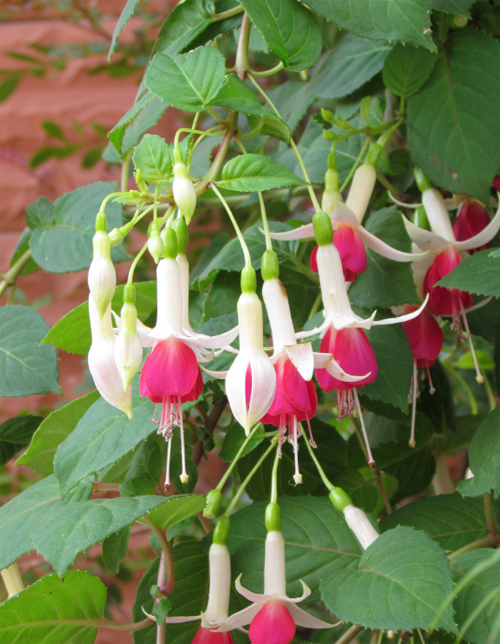
Methods and points to note for growing lantern flowers:
1. Soil:
You can choose loose, well-draining sandy soil, and also add 20%-30% fully decomposed livestock manure.
2. Fertilizer:
Apply sufficient organic fertilizer before planting, control nitrogen fertilizer in the early growth stage to prevent excessive vegetative growth, and increase phosphorus and potassium fertilizer during the flowering period. During the vigorous growth period when the plant is developing, apply liquid fertilizer as a top dressing. For the first 3 years, repot and change the soil every spring to replenish nutrients.
3. Temperature:
The suitable growth temperature is 15-25 degrees. In summer it fears hot, high temperatures; when the temperature exceeds 30 degrees, it enters a semi-dormant state. In winter it must not go below 5 degrees.
4. Sunlight:
It prefers a sunny, well-lit environment. Insufficient sunlight easily causes excessive vegetative growth, resulting in fewer flowers. In summer, it can be placed in a semi-shaded environment, while in winter it can receive a certain amount of sunlight.
5. Water:
In winter and during the rainy season, water once every 2-3 days; in autumn and on sunny days, water once a day; in summer, when it is in a semi-dormant state, control the water to prevent leaf drop and root rot.
Pest and disease control methods for lantern flowers:
1. Gray mold
Spray zineb or carbendazim once every 7-10 days, spraying 3-4 times. Usually pay attention to ventilation and light, and promptly prune and dispose of diseased branches and leaves.
2. Powdery mildew
Pay attention to ventilation and light. You can spray thiophanate solution or triadimefon once every 10 days, spraying 2-3 times.
That is all for the methods of growing lantern flowers and the pest and disease control methods. Why not hurry and get such a beautiful flower for your own home?
Lantern flower growing tips, lantern flower pest and disease control
How do you grow lantern flowers? The shape of the lantern flower is very peculiar, appearing in the form of an upside-down lantern, and it looks extremely elegant. Placed on a balcony, in a study, on a windowsill, and other places, it can play a very good decorative role. But lantern flowers are still quite difficult to grow. Let us take a look together below!
Lantern flowers are rather delicate. Although they look very charming and beautiful, they cannot withstand the scorching sun. The lantern flower is by nature more fond of a high-humidity, cool environment, and its suitable growth temperature is around 10-25°C. Generally in summer the temperature must not exceed 38 degrees Celsius, and in winter sufficient warmth must be ensured so as not to affect its growth. It is generally propagated by cuttings and has strong adaptability.
1. Soil: You can choose loose, well-draining sandy soil, and also add 20%-30% fully decomposed livestock manure.
2. Fertilizer: Apply sufficient organic fertilizer before planting, control nitrogen fertilizer in the early growth stage to prevent excessive vegetative growth, and increase phosphorus and potassium fertilizer during the flowering period. During the vigorous growth period when the plant is developing, apply liquid fertilizer as a top dressing. For the first 3 years, repot and change the soil every spring to replenish nutrients. Lantern flower growing methods
3. Temperature: The suitable growth temperature is 15-25 degrees. In summer it fears hot, high temperatures; when the temperature exceeds 30 degrees, it enters a semi-dormant state. In winter it must not go below 5 degrees.
How to grow lantern flowers
4. Sunlight: It prefers a sunny, well-lit environment. Insufficient sunlight easily causes excessive vegetative growth, resulting in fewer flowers. In summer, it can be placed in a semi-shaded environment, while in winter it can receive a certain amount of sunlight.
5. Water: In winter and during the rainy season, water once every 2-3 days; in autumn and on sunny days, water once a day; in summer, when it is in a semi-dormant state, control the water to prevent leaf drop and root rot.
6. Lantern flower pest and disease control: Its common diseases are generally gray mold, powdery mildew, and so on.
Gray mold mainly harms flowers, stems, and leaves. Affected parts generally show water-soaked spots. In the early stage of the disease, you can use a 500-times dilution of 65% zineb or 50% carbendazim or other new fungicides, spraying once every 7-10 days for 3-4 consecutive sprays. Usually pay attention to ventilation and light so that the plants grow well and their disease resistance is improved. After the disease occurs, promptly prune and dispose of diseased branches and leaves to reduce the source of infection.
Powdery mildew mainly harms flowers, stems, and leaves as well. Its symptoms are a layer of white powder on the surface. In the early stage of the disease, pay attention to ventilation and light, and increase the application of phosphorus and potassium fertilizer to improve the plant's disease resistance. After the disease occurs, promptly spray an 800-times dilution of 70% thiophanate solution or a 2500-times dilution of triadimefon or other suitable fungicides, spraying once every 10 days for 2-3 consecutive sprays.
The above is the relevant introduction in this article. I believe that after reading it you have gained a simple understanding of this. If needed, you can continue to follow No.1 Home Network to learn more information.
How to grow pot marigold (calendula), pot marigold growing methods and points to note / shading needed in spring, summer, and autumn
Pot marigold, friends who have seen it should be deeply impressed. Its flower colors are gorgeous, dazzling with golden light, just like a golden lantern, and it is deeply loved by flower lovers. In daily life, many people want to bring pot marigold into their homes to decorate their living space. So how do you grow pot marigold? The following is a carefully compiled set of pot marigold growing methods and points to note, very detailed. Friends who want to grow it must take a look~
1. How to grow pot marigold: understand its habits
Growing indoors is not the same as growing in the wild. To grow a plant well, we must first understand its habits. So for how to grow pot marigold, the editor will bring you the growing methods and points to note for pot marigold from aspects such as soil, light, temperature, watering, fertilizing, and pruning. Let us continue reading below.
2. Growing methods and points to note for potted pot marigold
1. Soil
How do you grow potted pot marigold? First, of course, is choosing the soil. According to the growth habits of pot marigold, if you want it to grow well, it is best to prepare loose, fertile, well-draining, slightly acidic soil.
Points to note: Pot marigold has strong adaptability and is not picky about soil. You can also choose ordinary soil, as long as it is not alkaline.
2. Light
In the growing methods for pot marigold, light is something everyone should pay special attention to, especially in spring, summer, and autumn, when the potted plant should be kept in shaded conditions. The reason for this is that pot marigold cannot do without light, but it can only tolerate weak light.
Points to note: In spring, summer, and autumn, if it is grown under direct sunlight, the leaves of pot marigold will turn yellow and fall off, and growth will be very slow or it will enter a semi-dormant state. In winter, pot marigold should be given direct sunlight to help it carry out photosynthesis, form flower buds, and bloom and set seed.
3. Water/humidity
Pot marigold prefers a moist environment, so everyone should water frequently. However, note that during the growth period you should not water too much; keeping the soil moist is enough. The key point is to pay attention to humidity. When the temperature is relatively high, spray in time to increase air humidity, striving to keep humidity at 75%-85%.
Points to note: When growing pot marigold, everyone should spray water in time to increase humidity, preferably 1-3 times a day. On sunny days, increase the number of sprays; on cloudy and rainy days, reduce spraying. However, excessive spraying can make the heading part prone to infection and rot by pathogens, so when spraying, also pay attention to water quality.
4. Fertilizing
Having covered watering, let us now talk about fertilizing, which is also very important in the growing methods for pot marigold. Once fertilizer is sufficient, pot marigold can produce more and larger flowers. The specific amount: during the growth period, fertilize once every half month.
Points to note: Pot marigold likes fertilizer, so fertilizing cannot be too little. Once fertilizer is insufficient, the flowers will noticeably become smaller and degenerate.
5. Temperature
For how to grow pot marigold, the temperature should also be properly controlled, preferably kept at 7-20°C. If the winter temperature is above 10°C, pot marigold will grow excessively. If the summer temperature rises, the stems and leaves grow vigorously, the flowers become smaller, and the petals noticeably decrease. So neither too high nor too low a temperature is good; it must be suitable.
Points to note: Pot marigold prefers a warm environment. Once the temperature is too low, everyone should add a plastic film for protection, otherwise the leaves are prone to cold damage. During year-round care, pay attention to controlling the temperature well, open windows in time for ventilation, and control indoor temperature by spraying water to cool it down.
6. Pruning
In the growing methods and points to note for pot marigold, the above points must be achieved, while for the next step, pruning, everyone just needs to pay attention. Specific pruning methods:
① Cut off branches with old leaves and yellow leaves once every two months. As long as the temperature is suitable, it can bloom in all four seasons;
② Do not keep seeds during the flowering period. Cutting off withered flowers helps the flowering branches sprout, produce more flowers, and extend the viewing period for the flowers.
7. Pest and disease control
During the growing process of pot marigold, it is inevitable that it will be troubled by pests and diseases. Among them, the common pests and diseases include fusarium wilt and downy mildew. In early summer, as the temperature gradually rises, pot marigold can also develop leaf spot disease. In response, everyone should follow the pest and disease control methods for pot marigold and spray the corresponding pesticide.