-
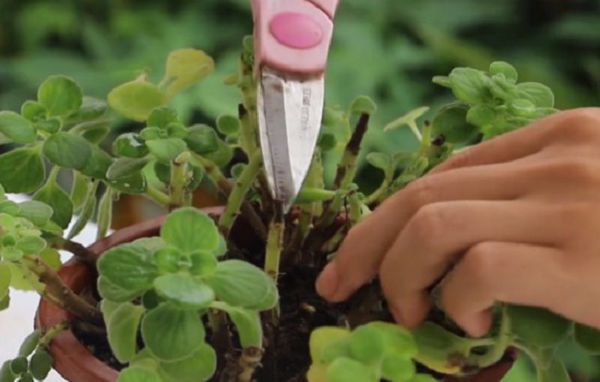
How to grow Cuban oregano (Mexican mint)? These three points must be done well
Key care points for Cuban oregano (Mexican mint): these three points must be done well
-
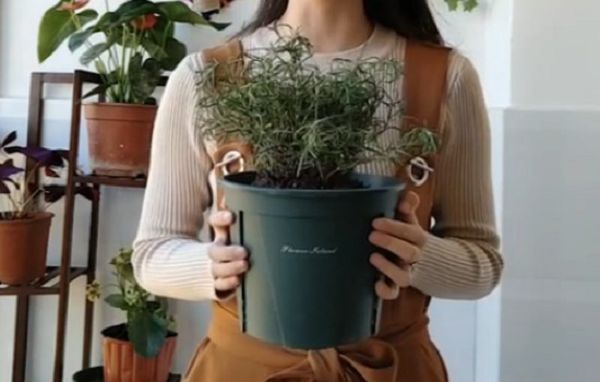
How to prevent rosemary leaves from turning black? These two conditions must be met
To prevent rosemary leaves from turning black, these two conditions must be met
-

Succulent Winter Watering Guide, a Must-Read for Home Gardeners
Home Gardening, Succulent Winter Watering Guide
-
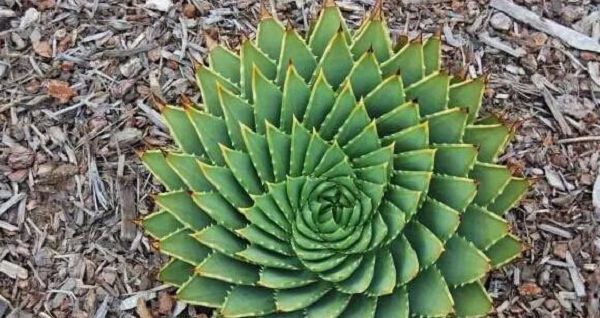
Potted plants are prone to dying when overwatered, so you must control the amount of water you give them.
For potted plants that die as soon as they are overwatered, you must hold yourself back.
-
How to care for pelargoniums in autumn? These methods must be mastered
Pelargoniums are also known by other names such as butterfly hydrangea, hemp-leaved hydrangea, and large-flowered geranium. To grow this summer-dormant flower well, its autumn care is very important. Because only with proper care during this period can you ensure that the pelargonium has lush leaves and continuous blooms in the other seasons. Within 10 days after the start of autumn, first prune the pelargonium, focusing on cutting away inner branches, dead branches, and leggy branches. This ensures the plant has good ventilation and light. Then knock it out of the flower pot and use a sharp knife to trim away some old roots and old soil, taking care to work gently and cut
-
How to preserve tree stumps for bonsai against rot? These practical methods are a must-know
A fine bonsai work can only be completed after 5-8 years of careful management, but during the care process, how to prevent dead branches from continuing to rot is the most worrying thing. The most common way to preserve tree stumps against rot is to coat them with lime-sulfur mixture (a mixture of lime and sulfur). The preparation method of lime-sulfur mixture: one part quicklime powder, 2 parts sulfur powder, 10 parts water, boiled and prepared. One point to emphasize is boiling! That is, boil it in a pot and then use it, because sulfur powder generally does not dissolve in water. Tree stumps can be treated during both the growing season and the dormant season; in winter it is mainly for prevention, and the effect is very good.
-
How to prune a tamarisk bonsai? These pruning techniques are a must to master
Tamarisk, also known as Guanyin willow or Sanchun willow. It is highly adaptable, tolerant of salt, waterlogging, cold, drought and pruning, takes shape quickly, and generally survives with easy care. Its branches are fine and its leaves small, and its branches droop gracefully like a weeping willow; its trunk is like iron, aged and peculiar, with the character of pine and cypress; it blooms 3 times a year, with a fairly long flowering period, and the pink flowers covering the branches make it look even more charming; its roots are like wandering dragons, with wonderful forms, and whether viewing the roots, trunk, leaves or flowers, it has advantages unmatched by other tree species, making it a good tree species for making bonsai. Tamarisk
-
Three Taboos Beginners in Bonsai Making Must Avoid
1. Never seek out raw material blindly. Many people always want to own a great many bonsai so that they can enjoy them at any time and relieve their "hunger" and "thirst." But when they first begin learning the craft, their appreciation skills are not yet sufficient, so when collecting tree stumps in the wild they grab every stump they see and carry out "carpet-style" digging, which both wastes resources and damages the ecology. When buying at markets they likewise pay no attention to good or bad, superior or inferior, and buy in bulk. The result is mostly crude, substandard pieces that waste time, effort and money. Therefore, although a beginner's eagerness for stumps is understandable, one must have guidance from someone experienced, so as to avoid getting half the result with twice the effort. 2. Growing the stump
-
A detailed guide to cut rose production procedures, a must-read for growers
I. Propagation Cut roses are mainly propagated by grafting. The rootstocks used are wild rose, multiflora rose, or Rosa canina, with Rosa canina being the most ideal. Grafting propagation is carried out during the growing season, usually in mid-March or from early July to mid-September. At this time, the bark of the rootstock is easy to peel, making the operation convenient and resulting in a high survival rate. When grafting, first make a vertical cut on the rootstock, then make a horizontal cut to form a "T" shape. Then cut a shield-shaped bud piece from the scion and insert it into the cut. Then tie and secure it in place. After the scion survives, cut off the part above the cut
-
How to cultivate a tower chrysanthemum? These technical points must be mastered
I. Selection and cultivation of the rootstock For grafting tower chrysanthemums, Artemisia (mugwort) of the Asteraceae family, genus Artemisia, is generally used as the rootstock. Sow seeds for seedlings at the end of September; in early November, select mugwort seedlings whose stems have just begun to elongate and which are growing vigorously, plant them first in small pots, and place them in a greenhouse to overwinter, with the temperature generally kept at 10-15°C. After transplanting and establishment, apply a light fertilizer to promote growth. Water once a week, maintaining humidity at 50-60%. In early to mid-February of the following year, lateral branches can sprout from every node starting at its base. After the frost has passed, once the plant height is about 40-60 cm, it can be moved outdoors. Before moving outdoors
条件筛选