-
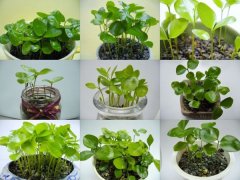
How do you germinate and plant orange jasmine (Murraya paniculata) seeds, and what do the sprouts look like?
How exactly do you plant orange jasmine seeds? Do you know? Orange jasmine is a very popular flowering plant, and many people love this flower, so how do you plant it yourself? How do you germinate orange jasmine? What do orange jasmine sprouts look like? There are pictures below. Want to learn a
-

Six key points for growing Orange Jasmine (Murraya paniculata): plenty of sunlight, water when the soil is dry, and never let water accumulate
Summary Temperature: The suitable growing temperature for orange jasmine is around 20-30°C. Soil: Choose well-drained sandy soil. Pruning: Mainly prune leggy and crossing branches to help the plant absorb nutrients. Watering: Water in moderation, water when dry and let it dry between waterings, and do not let water accumulate.
-
Sevenileaf Orange Jessamine (Murraya paniculata) Plant Profile and Photo Appreciation
Murraya paniculata is also called orange jessamine, seven-mile fragrance, nine-autumn fragrance, and so on. It is mainly distributed in southern China as well as the Philippines, Indonesia, Sri Lanka, and other places, and it is also a Chinese herbal medicine. So today, the editor will introduce to you the profile and photo appreciation of Murraya paniculata. 1.
-
How much does a Murraya paniculata sapling over 5 years old cost per plant? Detailed planting guide
In southern China, Murraya paniculata is mostly used as hedging material, and is also used as an ornamental material for flower beds and bonsai. So how much does a Murraya paniculata sapling over 5 years old cost per plant? How do you plant it? 1. Basic introduction to Murraya paniculata 1. Distribution of Murraya paniculata Murraya paniculata is
-
What is the difference between Murraya paniculata and orange jessamine, and are they suitable for indoors?
Murraya paniculata is an evergreen shrub of the genus Murraya in the family Rutaceae, and can also grow into a small tree. It bears small white flowers in clusters with a rich fragrance. Both its morphological characteristics and growth habits are very similar to those of orange jessamine, and Murraya paniculata is also called orange jessamine. So what
-
What to Do When Murraya paniculata Leaves Dry Up? Master the Right Methods to Restore Lush Green
Murraya paniculata is worth viewing all year round, and it looks best in early summer when new leaves unfurl. But Murraya paniculata is also a green plant that requires a lot of care. Recently, some flower lovers have run into the problem of Murraya paniculata leaves drying up, so what should be done when Murraya paniculata leaves dry up? Below is an introduction
-
How to make a Murraya paniculata bonsai? Latest method explained in detail
Seedling selection Murraya paniculata (orange jasmine) is an ornamental plant suitable for both soil planting and pot cultivation. Common seedling sources include slower artificial propagation methods such as sowing and cuttings, or you can search mountain forests yourself for old, quaint and elegant tree stumps to transplant. Pot selection It is recommended to choose a glazed pottery pot, which has strong water permeability
-
When does Murraya paniculata bloom? The latest flowering period introduction
Murraya paniculata is also called mock orange and many other names, and like citrus it belongs to the Rutaceae family. The plant is a shrub, and some also call it a small tree. It mainly grows in the tropical regions of the south. As for when it blooms, we can take a look together in a moment. The article will also
-
How Does Orange Jessamine Get Through Winter? The Latest Care Methods for You
Orange Jessamine (Murraya paniculata) is also known as Qilixiang, Qianlixiang, Wanlixiang, and Guoshanxiang. From its names alone, we can imagine how rich and powerful its fragrance is. With its graceful form, elegant foliage, and intense floral scent, it is extremely popular and often grown as a bonsai. In addition, it also has medicinal value
-
How to grow orange jasmine (Murraya paniculata)? A detailed guide to the latest cultivation methods
Orange jasmine (Murraya paniculata) is a small tree that can grow to over eight meters at its tallest. It is suited to warm places. In China, orange jasmine is basically grown in Yunnan, Guizhou, Hunan, Guangzhou, Hainan and other places, where the climate is relatively mild and meets
条件筛选