-

Application of the Year-round Cultivation Technology of Mulberry Branch Edible Fungi in Jinxiu Dayaoshan
Year-round Cultivation Technology of Mulberry Branch Edible Fungi in Jinxiu Dayaoshan
-
The portable edible mushroom mixing machine has outstanding advantages and is worth vigorously promoting and using.
The portable edible mushroom mixing machine is worth vigorously promoting and using.
-
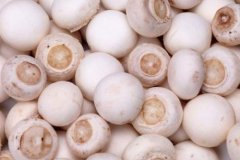
Is the underside of the Tricholoma mushroom cap and its interior turning black toxic, and can it still be eaten normally?
Tricholoma mushroom is also called white mushroom because it is white all over, and it is also a rare edible fungus with high nutritional value. But why do some Tricholoma mushrooms bought and left for a while turn black? Is the underside of the Tricholoma cap turning black toxic? Is the inside of the Tricholoma
-
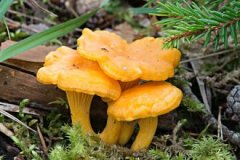
Are chanterelles poisonous? Toxicity level and price per jin explained
What kind of mushroom is the chanterelle? Some people say it is poisonous, so is it actually poisonous or not? It does have a certain level of toxicity, but at the same time it is also an edible mushroom, and people with itchy skin should avoid it. In the wild mushroom trading market, chanterelles currently cost 100 yuan per kilogram
-
New edible mushroom variety: high-temperature mushroom Xiagu 93
The high-temperature mushroom "Xiagu 93" is the first high-temperature-type four-spore mushroom variety suitable for summer cultivation in China, bred in 1993 by researchers at the Horticulture Institute of the Zhejiang Academy of Agricultural Sciences through research efforts, originally named "Zhe AGh-1". This variety fills the gap in summer mushroom cultivation varieties in China. The fruiting period of the high-temperature mushroom coincides with the off-season for various edible mushrooms, when fresh mushroom supply is interrupted, and prices are 3 to 5 times higher than in peak season. It has been promoted in more than 20 provinces and cities including Zhejiang, Jiangsu, Shanghai, Fujian, Guangdong, and **. This variety passed variety certification in April 2000.
-
Breeding and Promotion of the High-Temperature Mushroom 'Xiagu 93'
In December 2002, the provincial key science and technology project "Breeding and Promotion of the High-Temperature Mushroom 'Xiagu 93'", led by the Institute of Horticulture of the Zhejiang Academy of Agricultural Sciences, passed the achievement appraisal organized by the Provincial Department of Science and Technology. Summer is the off-season for the cultivation and production of various edible fungi in China, and the supply of fresh mushrooms on the market is interrupted. Therefore, carrying out the breeding of high-temperature mushrooms and establishing a complete set of supporting comprehensive cultivation techniques so that mushrooms can be grown for more than two seasons a year in China is of great significance for enriching China's mushroom varieties, improving mushroom quality, and meeting market demand for mushrooms. Through more than ten years of
-
Key Cultivation Techniques for the High-Temperature Mushroom Xiaogu 93
Xiaogu 93 is a high-temperature-type mushroom variety bred by the Zhejiang Academy of Agricultural Sciences. The cultivation techniques are as follows: 1. Cultivation season and facilities The cultivation season is from late March to October in the south, from May to September in the Yangtze River basin, and from June to August in the north. Mushroom house disinfection Existing conventional mushroom cultivation equipment such as mushroom houses or plastic greenhouses can be used for cultivation during the idle summer period, as well as plastic medium tunnel cultivation. Generally, immediately after the spring mushroom crop is finished, the waste material should be removed, the mushroom house and bed frames should be cleaned and disinfected, and before cultivation, dichlorvos
-
Detailed Explanation of Mushroom Cultivation Ingredient Mixing and Bagging Methods
Ingredient Mixing and Bagging When using mixed wood sawdust from a sawmill, it must be combined with 50% fresh sawdust to promote the growth of mushroom mycelium. Each room requires 1000 kg of sawdust, 200 kg of bran, 1 kg of 50% carbendazim, and 1200 kg of water mixed into the material, which helps kill contaminating microorganisms. The ratio of material to water is 1:1, mix evenly. The standard for dryness and moisture is that it forms a ball when squeezed in the hand, but no water droplets can be squeezed out, and it falls apart when the hand is released. The appropriate water content inside the mushroom bag is 56%. After the culture medium is prepared, bagging should be carried out immediately. According to the 24 cm x 55 cm specification
-
Detailed introduction to the Shiitake mushroom variety Wuxiang No. 1
Characteristics: This variety is a high-temperature type of shiitake mushroom and can produce mushrooms during the hot summer and autumn seasons. The mycelial growth temperature range is 5-34°C, with the optimum temperature being 24-27°C. The fruiting temperature is 5-30°C. Under relatively dry management, the fruiting bodies are of good quality. Advantages: tolerates high temperatures, fruits early, turns over waves quickly, has good mushroom quality, high yield, and stable production. Disadvantages: in environments with high temperature and high humidity and insufficient ventilation, the mushroom logs are prone to contamination by competitor fungi, and the fruiting bodies occur in large numbers and grow quickly, with thin flesh, long stipes, and easy cap opening. Suitable promotion areas:
-
The correct method for storing shiitake mushrooms with carbon dioxide
Using the carbon dioxide (CO2) low-oxygen insect-killing method, shiitake mushrooms can be stored without being affected by the natural climate, free from insects, mold, and spoilage, ensuring a year-round supply to the market. 1. Make a sealable cover from polyethylene film, with the size determined as needed, generally suitable for holding 5-10 tons. The cover is rectangular, with an inspection opening left at the top. When stacking, untie the bags of packaged shiitake mushrooms and stack them into a rectangle or square. The stack is divided into three layers: the bottom layer is a moisture-proof agent, the middle layer holds the shiitake mushrooms, the top layer is a moisture-absorbing agent, and then the cover is put on and sealed. 2. Ex
条件筛选