-
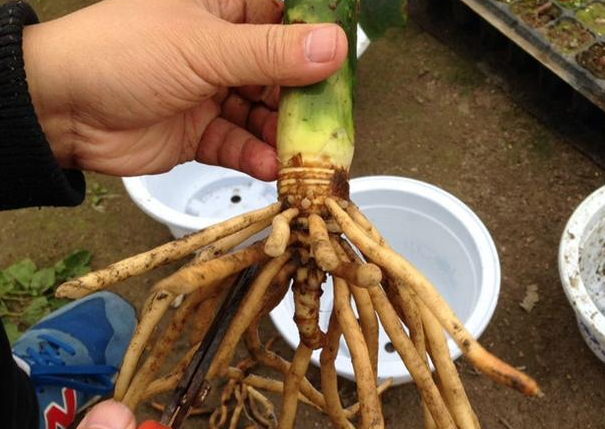
Under what circumstances does the clivia (Clivia miniata) grow side shoots, and what to do about root rot
When it comes to this clivia (Clivia miniata), many people absolutely love growing it. Under what circumstances does this clivia produce offsets? What to do about clivia root rot: 1. After removing it from the pot, first wash the roots clean, disinfect thoroughly, and soak in potassium permanganate solution. 2. Repot, using plain soil or pine needles to encourage rooting. 3. After potting
-
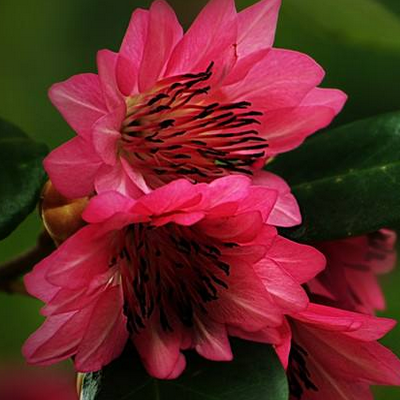
Red Lotus Rhodoleia: Minimum Cold Tolerance, Cutting Propagation Methods and Flower Language Explained
The Red Lotus Rhodoleia plant is generally planted in gardens and also cultivated as a landscape plant. So what is the lowest temperature the Red Lotus Rhodoleia can tolerate? How do you propagate Red Lotus Rhodoleia from cuttings? What is the flower language of Red Lotus Rhodoleia? Minimum cold tolerance of Red Lotus Rhodoleia: a neutral-to-shade-tolerant tree species, young trees tolerate shade, and once mature it prefers more light
-

The modern potato industry technology system is being built by the Ministry of Agriculture.
It focuses on demonstrating and promoting advanced, applicable, efficient, high-quality and water-saving cultivation techniques for dryland potatoes, accelerating the integration and transformation of agricultural scientific and technological achievements, and using this as a marker to drive the technological upgrading and sustainable development of China's potato industry. On July 22-23, the Department of Science and Technology of the Ministry of Agriculture, together with the Department of Crop Production, held the "National On-site Observation Meeting on Water-Saving, Efficient and High-Quality Cultivation Techniques for Dryland Potatoes" in Ulanqab, Inner Mongolia. According to reports, the potato, used as both food, vegetable, feed and processing raw material, has now become the world's fourth largest food crop after rice, wheat and corn.
-
Spring-planted rice D You 68, a variety recommended by the Ministry of Agriculture
D You 68 is a three-line hybrid mid-season rice bred by the Rice Research Institute of Sichuan Agricultural University. It was approved by the Sichuan Provincial Crop Variety Approval Committee in 1997. Its whole growth period is 4-5 days longer than that of Shanyou 63, and it belongs to the late-maturing medium indica combination. Plant height 120 cm, growth uniform, plants luxuriant, tillering ability relatively strong, high ear-bearing rate, large panicles with many grains, panicle length about 23 cm, grains per panicle 187-194, seed setting rate about 80%, 1000-grain weight 26.3-27.7 g. Wide adaptability, strong stress resistance, good color at maturity, relatively great flexibility in seedling age
-
How to Administer Medicine to a Sick Pig: Detailed Explanation of the Correct Procedure
In the process of raising pigs, this problem is often encountered: after a pig falls ill, its appetite usually decreases, or it may even stop eating, which makes oral administration of medicine to the sick pig difficult. So how can this problem be solved? The method is to carry out manual forced administration of medicine. The technique for administering medicine to a sick pig is introduced below: restrain the sick pig standing or lying on its side, fix its head so that it cannot move freely, use a mouth opener to pry the pig's mouth open, and quickly pass a stomach tube from the surface of the tongue through the root of the tongue into the esophagus. When it is
-
How to Administer Medication to a Sick Dog? Master the Correct Administration Method
Most medications for treating dog illnesses are given orally. There are many methods for administering medication to dogs, and the choice should be based on the dosage form, dosage, and symptoms. 1 Tablets, pills, and ointments: Have the dog sit and restrain it appropriately. The person administering the medication places the left palm across the dog's nose bridge, uses the thumb and index finger (or adds the middle finger) to open the mouth from both corners, or wraps the skin on both sides of the upper jaw around the upper teeth to open the mouth, then immediately places the tablet or pill at the base of the tongue, or uses a bamboo stick to apply the ointment to the base of the tongue, releases the left hand, and uses the right hand to support
-
Key Technical Points for Winter Potato Cultivation with No-Till or Minimum-Till Rice Straw Mulching
I. No-till or minimum-till field preparation. 1. Selection of no-till or minimum-till fields. No-till or minimum-till potato cultivation is best carried out in sandy loam fields with convenient drainage and irrigation, loose soil, a pH value of 5.5-6, and good water and fertilizer retention. It is especially suitable for planting in sandy loam paddy fields with good drainage and irrigation conditions during the winter fallow period in our city. Fields prone to drought and water shortage and shallow, poor fields, heavy clay fields, low-lying fields, mountain pit fields, cold waterlogged fields, and rotten
-
Soybean Jinyi 30 Selected as a 2008 Ministry of Agriculture Recommended Leading Variety
The new soybean variety "Jinyi 30", bred by researchers at the Institute of Crop Genetics of the Shanxi Academy of Agricultural Sciences, was recently selected as a leading variety for nationwide promotion in 2008 by the national Ministry of Agriculture, and is the only variety from our province to be selected. To comprehensively advance the science and technology outreach project and guide farmers in selecting superior varieties and applying advanced, suitable technologies, the national Ministry of Agriculture recommended a total of 80 leading agricultural varieties for nationwide promotion this year. "Jinyi 30" is a large-seeded variety. The plant has thick, sturdy stems, a well-developed root system, and
-
How are affected pigs identified? The Ministry of Agriculture publishes the criteria
Recently, the Veterinary Bureau of the Ministry of Agriculture and the China Institute of Veterinary Drug Control jointly compiled and issued the "Safe Use Manual for Inactivated Vaccine against Highly Pathogenic Porcine Reproductive and Respiratory Syndrome," publishing the quality standards for the inactivated vaccine against porcine reproductive and respiratory syndrome, and also publishing the criteria for identifying affected pigs. The manual stipulates that the criteria for identifying affected pigs are: a body temperature above 41°C for at least 3 days; decreased spirit and appetite, conjunctivitis, and respiratory symptoms such as coughing and wheezing; and on gross necropsy, patchy consolidation appearing in the apical or cardiac lobe of the lungs. Meeting the above three criteria means
-
What are the correct methods for administering medicine to sick pigs?
After a pig falls ill, choosing the right method of administering medicine can not only improve the efficacy of the drug, shorten the course of treatment, and help the pig recover quickly, but also reduce drug waste and save on medication expenses. The fasting administration method. This method is suitable when the sick pig has an appetite and the drug has no special odor. With this method, generally after the sick pig has fasted overnight, the drug is mixed into a small amount of feed the pig likes and given in the morning on an empty stomach, so that it eats it all quickly. Administering the drug this way neither wastes the drug nor fails to achieve the expected effect. For deworming pigs, this method is best. Odor masking by drenching
条件筛选