Under what circumstances does the clivia (Clivia miniata) grow side shoots, and what to do about root rot
When it comes to this clivia (Clivia miniata), many people absolutely love growing it. Under what circumstances does this clivia produce offsets? What to do about clivia root rot:
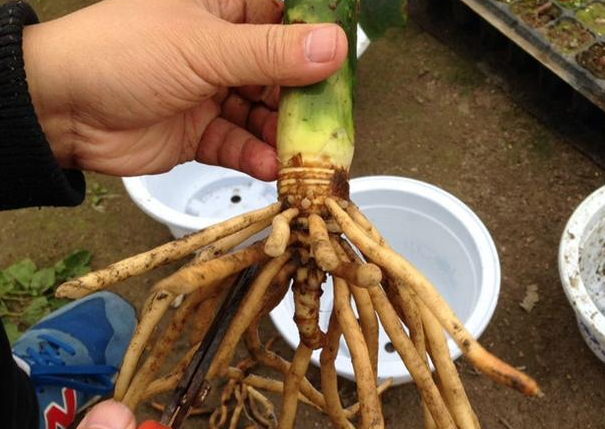
1. After removing it from the pot, first wash the roots clean, disinfect thoroughly, and soak in potassium permanganate solution
2. Repot, using plain soil or pine needles to encourage rooting
3. After potting, I generally water once more with diluted rooting solution and then place it in a spot with bright indirect light
4. Normally the potting soil must not be too wet; after a period of time it will grow new roots again
Note:
1. After disinfecting, you can soak the pseudobulb area in rooting hormone
2. You can remove some of the old leaves at the bottom to expose new growth points, which makes rooting easier
3. Prevention is better than cure; deal with it early, do not wait until the rot is very severe before treating it, and during normal care do not let water accumulate in the potting soil
That is all for the methods on how to make clivia produce offsets, and these are also the methods for dealing with root rot.
Always failing at keeping flowers? Learn these 3 sayings to keep your flowers alive
Money tree (Pachira aquatica)
Key to care: watering
Watering should follow "dry then wet", meaning water after the top 3~5cm of soil has completely dried out, and stop watering once water flows out through the small holes at the bottom.
Other notes:
Place in a bright, well-ventilated spot indoors, such as the living room or balcony.
Do not place it anywhere below 10°C. Do these few things and keeping a money tree healthy will be no problem.
Pothos (Epipremnum aureum)
Key to care: watering
Pothos needs a fairly large amount of water. At temperatures above 20°C, water 2~3 times a week; below 20°C, water at least once every 5 days.
Other notes:
1. Pothos likes shade; normally place it in the living room or a bright indoor spot. A balcony easily causes sunburn.
2. Pay attention to ventilation; open the windows for about 1~2 hours every day. Only with good ventilation is pothos less prone to water accumulation.
Lucky bamboo (Dracaena sanderiana)
Key to care: temperature
The most suitable growing temperature for lucky bamboo is 20°C. It is best to buy it in April or May in spring. If your home can stay at 20°C year-round, you can buy it in any season.
Other notes
1. Place it in a relatively bright spot in the living room; it can be on the windowsill or a little distance away from the windowsill.
2. Before rooting, change the water once every 1~2 days; after rooting, only change all the water when it starts to smell, and normally just top it up.
Asparagus fern (Asparagus setaceus)
Key to care: humidity
Asparagus fern needs high humidity to avoid yellow leaves. Growers in the north need to mist the leaves frequently.
Other notes:
1. Water using the soaking method: put the whole pot, plant and all, into a basin full of water, and take it out once the surface of the potting soil has also become moist.
Normally place it about 1 meter to half a meter away from a south-facing windowsill or south-facing balcony; asparagus fern does not like strong light.
Pennywort (Hydrocotyle vulgaris)
Key to care 1: light
It must be placed somewhere it can receive direct sunlight; only then will pennywort grow extremely fast!
Key to care 2: water
Pennywort loves water, absolutely loves it. For soil culture, water at least 3 times a week; for water culture or half-soil half-water, just top up the water.
Kalanchoe (Kalanchoe blossfeldiana)
Key to care: light
Kalanchoe should be placed indoors where it can receive plenty of light. A south-facing windowsill or south-facing balcony is best, east or west balconies come second, and forget about a north balcony.
Other notes:
1. For watering, water when the potting soil is dry, or it is fine to wait a little longer; kalanchoe itself can store water.
2. Kalanchoe is a short-day flower; it can only differentiate flower buds in an environment of 20°C and about 8 hours of sunlight.
Succulents
Key to care: watering
Succulents can basically survive with just a little water. When the surface potting soil is dry or the pot has clearly become lighter, it is time to water.
Other notes
Succulents definitely need plenty of sun; it is best to grow them outdoors, otherwise place them on a south-facing windowsill or balcony.
Clivia (Clivia miniata)
Key to care: watering
The fleshy roots of clivia are relatively more afraid of water accumulation. Water only after the top 2~3cm of the potting soil has completely dried out, and stop once water leaks from the small holes at the bottom.
For small clivia, you can water directly using the soaking method.
Other notes:
Normally you can wipe clivia leaves with beer diluted in water to make them glossy and shiny.
When growing clivia indoors, rotate the pot once a week to prevent the leaves from becoming messy.
Gardenia (Gardenia jasminoides)
Key to care: watering
Gardenia likes moisture. Growers in the north generally need to water once every 2~3 days, and also spray water daily to maintain air humidity.
Other notes:
Gardenia needs plenty of sun; it is best placed outdoors to receive direct light. If you do not have outdoor conditions, you can put it on a balcony, but the light must be unobstructed.
Growers in the north can add a little vinegar or ferrous sulfate when watering to adjust the soil pH and prevent gardenia leaves from turning yellow.
Spider plant (Chlorophytum comosum)
Key to care: humidity
Spider plant likes a humid environment, so normally water on the wetter side rather than letting it dry out, about 2 times a week, and usually mist the plant more often and sprinkle water on the ground around it to increase air humidity.
Other notes:
The most suitable growing spot for a spider plant is by a window, with light but not intense light. In the harsh summer sun, it is better to put it in the living room.
Promptly prune off dried and yellowed leaves. Repot the spider plant every 1~2 years, and when repotting, prune off old and dead roots, which can restore the spider plant's vitality.
Mint (Mentha)
Key to care: light
Mint must have sufficient light to grow; normally placing mint on a balcony is enough.
Other notes:
Mint must have good ventilation; only then will its fragrance be stronger.
Water once every 2~3 days, and water thoroughly. As temperatures rise, growers can appropriately increase watering frequency. As long as ventilation is good, the roots will not rot!
Phalaenopsis orchid (Phalaenopsis)
(Author: xxh1230 Source: Phalaenopsis Tieba)
Key to care: humidity
Phalaenopsis orchids really have high water requirements; generally speaking, they need watering once every 2~3 days, and even more when blooming.
Other notes:
The temperature must be kept between 15~30°C, otherwise various problems such as yellow leaves and failure to grow will appear.
Phalaenopsis orchids must have good ventilation, otherwise pest problems will occur.
Peace lily (Spathiphyllum)
Key to care: temperature
The peace lily likes relatively higher temperatures; the nighttime temperature should be 14~16°C, and the daytime temperature should be around 25°C.
Other notes:
The peace lily likes shade; do not put it directly in the sun. Behind a windowsill or in a bright living room is more suitable.
The peace lily needs relatively high air humidity. Besides watering according to "dry then wet", you also need to spray water daily on the leaves and the ground to increase air humidity.
Jasmine (Jasminum sambac)
(Author: Fangniuwa Source: Sina Blog)
Key to care: light
As the saying goes, "jasmine that cannot be sunburned to death", which shows how high jasmine's demand for light is. It is best grown outdoors; otherwise a balcony with good light will also do.
Care notes:
Keep it moist, better wet than dry, and water about once every 2~3 days.
Every year before jasmine sprouts, appropriately prune off old branches to promote the growth of new branches, so it can bloom more!
Rubber plant (Ficus elastica)
(Author: srnthj Source: Baidu Knows)
Key to care: temperature
The rubber plant is not cold-tolerant; indoor growing temperatures must not be lower than 10°C, otherwise it will suffer cold damage and drop leaves.
Care notes:
It likes an environment with soft light, such as a living room with north-south ventilation.
When watering, you can mix in overnight tea, and spray water on the leaves; first, this can increase air humidity, and second, it can clean the leaves.
Bougainvillea (Bougainvillea spectabilis)
(Author: Yanyu Congmeng Source: Pacific Computer Network Product Forum)
Key to care: temperature
Bougainvillea is not cold-tolerant; the minimum growing temperature should be around 10°C. Therefore, if growers in the north want to grow it, it can only be indoors, and only with heating.
Other notes:
Bougainvillea is afraid of waterlogging; basically just grasp the principle of not watering when not dry, and watering thoroughly when you do.
Growers in the north can add a little ferrous sulfate when watering to change the soil pH and make the soil more acidic.
Radermachera (Radermachera sinica)
Key to care: water
Be careful with watering the radermachera. If you are worried about water accumulation, you can use "dry then wet". For larger radermachera, it is best to water after the top 4~5cm of soil has completely dried out.
Other notes:
It likes light and can survive in full sun or partial shade, so whether you put it on the balcony or in the living room is up to you.
Apply dilute organic fertilizer once a month, or directly use fermented rice water or soybean cake water.
Camellia (Camellia japonica)
Key to care: temperature
Camellias are not cold-hardy; the most suitable temperature for growth is 18-25°C, and it should not drop below 10°C. If the temperature is relatively low, you can slip the camellia into a plastic bag and place it in a spot with strong sunlight to keep it warm.
Other notes:
Do not move camellias around casually. Once you place it in a spot with good light, stop moving it!
It likes acidic soil, so you can add a little vinegar or ferrous sulfate when watering.
Lily
Key care point: light
Lilies need an environment with plenty of light. Outdoor growing is best, followed by a balcony with good light.
Other notes:
Potted lilies must use a relatively deep pot, because their root system is very developed; if the pot is too shallow, the roots may even stick out!
Water by the "dry-wet" principle: wait until the surface potting soil is dry before watering! Never let water accumulate, or the bulb will rot.
Snake plant
Key care point: watering
Snake plants are very drought-tolerant and at the same time very afraid of waterlogging. When watering, it is better to keep them dry than wet, once a week or even less. Of course, in summer the watering frequency should be increased appropriately, about 2 times a week.
Other notes:
Snake plants should use a relatively shallow pot with a relatively large diameter, so that the snake plant can successfully produce pups.
Its light requirements are not high; as long as the room is not especially dark, snake plants can grow!
Peony
(Author: Yingjian Da Mingbai Source: zol forum)
Key care point: light
If peonies are to bloom, they must have sufficient light and need to be cultivated in the open air; they can be planted on an open balcony.
Other care points:
Newly potted peonies must not be fertilized; only after half a year can some relatively dilute chicken manure fertilizer, bean cake water, etc. be applied.
Peonies have fleshy roots and are very afraid of waterlogging, so watering must follow the dry-wet principle, especially for potted peonies.
Aloe
Key care point: watering
Aloe does not need to be watered too frequently; it is better dry than wet, about once a week is enough. In summer, water more, about 2 times a week, and in winter about once every half a month.
Other notes:
Usually give it more sun, except during the scorching sun of summer.
Potted aloe is best repotted once every 1-2 years, and do it in spring or autumn.
Orchid
Key care point: growing medium
If the growing medium is prepared well and you take careful care of it in daily life, it basically will not die. The simplest growing medium ratio is bark + brick granules + mountain soil granules.
Other notes:
Pay attention when watering. Although the dry-wet principle applies generally, appropriately increasing the amount of water without causing waterlogging will make orchids grow better.
For fertilizer, you can choose fully decomposed bean cake water, or buy special orchid fertilizer; basically once a week is enough.
Azalea
(Author: Renjun Source: Huairen Tieba)
Key care point: soil pH
When watering azaleas, add a little vinegar or ferrous sulfate. This can effectively improve the soil pH and make the soil more suitable for azalea growth.
Other notes:
In spring and autumn, give azaleas more sun, but in summer provide shading to avoid direct sunlight.
Do not move azaleas' position easily. It is best to place them on a southeast-facing balcony, and ventilation must be good!