Red Lotus Rhodoleia: Minimum Cold Tolerance, Cutting Propagation Methods and Flower Language Explained
The Red Lotus Rhodoleia plant is generally planted in gardens and also cultivated as a landscape plant. So what is the lowest temperature the Red Lotus Rhodoleia can tolerate? How do you propagate Red Lotus Rhodoleia from cuttings? What is the flower language of Red Lotus Rhodoleia?
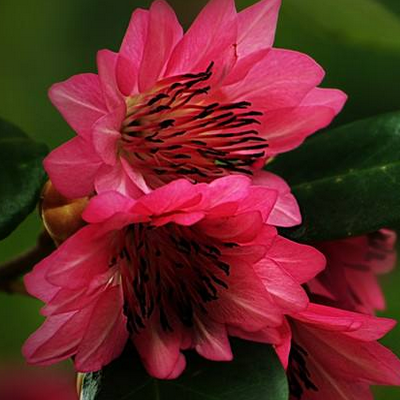
Minimum cold tolerance of Red Lotus Rhodoleia:
A neutral-to-shade-tolerant tree species, young trees tolerate shade, and once mature it prefers more light. It requires an average annual temperature of 19°C-22°C, tolerates an absolute low temperature of -4.5°C, and is suited to red soils and red-yellow soils developed from granite and sandy shale, in acidic to slightly acidic soils. On deep, fertile slopes it can grow into large-diameter timber, and it can also grow on arid, barren mountain ridges.
How to propagate Red Lotus Rhodoleia from cuttings:
Seedling environment
It is best to ensure the average annual temperature stays between 21°C and 23°C, guarantee a certain amount of sunlight, and choose soil such as lateritic red soil developed from granite or gneiss for planting.
Cultivation of mother plants for cutting collection
Take the Red Lotus Rhodoleia seedlings out of the growing bags and plant them in deep, fertile soil, then water thoroughly at the base of the plants. Then choose to top them to encourage the growth of side branches; when the branches have grown and are semi-lignified, cut them off to use as cuttings.
Cutting
The day before cutting, disinfect with potassium permanganate solution. Place the cut cuttings in clean water, trim and soak them for about two hours, then disinfect them again, after which proceed with cutting. After cutting, water thoroughly once promptly, then cover with a shade net.
What is the flower language of Red Lotus Rhodoleia:
The flower language of Red Lotus Rhodoleia is: beauty hidden deep in the mountains, golden bells hung high.
There is a poem of the same name that expresses the flower language of Red Lotus Rhodoleia very well——"Born with beauty hidden deep in the mountains, glad to have the lianmu know the flower fairy. Green leaves reach the clouds dripping emerald green, red flowers reflect the sun as rosy clouds dye the sky. Rolling green waves sway in the wind, waves of delicate fragrance drift to the clouds. Golden bells hang high, the red lotus is lovely, the heart is forever linked with Amu."
Alright, that is all for the introduction to Red Lotus Rhodoleia. Friends, you all understand it clearly now, and know the flower language is beauty hidden deep in the mountains.
Japanese Pieris Pieris japonica Illustrated Guide: How to Grow Japanese Pieris / How to Propagate Japanese Pieris
Japanese Pieris ProfileJapanese Pieris Pieris japonica
Cultivation Methods and Precautions for Japanese Pieris, Introduction to Japanese Pieris
Japanese Pieris: an evergreen shrub, 1-3 meters tall. Leaves clustered at the branch tips, thickly papery, oblanceolate or lanceolate-oblong, with fine serrations along the leaf margins; racemes; each inflorescence has 3-4 flower branches, densely bearing small urn-shaped flowers, pendulous, corolla white or white-green, capsule spherical. The whole plant is toxic but the flowers and leaves have extremely high ornamental value, so large plantings are already hard to see in the wild. It can be used for cut flowers, bonsai, hedges and open-ground garden cultivation; both stems and leaves are toxic, and if humans or livestock accidentally eat them, it causes coma, difficulty breathing and loss of coordination. The leaves are highly toxic, and their water decoction can kill agricultural pests. The leaves are toxic and can be used as an insecticide. Toxic parts: stems, leaves and seeds. Poisoning symptoms: accidental ingestion by young children or livestock causes symptoms such as coma, difficulty breathing, loss of coordination and even whole-body convulsions.
Origin of the name: when horses accidentally eat its branches and leaves, they become poisoned and appear drunk, hence the name "Japanese Pieris" (horse-drunk tree).
Morphological Characteristics of Japanese Pieris
A shrub or small tree, about 4 meters tall; bark brown, branchlets spreading, hairless; winter buds obovate, bud scales 3-8, arranged imbricately. Leaves clustered at the branch tips, thickly papery, oblanceolate or lanceolate-oblong, with fine serrations along the leaf margins; leaves leathery, densely clustered at the branch tips, elliptic-lanceolate, 3-8 cm long, 1-2 cm wide, apex shortly acuminate, base narrowly cuneate, margins with fine rounded teeth on more than 2/3, rarely nearly entire, hairless, dark green above, light green beneath, midvein raised on both surfaces, lateral veins sunken above and inconspicuous beneath, veinlets reticulate; petiole 3-8 mm long, with a deep groove on the ventral side, rounded on the dorsal side, slightly pubescent. Racemes or panicles terminal or axillary, 8-14 cm long, upright or drooping, the inflorescence axis pubescent; each inflorescence has 3-4 flower branches, densely bearing small urn-shaped flowers, pendulous, corolla white or white-green, capsule spherical. Sepals triangular-ovate, about 3.5 mm long, about 1 mm wide, sparsely short-pubescent inside, with a few glandular hairs or nearly hairless outside; corolla white, urceolate, 6-7 mm long, about 5 mm in diameter, hairless, upper part shallowly 5-lobed, lobes nearly round; stamens 10, about 3.5 mm long, filaments slender, long-pubescent, more so at the base; ovary nearly spherical, hairless; style slender, about 6 mm long, stigma small, capitate. Capsule nearly flattened-spherical, 3-5 mm in diameter, hairless. Flowering period: January-March; pale white-green; fruiting period July-February, capsule, brown.
Evergreen shrub or small tree, 2-4 m tall. Bark brown, branchlets spreading, hairless; winter buds obovate, bud scales 3-8, arranged imbricately. Leaves densely clustered at the branch tips; petiole 3-8 mm long, with a deep groove on the ventral side; leaf blade leathery, elliptic-lanceolate, or oblanceolate, 3-8 cm long, 1-2 cm wide, apex shortly acuminate, base narrowly cuneate, margins with fine rounded teeth on more than 2/3, rarely nearly entire, dark green and glossy above, light green beneath, midvein raised on both surfaces, lateral veins sunken above and inconspicuous beneath, veinlets reticulate. Racemes or panicles terminal or axillary, clustered at the branch tips, 8-14 cm long, the inflorescence axis pubescent; sepals triangular-ovate, about 3.5 mm long; corolla white, urceolate, upper part shallowly 5-lobed, lobes nearly round; stamens 10, filaments long-pubescent; ovary 1, nearly spherical, style slender, stigma capitate. Capsule nearly flattened-spherical, 3-5 mm in diameter, dehiscing loculicidally, calyx and style persistent. Flowering period April-May, fruiting period July-September. Japanese Pieris prefers humid, semi-shaded environments, fears strong direct sunlight, and is cold-hardy. It can overwinter outdoors at a low temperature of -27°C, tolerates pruning and has strong sprouting ability. Most Japanese Pieris varieties have low environmental requirements and are easy to grow. Japanese Pieris prefers humid, semi-shaded environments, fears strong direct sunlight, and is cold-hardy. It can overwinter outdoors at a low temperature of -27°C, tolerates pruning and has strong sprouting ability.
Ecological Habits of Japanese Pieris - Sunlight:When planting on flat ground, avoid strong direct sunlight at high temperatures
Management:The suitable growth temperature is about 15-25°C
Water:The best cultivation soil is loam or sandy loam rich in humus, and drainage must be good.
Japanese Pieris prefers humid, semi-shaded environments, fears strong direct sunlight, and is cold-hardy. It can overwinter outdoors at a low temperature of -27°C, tolerates pruning and has strong sprouting ability. Most Japanese Pieris varieties have low environmental requirements and are easy to grow.
Variety Classification of Japanese Pieris - Beautiful Pieris Pieris formosa (Wall.) D. Don
Beautiful Pieris (Iconographia Cormophytorum Sinicorum), Xingshan Pieris (Chinese Tree Taxonomy), Long-bracted Beautiful Pieris (Flora Xizangica, Flora Yunnanica)
Evergreen shrub or small tree, 2-4 meters tall; branchlets cylindrical, hairless, with leaf scars on the branches; winter buds relatively small, ovate, scales hairless outside. Leaves leathery, lanceolate to oblong, rarely oblanceolate, 4-10 cm long, 1.5-3 cm wide, apex acuminate or acute, margins finely serrate, base cuneate to obtuse-rounded, dark green above, light green beneath, midvein prominent, sparsely pubescent above when young, falling off when old, lateral veins sunken above and inconspicuous beneath; petiole 1-1.5 cm long, with groove lines on the ventral side, rounded on the dorsal side. Racemes clustered in the leaf axils at the branch tips, or sometimes terminal panicles, 4-10 cm long, rarely reaching more than 20 cm; pedicels pubescent; sepals broadly lanceolate, about 3 mm long; corolla white, urceolate, pubescent outside, upper part shallowly 5-lobed, lobe apices obtuse-rounded; stamens 10, filaments linear, about 4 mm long, with white pubescence, anthers yellow; ovary flattened-spherical, hairless, style about 5 mm long, stigma small, capitate. Capsule ovate, about 4 mm in diameter; seeds yellow-brown, spindle-shaped, the outer seed coat cells elongated. Flowering period May-June, fruiting period July-September.
Produced in Zhejiang, Jiangxi, Hubei, Hunan, Guangdong, Guangxi, Sichuan, Guizhou, Yunnan and other provinces and regions. Grows in thickets at an altitude of 900-2300 meters. Also found in Vietnam, Myanmar, Nepal, Bhutan and India.
Long-sepaled Pieris Pieris swinhoei Hemsl.
Shrub, 2-3 meters tall; bark gray-brown, longitudinally fissured, branchlets slender, slightly pubescent; winter buds not seen. Leaves clustered at the branch tips, leathery, narrowly lanceolate, 4.5-8 cm long, 1-1.5 cm wide, apex shortly acuminate, base narrowly cuneate, margins with sparse serrations above the middle, slightly revolute after drying, dark green above, light green beneath, hairless on both surfaces, midvein prominent above and raised beneath, lateral veins nearly horizontally spreading, veinlets reticulate, obvious; petiole extremely short, 2-7 mm long. Racemes or panicles borne at the branch tips or in leaf axils, upright, 15-20 cm long; pedicels about 5 mm long, pubescent; sepals long, leathery, lanceolate, 5-7 mm long, 3-4 mm wide, short-pubescent inside, especially near the top; corolla white, tubular-urceolate, about 1 cm long, about 5 mm in diameter, hairless, upper part shallowly 5-lobed, upper part of lobes obtuse-rounded; stamens 10, included, about 6 mm long, filaments linear, nearly hairless; ovary conical, about 2 mm long, about 1.5 mm in diameter, densely yellow-brown short-pubescent; style slender, about 7 mm long, stigma small, slightly pubescent. Capsule nearly spherical, about 5 mm in diameter. Flowering period April-June, fruiting period July-September.
Produced in Fujian, Guangdong, Hong Kong, China. Grows in thickets. Type specimen collected from Xiamen, Fujian.
Variegated Japanese Pieris
Variegated Japanese Pieris is the most popular colorful-leaved garden tree species in Europe, America and Japan. It can be enjoyed both for its foliage and its flowers, meets the requirements of China's garden applications for new superior varieties, and has great market potential.
Variegated Japanese Pieris is the collective name for cultivated variants or cultivars of Japanese Pieris (Pieris japonica) as well as hybrids of Japanese Pieris and Taiwan Pieris. It belongs to the Ericaceae family and is an evergreen broad-leaved shrub or tree. Its cultivated variants and cultivars are numerous, and the leaf colors vary greatly. The varieties introduced into China can be broadly divided into two major series: foliage-viewing and flower-viewing. The foliage-viewing series can be divided by leaf color into three major series: red-leaf, variegated-leaf and green-leaf. The flower-viewing series can be divided into two major series: red-flowered and white-flowered. At peak bloom, the red-flowered series is a profusion of flowers, brilliant and colorful; the white-flowered series is like flowing clouds and flying waterfalls, fresh and elegant. The bark of Variegated Japanese Pieris is gray or brown, with longitudinal striations and scaly patterns.
The leaves of Variegated Japanese Pieris are leathery and flexible, mostly alternate, lanceolate to oblanceolate, or long-elliptic, with serrations. Young shoots are often red, bronze, copper, orange or yellow, varying. The leaf color of most Japanese Pieris cultivars changes with different growth stages, and the same plant can simultaneously have red, pink, tender yellow, green and other leaves in a spectacular display, with extremely high ornamental value. The flower form of Variegated Japanese Pieris is uniquely charming, with small pure white flowers borne on racemes or panicles, resembling hanging bells. Inflorescences are terminal or axillary, upright or drooping. The flowers are mostly white, sometimes pink, and fragrant. Flowering period February to May, the calyx yellow-green or yellow-brown, sometimes light reddish-brown.
Distribution Area of Japanese Pieris
Distributed in southern mainland China, Taiwan and other places, produced in Taiwan, Anhui, Zhejiang, Fujian and other provinces. Grows in thickets at an altitude of 800-**** meters. Also found in Japan.
Garden Uses of Japanese Pieris
Japanese Pieris (Piereis polta) belongs to the Ericaceae subfamily Andromedoideae, and is an evergreen broad-leaved shrub or tree. The tree height is usually between 0.8-3 m. Japanese Pieris has a graceful plant shape and attractive leaf colors, and is a common evergreen shrub in European and American gardens.
There are many cultivars of Japanese Pieris, with more than 100 already registered. Most of those cultivated in nurseries are Japanese Pieris, and some are hybrids of Japanese Pieris and Taiwan Pieris or hybrids of Taiwan Pieris variants and Japanese Pieris.
Classified from an ornamental perspective, the cultivars of Japanese Pieris can be broadly divided into two major series: foliage-viewing and flower-viewing. The foliage-viewing series is divided by leaf color into three major series: the red-leaf series, the red-flower series and the green-leaf series. The flower-viewing series can be divided into two major series: red-flowered and white-flowered. The red-leaf series is as brilliantly red as flames; the variegated-leaf series is brightly multicolored; the green-leaf series is verdantly lush; at peak bloom, the red-flowered series has inflorescences covering the branches, passionate and bold; the white-flowered series is like flowing clouds and flying waterfalls, fresh and elegant. At the same time, the leaf color of most Japanese Pieris cultivars changes with the age of the leaves, so at the same period the plant can simultaneously have red, pink, tender yellow, green and other leaves, with brilliant colors and extremely high ornamental value. Many varieties have a very compact growth habit with dense branches and leaves, and are easy to shape into all kinds of forms. According to the characteristics of the cultivar, Japanese Pieris can be used as a woody potted flower for viewing; in landscaping, it is also often used for flower hedges and color-block mosaics. It has a very good beautifying effect in woodland arrangement, block planting, understory planting and edge shrub beautification.
Development Prospects
With numerous varieties and differing habits and wide uses, it is entirely possible to "match the tree to the site." Its wide application in the gardens of many countries such as those in Europe and Japan is good proof. Many varieties, because of their rich, colorful and gorgeous leaf colors, have extremely high ornamental value as potted flowers, and when grown in substrate, the pH is easy to control and they are easy to care for.
At present, there is very little introduction and cultivation of Japanese Pieris varieties in China, and excellent varieties are even rarer. As long as the varieties are chosen properly and combined with substrate cultivation, whether for potted flowers or landscaping, the market prospects are immeasurable.
Medicinal or Dietary Value of Japanese Pieris
The medical information and health dietary information on Huhua Network is for reference only and cannot be used as a basis for diagnosis or medical treatment. Any health issue should be consulted with professional medical staff, and the treatment of any disease should follow doctor's orders.
Ultimate flower-protecting mission: love yourself, and start from reality, strictly following doctor's orders. For illness, do not be careless, do not delay, do not give up hope, face it bravely, use love to warm the silent world, and use your heart to care for the flower field within.
The medical content on Huhua Network is for reference only and cannot be regarded as professional advice. Any health issue should be consulted with professional medical staff.
Medicinal Information (1)
Traditional Chinese Medicine Information
[Drug name]: Japanese Pieris
[Pinyin]: ma zui mu
[Latin plant animal mineral name]: Peris japonica(Thunb.)D.Den ex G.Den[P.taiwanensis Hayata; P.Polita W.w.Smithet Jeffr.; Andromeda japenica Thunb.]
[Traditional Chinese medicine chemical composition]: The leaves contain asebotoxin, asebetin, asebouercitrin, taraxerol, etc.
[Efficacy]: insecticidal
[Family and genus classification]: Ericaceae
[Main indications]: scabies
[Ecological environment]: Grows in sparse forests on hillsides, forest edges and thickets beside stream valleys at an altitude of 800-**** m.
[Harvesting and storage]: Can be harvested in spring, summer and autumn, used fresh or dried in the sun.
[Resource distribution]: Distributed in Anhui, Zhejiang, Jiangxi, Fujian, Taiwan and other places.
[Efficacy classification]: insecticide
[Usage and dosage]: External use: appropriate amount, decoct in water for washing, apply the residue as a poultice.
[Source]: "Chinese Materia Medica"
Functions and Uses of Japanese Pieris
The whole plant is toxic but the flowers and leaves have extremely high ornamental value, so large plantings are already hard to see in the wild. It can be used for cut flowers, bonsai, hedges and open-ground garden cultivation; both stems and leaves are toxic, and if humans or livestock accidentally eat them, it causes coma, difficulty breathing and loss of coordination. The leaves are highly toxic, and their water decoction can kill agricultural pests.
Propagation Methods of Japanese Pieris: seeds, cuttings or division. Planting and Care
Japanese Pieris has a graceful plant shape, variable leaf colors, and pink inflorescences, very charming. It is cold-hardy, wind-resistant, pollution-resistant, and has strong sprouting ability, making it an excellent foliage evergreen shrub for cities. It is also widely used for indoor potted plants and small courtyard viewing in Europe and Japan. Japanese Pieris is native to China and Japan, an evergreen shrub, plant height 4 m, plant spread 3 m, leaves narrowly obovate to elliptic: terminal panicles, about 15 cm long, flowers bell-shaped, white, drooping or semi-upright, flowering in late winter and spring; can tolerate a low temperature of -15°C.
I. Propagation Techniques. ① Seed propagation. Sow in pots in spring and autumn, the suitable germination temperature is 13°C-18°C, germinating 30-40 days after sowing. ② Cutting propagation. Use softwood cuttings in early summer and semi-ripened cuttings in late summer, cutting length 8 cm-10 cm, keep room temperature at 20°C-24°C, rooting 25-30 days after cutting. Treating the base with 5 g/L indolebutyric acid for 2-3 seconds can promote rooting.
II. Choosing Soil. The young leaves of Japanese Pieris are colored, with red, pink, pink-green, tender yellow, orange-yellow and other colors. When planting in small courtyards, it is best to choose a high, well-drained, fertile, humus-rich acidic sandy loam, with a plant spacing of 2 m-3 m. For potted plants, use garden soil, sand and barnyard manure mixed in a 6:2:2 ratio.
III. Scientific Fertilization. It likes warm, humid and semi-shaded environments. During the growth period, keep the soil moist and apply an acidic fertilizer of Huiyou 21-7-7 once a month. In winter, dig a trench around the outer edge of the canopy to fertilize, and cover with a layer of bark chips to keep warm for overwintering. [1]
IV. Suitable Temperature. Japanese Pieris is relatively cold-hardy, fears high temperatures and strong direct sunlight. Its growth temperature is 10°C-15°C; cold-hardy species can tolerate 15°C, and general species can tolerate 5°C.
Flower Language of Japanese Pieris
Sacrifice, danger, pure love
Japanese Pieris Pictures
Golden Rat Tail Cactus Borzicactus aureispina Illustrated Guide: How to Grow Golden Rat Tail Cactus / How to Propagate Golden Rat Tail Cactus
Golden Rat Tail Cactus ProfileGolden Rat Tail Cactus Borzicactus aureispina
Cultivation Methods and Precautions for Golden Rat Tail Cactus, Introduction to Golden Rat Tail Cactus
Golden Rat Tail Cactus is a perennial succulent plant of the Cactaceae family, with slender creeping stems densely covered with yellow-brown short spines. Young stems are bright green, later turning gray. Flowers pink. Golden Rat Tail Cactus cristata, also known as Golden Crest, is formed by the irregular growth and extension of the growing point of the Golden Rat Tail Cactus column. It usually mutates into wood-ear shape, cockscomb shape or wave shape, with the abnormal stems densely covered with golden-yellow short bristles.
Stems slender cylindrical, 1.5-2.5 cm thick, 1.5 m tall, much branched, climbing or creeping and drooping, bright green, with 16-18 low ribs, covered with golden-yellow bristle-like fine spines. A single plant resembles a golden monkey's tail, and as a whole looks like a gathering of snakes. Flowers lateral, funnel-shaped, inner tepals pink, outer tepals orange-red with bright red stripes,
Golden Rat Tail Cactus likes a sunny environment. Tolerates drought and semi-shade, dislikes waterlogging. Suitable growth temperature 20-25°C, can tolerate a low temperature of 4°C. Its habit is robust, with no special requirements for soil, and it grows well in ordinary flower soil.
Golden Rat Tail Cactus flowering period April-June.
Morphological Characteristics of Golden Rat Tail Cactus
Golden Rat Tail Cactus is a perennial succulent plant of the Cactaceae family, with slender cylindrical stems, 1.5-2.5 cm thick, 1.5 m tall, much branched, climbing or creeping and drooping, bright green, with 16-18 low ribs, covered with golden-yellow bristle-like fine spines. A single plant resembles a golden monkey's tail, and as a whole looks like a gathering of snakes. Flowers lateral, funnel-shaped, inner tepals pink, outer tepals orange-red with bright red stripes,
The spines of the Golden Rat Tail Cactus are hard, slightly short, and golden yellow. The flowers of the Golden Rat Tail Cactus are rose red, and it blooms easily, flowering continuously from the whole summer into autumn. The flower shape is similar to that of the Christmas cactus, but the Golden Rat Tail Cactus flower is a bit larger, and the flower stays open continuously and does not close at night. The Golden Rat Tail Cactus is cross-pollinated, and the mature fruit hides among the soft spines.
The stems of the Golden Rat Tail Cactus are slender, creeping, usually twisted and drooping, reaching up to 2 meters in its place of origin, generally 20-30 cm when cultivated, with aerial roots. Young stems green, later turning gray, 1.5-2 cm in diameter, leafless, with 10-14 ribs, bearing clusters of 15-20 short spines every 0.5 cm, initially slightly red, later turning yellow-brown, named for its appearance resembling a mouse's tail. Flowers funnel-shaped, pink, about 8 cm long, 7 cm in diameter, tepals acute, opening by day and closing at night, lasting one week. Berry spherical, red, with bristles, seeds small, red-brown. The rat tail cactus stems are slender, twisted and drooping, dark green, with short spines in neat rows, and the flower colors are bright and beautiful, making it an excellent indoor ornamental plant. Hanging the pot under the eaves with wire, or displaying it in front of a window in winter, gives an excellent ornamental effect.
The Golden Rat Tail Cactus is bright green when young, later turning gray-green. It has 10-14 shallow ribs, 10-20 radial spines, new spines red, later turning yellow to brown. It flowers in April-May, flowers zygomorphic, pink, opening by day and closing at night. Berry spherical, red.
The Golden Rat Tail Cactus has 10-12 bristle-like radial spines; new spines pale red, old spines yellow-brown. The long abnormal stems closely resemble a mouse's tail, very peculiar. The Golden Rat Tail Cactus generally flowers in April-May, and the pink flowers open by day and close at night, very interesting.
Ecological Habits of Golden Rat Tail Cactus
Golden Rat Tail Cactus likes warm, humid and sunny environments, is not cold-hardy, tolerates drought and semi-shade, and dislikes waterlogging. It likes well-drained, airy, fertile soil, which can be made by mixing leaf mold, sand and loam.
The suitable growth temperature of Golden Rat Tail Cactus is 20-25°C, and it can tolerate a low temperature of 4°C. Its habit is robust, with no special requirements for soil, and it grows well in ordinary flower soil.
During the summer growth period, the Golden Rat Tail Cactus needs sufficient water, and should be sprayed with water frequently to maintain relatively high air humidity. Fertilize once a month. The overwintering temperature needs to be above 10°C.
When cultivated outdoors in midsummer, it needs appropriate shading. When moved indoors in winter, it needs sufficient sunlight and reduced watering. The stems of the Golden Rat Tail Cactus are slender, creeping, and much branched, so when potted it needs a support frame, or can be grown in a hanging basket. The whole plant should be pruned to maintain a graceful shape. During the growth period, in addition to sufficient watering, it should also be sprayed with water frequently to increase air humidity. In summer, pay attention to the ventilation of the cultivation site, and it is best to place the plant in a semi-shaded spot outdoors. In winter, the pot soil should be kept appropriately moist, not completely dried out.
Cultivation Techniques of Golden Rat Tail Cactus - Cultivation Management
Golden Rat Tail Cactus likes warm conditions with a large day-night temperature difference, humid summers and dry winters, and an environment with strong but short-duration light. It requires good drainage and dislikes waterlogging. It can be cultivated in the open ground in the subtropical regions of South China, while in other regions it can only be potted and overwintered indoors.
The potting soil is made by mixing equal parts of leaf mold, sandy soil and loam, with a small amount of sesame paste residue and bone meal added as base fertilizer. When cultivated outdoors, place it in a spot with sufficient light and shelter from rain; when cultivated indoors, maintain a certain humidity in summer, and never let it stay dry for a long time, to prevent the abnormal stems from withering and yellowing. In winter it must be relatively dry, and watering should be controlled. When watering, note that it should be watered thoroughly only after drying out, and the soil must not be too wet, to avoid root rot. Especially after the flower buds appear, water should be reduced further to avoid bud and flower drop. During the growth period, apply liquid fertilizer once every 10-15 days to promote lush growth and large, brightly colored flowers. Potted plants are generally moved indoors before Frost's Descent, and the room temperature should not be lower than 10°C; the time to move them out should be after Qingming.
During the growing season, watering follows the principle of alternating dry and wet, and apply a thin fertilizer once a month, mainly phosphorus and potassium fertilizers. Long-term insufficient light is unfavorable for flowering, so it should often be placed in a sunny spot for care. In midsummer, shade appropriately, and in winter, control watering and keep the pot soil slightly moist.
During the summer growth period, the Golden Rat Tail Cactus needs sufficient water and should be sprayed with water frequently to maintain relatively high air humidity. Fertilize once a month. When cultivated outdoors in midsummer, it needs appropriate shading. When moved indoors in winter, it needs sufficient sunlight and reduced watering. The rat tail cactus stems are slender, creeping, and much branched, so when potted it needs a support frame, or can be grown in a hanging basket. The whole plant should be pruned to maintain a graceful shape.
Cultivation Key Points
Soil
Fertile, well-aerated sandy loam and forest soil, avoiding waterlogged ground, drought-tolerant. The soil mix for the Golden Rat Tail Cactus is relatively simple: perlite mixed with peat, with vermiculite and coal cinders added, in any ratio, with aeration as the priority.
Water
In summer it must not lack water; keep the pot soil moist and spray frequently to maintain humidity. In winter, water once every ten days, and be careful not to spray water onto the stem surface.
Sunlight
Golden Rat Tail Cactus likes light, tolerates strong sunlight and also semi-shade, but under long-term shade the stems grow slender.
Fertilizer
Before potting the Golden Rat Tail Cactus, add decomposed organic fertilizer to the nutrient soil, and fertilize once a month during the growing season. Do not fertilize during winter and summer dormancy.
Temperature and Watering
Golden Rat Tail Cactus likes warm climatic conditions with a large day-night temperature difference, and is not cold-hardy.
This variety of Golden Rat Tail Cactus is not very tolerant of intense sunlight. During the growth period, water only after the soil dries out, and give mature plants as little water as possible. Summer is the growth period of the Golden Rat Tail Cactus, and the plant also needs slight shading and ventilation. The high-temperature period from July to September is basically maintained in a cool, ventilated condition, and from September to December water is also given only after the soil dries out.
Throughout the cold winter, when the temperature is below 2°C, water can almost be withheld. At this time the Golden Rat Tail Cactus enters dormancy, and less water can also prevent frost damage and root rot caused by low temperatures. When the pot soil is dry, the Golden Rat Tail Cactus is relatively tolerant of low temperatures (do not go below 0°C).
During the growth period, watering the Golden Rat Tail Cactus is basically done only after the soil dries out, and it is basically not watered over the top, as poor ventilation also makes it prone to rot. Watering in spring must be done gradually, paying attention to weather changes. The Golden Rat Tail Cactus is still relatively easy to care for.
How to Grow and Care for Aporocactus flagelliformis (Golden Rat Tail Cactus) in Pots
During the summer growing season, it needs plenty of water, along with frequent misting to maintain high air humidity. Fertilize once a month. When grown outdoors in midsummer, it needs appropriate shade. In winter, move it indoors where it needs ample sunlight and reduced watering. The stems of the rat tail cactus are slender and prostrate, with many branches; when grown in pots, it needs a support frame or can be grown in a hanging basket. The whole plant should be pruned to maintain an attractive shape.
When watering, let the soil dry out completely before watering thoroughly; do not let the soil become too wet, as this can cause root rot. Especially after flower buds appear, water even more sparingly to avoid bud and flower drop. During the growing period, apply liquid fertilizer once every 10-15 days to encourage lush growth and large, brightly colored flowers. Potted plants are generally brought indoors before Frost's Descent, and the room temperature should not fall below 10°C; the best time to move them back outside is after Qingming. The golden rat tail cactus is prone to red spider mite damage, and the affected areas turn yellowish-brown, spoiling its ornamental value. Therefore, pay special attention to ventilation in summer; it is best to place it outdoors for cultivation, and during the intense heat of midsummer, provide appropriate shade and cooling as a preventive measure.
Pest and Disease Control for Aporocactus flagelliformis
Take care to control leaf spot disease, red spider mites and whiteflies on Aporocactus flagelliformis.
The main pest of Aporocactus flagelliformis is the red spider mite, which can be prevented by regular spraying with dimethoate.
The main problem for Aporocactus flagelliformis is leaf spot disease; spot disease sometimes occurs on the stems and can be treated by spraying with a 600-fold dilution of 65% zineb wettable powder.
Propagation Methods for Aporocactus flagelliformis
Aporocactus flagelliformis is mainly propagated by division, cuttings and grafting, and can also be grown from seed.
Division propagation is commonly done by cutting off the top to encourage branching, carried out in spring and autumn. Cut 5-8 cm stem segments from mature plants, let the cut surface dry, and they can be used for cuttings propagation; stem segments 3-4 cm long can be used as scions for grafting propagation.
Cuttings Propagation
During the growing season, cut plump modified stems from Aporocactus flagelliformis as cuttings, cutting them into 8-10 cm sections; they should not be too short, as short sections root poorly. After drying them in the air for 1-2 days, insert them into a sand bed or peat soil, not too deep, and the rooting medium should not be too wet; a water-holding capacity of 60-70% is ideal. Roots form about one month after insertion, after which they can be potted up. This method propagates quickly and is commonly used in production.
For cuttings of Aporocactus flagelliformis, it is best to use columnar cactus species as rootstock, and using an upright, sturdy diamond-shaped cactus as rootstock gives even better results. Grafting is the main method of propagation, usually carried out in spring or early summer. Use Opuntia ficus-indica with longer stem segments, or Selenicereus macdonaldiae, as the rootstock. Cuttings propagation can also be used, and roots form very easily.
During the growing season, cut plump modified stems from the top as cuttings, 15-20 cm long; after the cut surface has dried slightly, insert them into a sand bed, and the medium should not be too wet. Roots form about 50-60 days after insertion. Transplant into pots when the roots are 2-3 cm long. For grafting, usually carried out in May-June, upright columnar cacti such as Opuntia ficus-indica and Selenicereus grandiflorus can be used as rootstock. Take a 10 cm modified stem from the top of Aporocactus flagelliformis as the scion; the graft heals in about 50 days.
Grafting Propagation
Through grafting, an attractive trailing plant shape can be achieved. Flat grafting and slant grafting can be used. The best time for grafting is from May to September. The method is as follows: choose a branch of Pereskia that has not fully lignified, cut it off 2-3 cm from the branch, and whittle it into a cone about 1 cm long; insert the base of a young, green Aporocactus flagelliformis stem into the pointed rootstock cut, with no need for tying.
After grafting Aporocactus flagelliformis, provide shade and control watering; humidity should not be too high, otherwise the graft will fail. If the scion remains fresh and green after more than ten days, the graft has taken. Remove the ties, then return to normal care; grafted plants grow more vigorously and faster than cuttings-grown plants, and can produce 4-5 side branches or even more.
Variety Classification of Aporocactus flagelliformis and Plants of the Same Genus
There are 7-8 species in the same genus, including Aporocactus martianus and Aporocactus flagelliformis 'Golden Bunny', with slight differences in plant shape, stem thickness, flower color and flowering period.
Main Varieties
There are about 7 species in the genus Aporocactus, and the commonly cultivated ones include:
Aporocactus leptophis, stems about 1 cm thick. It has 7-8 shallow ribs and 10-15 spines. Flowers are red.
Aporocactus conzattii, stems 1-2.5 cm thick. It has 8-10 ribs and 15-20 spines. Flowers are brick red.
Aporocactus flagriformis, very similar to Aporocactus flagelliformis, but with thicker stems and fewer ribs, only 7-10, and yellow spines. Flowers are deep red.
Distribution Range of Aporocactus flagelliformis
Aporocactus flagelliformis is native to the high mountain desert regions of Mexico, with a few also found in Mexico's tropical dense forests; it is now mainly distributed in Mexico and Central America.
Aporocactus flagelliformis is one of the earliest cactus species used for ornamental cultivation.
The Role and Uses of Aporocactus flagelliformis: Ornamental Value
Aporocactus flagelliformis is a perennial plant of the Cactaceae family, with slender, soft stems. Its flowers are brightly colored, and it can be grown hanging to create a unique display, making it a famous hanging cactus plant. It is suitable for beautifying homes, tea rooms, restaurants and other environments, growing freely as it hangs to form a beautiful display.
Economic Uses
The whip-like stems of Aporocactus flagelliformis are golden and dazzling, captivating the eye, while the fuzzy red flowers add to its beauty and lift the spirit. It is an excellent variety for balcony cultivation and home decoration, with high economic value.
Landscape Uses of Aporocactus flagelliformis
Aporocactus flagelliformis is one of the earliest cactus species used for ornamental cultivation; its long modified stems closely resemble a rat's tail and are very peculiar.
Aporocactus flagelliformis blooms in April-May; its pink flowers open by day and close at night, which is very interesting.
Cultural Background and Legends of Aporocactus flagelliformis
A beautiful spirit living in the forest fell in love with a human she should not have loved. The one she admired was a king, and the king was also deeply fascinated by the spirit. But the passionate love of a forest spirit had to be exchanged for life itself. In the end, the king held the spirit tightly, and the two deeply loving beings disappeared together in roaring flames.
In addition, in ancient Europe, there was a saying that if Aporocactus flagelliformis was grown at home, poisonous toads would not dare to come near. Another saying was that to tell whether a household was prosperous, you only needed to see how lushly its Aporocactus flagelliformis was growing.
The Flower Language of Aporocactus flagelliformis
The flower language of Aporocactus flagelliformis: a warm family.
In ancient Europe, there was a saying that to tell whether a household was prosperous, you only needed to see how lushly its Aporocactus flagelliformis was growing. The whip-like stems of Aporocactus flagelliformis are golden and dazzling, captivating the eye, while the fuzzy red flowers add to its beauty and lift the spirit.
Aporocactus flagelliformis Pictures