-
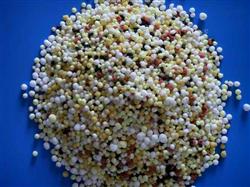
How to tell real fertilizer from fake? Keep these methods in mind
As the saying goes: "Fool the land for a moment, and the land fools you for a year." Once farmers buy and use fake or inferior chemical fertilizers, the losses caused are hard to make up for, which both dampens farmers' enthusiasm and harms farmers' interests. Below are the common methods for identifying real and fake fertilizers: Visual inspection First look at the fertilizer packaging. The fertilizer packaging bag must indicate the product name, nutrient content (grade), trademark, net weight, standard code, factory name and address, contact phone number, production license number and fertilizer registration number, etc. If the above markings are absent or incomplete and the packaging is rather rough, it may be fake or inferior compound fertilizer. Pay special attention to fertilizers whose packaging bag seals show obvious signs of being opened; this phenomenon may indicate adulteration. In addition, pay attention to the production date on the production certificate inside the fertilizer bag. If fertilizer is stored for too long, the total nutrients will be lost. Second, look at the fertilizer's granule size (or crystalline state). High-quality fertilizer has relatively uniform granule size and specific gravity, a smooth surface, and is not prone to absorbing moisture or caking, while fake and inferior fertilizer is exactly the opposite, with uneven granule sizes, a rough surface, high moisture, and easy caking. Third, look at the fertilizer's color. High-quality fertilizer has very uniform color, with no obvious color difference, and the entire granule is uniform from the inside out. Most fake fertilizer, however, is colored on the surface and easily loses its color.
-
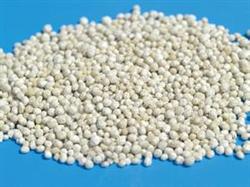
What methods are there to improve fertilizer use efficiency?
1. Fertilizer application rate. The application rate of compound fertilizer is based on the amount of nitrogen. Compound fertilizers contain multiple nutrients and mostly belong to the nitrogen, phosphorus and potassium three-element type. Except for special fertilizers for legume crops, which are mainly phosphorus and potassium fertilizers, all take nitrogen as the main nutrient, and in the nutrient ratio nitrogen is always dominant, matched with corresponding phosphorus and potassium nutrients. For one...
-

What causes flowers to get sick? Practical troubleshooting methods tell you
Plant diseases are generally divided into physiological diseases and biological infection (pathological) diseases. Physiological diseases are not contagious; as long as the cultivation environment is improved in time and corresponding measures suitable for plant growth and development are taken, there is a chance of improvement. Common biological infection diseases
-

How to care for kokedama? Moss bonsai care methods and precautions
To make a kokedama, you only need to prepare a sheet of moss, a small tropical plant, mixed soil and fine hemp twine. Mix seven parts peat and three parts bonsai soil (akadama soil)
-
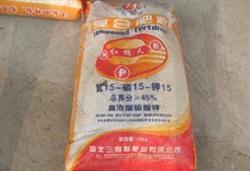
A Detailed Guide to Boron Fertilizer: Functions and Application Methods
As the saying goes: "A person who delays the land for a moment, the land delays the person for a year." Once farmers buy and use fake or inferior chemical fertilizers, the losses caused are hard to make up for, which both dampens farmers' enthusiasm and harms their interests. Below is an introduction to the common methods for identifying genuine and fake fertilizers: visual inspection - first look at the fertilizer packaging,...
-
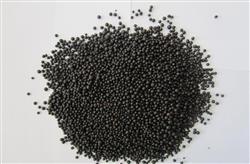
The role and application methods of amino acid organic fertilizer
Amino acid organic fertilizer was recently successfully developed in Yishui. This organic fertilizer is made from cake fertilizer (soybean meal, rapeseed meal, etc.), green manure and other raw materials containing plant protein, produced using a national invention patent method (0010794, 5), as a pollution-free, hormone-free, residue-free, fully organic, high-efficiency green agrochemical new...
-
Application Methods and Technical Key Points of High-Efficiency Organic Fertilizer
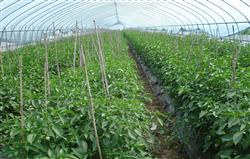
I. How to Apply High-Efficiency Organic Fertilizer to Vegetables 1. Application Rate: According to the nutrient requirements of various vegetable crops, apply 60-100 kg per mu as base fertilizer for each crop of vegetables. Baosheng High-Efficiency Organic Fertilizer is mild in nature, and applying more is unlikely to cause fertilizer burn; for vegetables, melons and fruits with high economic value or high yield, the application rate may be increased by 20-50%. Baosheng...
-
How to Propagate Azaleas from Cuttings? Detailed Methods and Tips
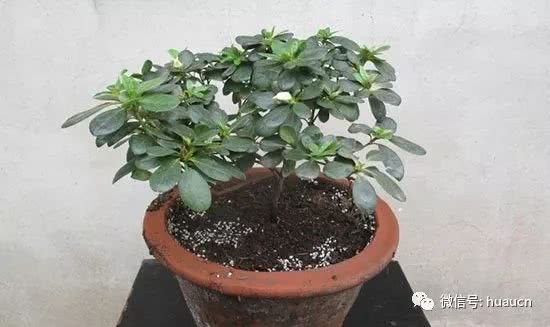
Propagating plants is a process every flower lover goes through. This illustrated guide to azalea cutting propagation is suitable for beginners, and also for gardeners who have just bought an azalea. Why do we say it suits those who have just bought an azalea? Because azaleas...
-
What are the common preparation methods for foliar fertilizers?
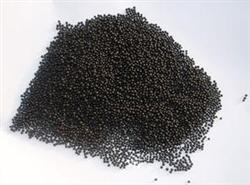
To produce pollution-free vegetables, in addition to selecting excellent varieties, practicing health-promoting cultivation, vigorously applying biological pesticides and rationally using chemical fertilizers, there are also many requirements for the soil conditions of the planting site and the fertilization methods. First, producing pollution-free vegetables requires pollution-free soil. As farmland for producing pollution-free vegetables, there must be good...
-

A Detailed Guide to the Feng Shui Placement Methods and Taboos of the Money Tree
The best placement for a money tree is the wealth position, as this can maximize its wealth-attracting effect and bless the owner with great fortune and prosperity. If a company has just opened, it can be placed at the company entrance. In addition, when placing it at home, it is best not to put it next to the television or in the toilet or bathroom.
条件筛选