-
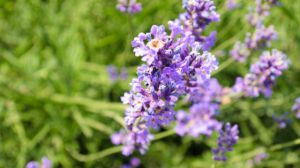
How to propagate lavender? A detailed guide to common propagation methods
Cutting propagation: Select healthy, semi-lignified flowering stems, cut them to a length of about 8-10cm, remove the lower leaves, then insert them into the growing medium, water thoroughly once, and finally cover with a layer of film to retain moisture. Seed propagation: Evenly scatter the seeds onto the surface of the growing medium, cover with a thin layer of soil, then spray water as needed to increase humidity.
-

What to Do When Gardenias Bloom Sparsely? Flower-Promoting Care Methods
Fertilizing before blooming: Before blooming, you need to apply some fertilizer to the gardenia, preferably phosphorus and potassium fertilizer, to provide it with the nutrition for blooming. Ensure light: Before blooming, you need to move it to a place with sufficient light. Ensure moisture: Before blooming, you need to replenish water in time to ensure sufficient moisture. Acidify the soil: Acidifying alkaline soil can also help it bloom more.
-

Correct Application Methods and Key Spraying Points for Foliar Fertilizers
1. Different foliar fertilizers have different application concentrations; higher is not always better. 2. Different crops and different growth stages respond differently to foliar fertilizers. 3. Different crops react differently to foliar fertilizers. 4. How well a foliar fertilizer dissolves and its dilution concentration greatly affect the spraying results...
-

What are the control methods for sweet osmanthus brown spot disease?
Sweet osmanthus brown spot disease mainly shows as follows: the pathogen infects the leaves; affected leaves first develop small yellow spots, which gradually turn yellowish-brown to grayish-brown. The spots are nearly round or irregular in shape, or appear as angular spots when their expansion is limited by the leaf veins. Around them is a ring of yellow halo. Sweet osmanthus brown spot disease is a very common disease.
-

Control Methods and Technical Key Points for the Flamboyant Tree Owlet Moth Pest
The flamboyant tree (Delonix regia) is known as one of the most brilliantly colored trees in the world; its name comes from its bright red or orange flowers combined with bright green bipinnate compound leaves, and it is commonly planted in Guangdong, Fujian, Sichuan and other places. The flamboyant tree has relatively few diseases and pests, but owlet moth pests are relatively common
-

Detailed Explanation of Fertilizer Types and Application Methods (Part 6)
Achievement of Shandong Agricultural University: The fertilizer coating controlled-release technology involves spraying a uniform controlled-release film onto the surface of crop-specific compound fertilizer or urea granules. Its core technology lies in the film material and corresponding additives. By adjusting the formula, the number and size of pores on the film can be set to control nutrient release. Controlled-release fertilizer...
-
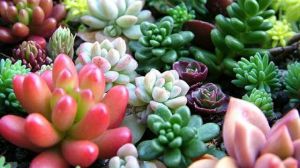
How to propagate succulents? A detailed guide to common methods
Seed propagation: sow the seeds immediately after harvesting or sow in the following spring. Cutting propagation: for leaf cuttings, cut off healthy, disease-free leaves and simply place them on a sand bed; for stem cuttings, clean the branches thoroughly, let them dry, then plant them as cuttings; for root cuttings, cut off mature roots and bury them in a sand bed. Division propagation: when repotting, cut off the bulbs and small plantlets and plant them separately.
-

Garden Plant Pests and Diseases Prone to Occur in September and Their Control Methods
By September, autumn is the peak period for the occurrence and damage of garden plant pests and diseases. During this period, close attention should be paid, with active prevention and timely treatment.
-

What are the flower care methods during the White Dew solar term?
In autumn, you should start controlling the amount of water given to flowers at the right time and stop fertilizing, so as to avoid root rot from too much water and leggy branches and leaves from too much fertilizer, which would affect overwintering. In addition, they should be placed in a sunny spot.
-

What are the care methods for a Serissa japonica bonsai?
Serissa japonica [Latin scientific name: Serissa japonica (Thunb.) Thunb.], an evergreen small shrub in the Rubiaceae family, can reach up to 90 cm in height and has a foul odor. It prefers light shade and fears the sun
条件筛选