What are the control methods for shiitake mushroom deformity disease?
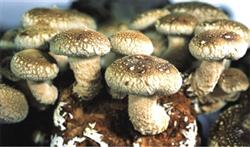
How do you prevent and control shiitake mushroom deformity disease? Please explain the control methods. During the growth of shiitake fruiting bodies, "candle mushrooms" (stalked with no cap), "pinecone mushrooms" and "lychee mushrooms" (caps clustered together with no stalk or not opening) often appear; these are deformed mutant mushrooms of shiitake and belong to physiological diseases. The control methods include the following...
How do you prevent and control shiitake mushroom deformity disease? Please explain the control methods
During the growth of shiitake fruiting bodies, "candle mushrooms" (stalked with no cap), "pinecone mushrooms" and "lychee mushrooms" (caps clustered together with no stalk or not opening) often appear; these are deformed mutant mushrooms of shiitake and belong to physiological diseases. The control methods include the following points:
1. Understand the strain's characteristics and prevent mistakes in introducing spawn. Before cultivation, you must first clarify the characteristics of the spawn, select suitable varieties according to local conditions, reasonably arrange the inoculation season, and calculate the scheduled inoculation time.
2. Understand the maturation characteristics of the mycelium and prevent blind removal from the bag. If the bag is removed too early, the mycelium has not reached physiological maturity, and there will be many deformed mushrooms. For physiological maturity of the mycelium, master "one mycelial age and three standards." "One mycelial age" means about 60 days from the date of inoculation; the "three standards" are that the nodular, bubble-like mycelium inside the bag accounts for 2/3 of the entire bag surface, brown patches appear locally, and the bag feels soft and elastic when held in the hand. At this point, removing the bag is appropriate.
3. Master the color-turning pattern and prevent loss of temperature control. During the color-turning period, pay attention to temperature changes. For the first 3 days, keep it within 25°C; the covering film on the mushroom bed does not need to be uncovered for ventilation. Under normal conditions, color turning ends in 12 days, and the first flush of mushrooms appears 3 days later. Color turning requires a temperature no lower than 12°C and no higher than 25°C. The optimal temperature for fruiting is 15°C.
4. Master the principle of temperature variation and prevent insufficient temperature-difference stimulation. With proper temperature variation, there will be many mushrooms, good morphology, and no deformed mushrooms. The correct method of temperature variation: cover the mushroom bed with plastic film during the day, and after 12 at night uncover the film for 1 hour, so that the day-night temperature difference is above 10°C and mushroom buds emerge in large numbers. All this should be done with continuous temperature variation for 3-4 days after color turning.
5. Soak in water in a timely and appropriate amount, and prevent the water-soaking from being too early or too little. When the water content of the fungus logs is below 40%, fruiting is difficult and there are many small mushrooms. Generally, when the weight of the fungus logs has dropped by 30% compared with the original, they can be soaked; after absorbing water, reaching 95% of the weight when the bags were made is sufficient. If they absorb too much water, the mycelium may have difficulty breathing, affecting normal mushroom growth.
6. The method of forcing mushrooms must be appropriate, and prevent being too dry or too wet. After each batch of mushrooms is harvested, the film must be uncovered for ventilation for 6-7 days, so that the mycelium can absorb sufficient oxygen and recover its growth capacity, then shift to spraying water to maintain moisture, alternating dry and wet, to force the first flush of mushroom buds to emerge.
7. Harvest at the right time and prevent overripeness. Harvest when the mushroom cap has curled edges and the stalk is moderate. Harvest once a day; during the spring peak production period, sometimes it is necessary to harvest twice a day. In short, be skilled in management, diligent in management, constantly sum up experience, and achieve relatively high economic benefits.
Click to get more shiitake mushroom cultivation techniques
Click to get more edible fungus cultivation techniques