-
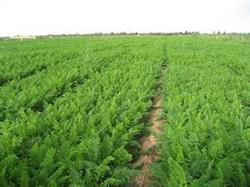
Detailed Explanation of Licorice Seedling Raising and Transplanting Methods and Technical Key Points
The glycyrrhizic acid contained in licorice is 200 to 300 times sweeter than sucrose, making it the best natural sweetener discovered to date. China exports large quantities of licorice and its extracts to European, American and Southeast Asian countries, and it has become a major foreign-exchange-earning medicinal herb. Due to increasing demand at home and abroad, wild licorice resources are becoming increasingly depleted. Therefore, it is necessary to...
-
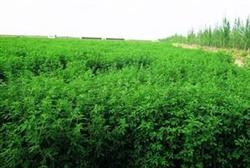
Detailed Explanation of Licorice Seedling Raising Methods and Key Planting Techniques
Abstract: Licorice is the source material for a large number of traditional Chinese medicine preparations, and is widely used in food, beverages, tobacco, daily chemicals and other fields, with broad application prospects. However, due to the lack of wild licorice resources, artificial planting efforts need to be increased. In order to improve licorice seedling raising and planting techniques, the Urumqi Grassland Station conducted licorice seedling raising and planting...
-
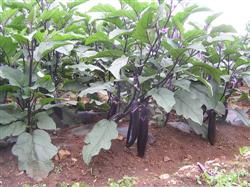
What are the management methods for eggplant in summer?
How should eggplant be managed in summer? Please advise. The main management points for eggplant in summer are as follows for reference: Eggplant likes water, so during the long drought with no rain in July, water must be supplemented to keep the soil moist. When irrigating, dissolve the fertilizers ammonium bicarbonate, monoammonium phosphate and potassium sulfate in water, with concentrations of 0.3%, 0.15% and 0....
-
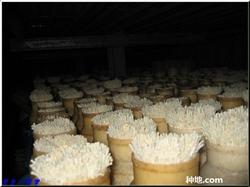
Summer Cultivation Methods and Key Technical Points for Enoki Mushroom
What are the requirements for cultivating enoki mushroom? Please note the following points when cultivating enoki mushroom: 1. Temperature The temperature requirements of enoki mushroom differ at each growth stage. The temperature range for mycelium growth is 3-34°C, with an optimum of around 23°C; the temperature required for fruiting body differentiation is 10-15°C, with an optimum of 12-13...
-
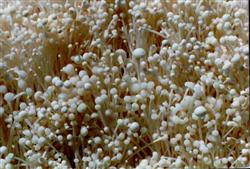
A Detailed Guide to Enoki Mushroom Regenerative Cultivation Techniques and Methods
How is enoki mushroom regeneratively cultivated? Please advise. Enoki mushroom has a strong regenerative branch characteristic: when young mushrooms dry out and wither, many new fruiting body primordia form on their stipes. With proper management of these primordia, they can all develop into high-quality mushroom bodies. This method has the characteristics of dense and uniform fruiting, thin stipes, being less prone to cap opening, good appearance...
-
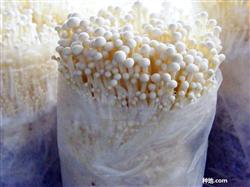
Control Methods for Black Spot Disease and Rust Spot Disease in Enoki Mushrooms
What to do when enoki mushrooms develop black spot disease and rust spot disease? Please advise. 1. Black spot disease: a bacterial disease caused by Pseudomonas bacteria. After infection, oval brown or dark brown spots appear on the caps of enoki mushrooms, initially needle-tip sized, expanding to 2-4 mm in diameter, with neat edges, and sometimes the caps crack. Control methods...
-
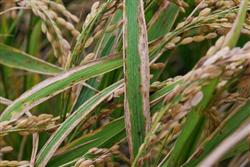
What are the control methods for the three major rice diseases?
How do you control the three major rice diseases? Please explain the control methods. The three major rice diseases can be controlled by referring to the following methods: 1. Rice blast (1) Leaf blast: dark green, nearly round or oval lesions, which later become slightly pointed at both ends; generally, when acute-type lesions appear or an infection center develops, especially in rice fields with high nitrogen fertilizer rates and tender, lush green growth, when the total number of leaf blast lesions occurring on 20 hills of rice during the entire growth period before heading reaches more than 400, spraying must be carried out, with an interval of 3 to 5 days, and continuous spraying 2 times.
-
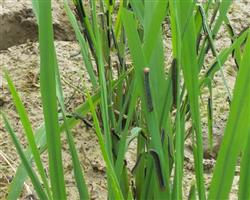
Main Pests and Control Methods for Rice in the Mid-to-Late Growth Stage
Which pests should be controlled in the mid-to-late growth stage of rice? Please provide an introduction and control methods. The pests to be controlled in the mid-to-late growth stage of rice are: 1. Control of rice planthopper: Rice planthoppers mainly inhabit the base of rice clumps, suck plant sap, causing rice plants to turn yellow and affecting yield. The control agents selected are: ① 25% Youlede wettable powder at 30 grams per mu: ② 25% sumicidin wettable powder at 100 grams per mu, mixed with 45 kg of water for spray control; ③ 20% yamailing emulsifiable concentrate at 100 mL per mu mixed with 45 kg of water for spray control; ④ saiqinone or 10% imidacloprid at 30 grams/mu mixed with 45 kg of water for spraying.
-
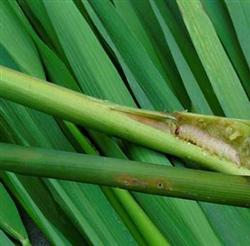
What are the prevention methods for the rice stem borer (Chilo suppressalis)?
How to prevent the rice stem borer (Chilo suppressalis)? Please provide an introduction to the methods. The following methods can be used for preventing the rice stem borer (Chilo suppressalis): 1. Agronomic measures. When damaged plants with dead leaf sheaths, dead hearts, or dead panicles are found, they should be pulled out promptly, which not only reduces the number of insects but also prevents larvae from moving to other plants to cause damage. 2. Chemical control. When the control threshold is re...
-
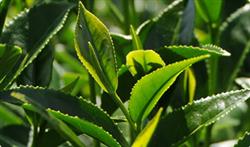
Tea Plant Winter Management Methods and Technical Key Points
How to manage tea plants in winter? Please advise. To make productive tea gardens sprout early and abundantly the following year, with strong, uniform buds, high yield, excellent quality free of pollution, and to sell at a good price when reaching the market early, strengthening winter management is key. As winter arrives, tea plants gradually stop growing and enter dormancy. At this time, the tea garden should carry out tea plant pruning, applying sufficient base fertilizer, pest and disease prevention...
条件筛选