-
A Detailed Guide to Boron Fertilizer: Functions and Application Methods
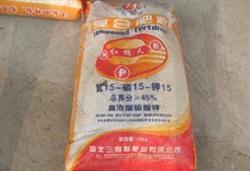
As the saying goes: "A person who delays the land for a moment, the land delays the person for a year." Once farmers buy and use fake or inferior chemical fertilizers, the losses caused are hard to make up for, which both dampens farmers' enthusiasm and harms their interests. Below is an introduction to the common methods for identifying genuine and fake fertilizers: visual inspection - first look at the fertilizer packaging,...
-
What are the common preparation methods for foliar fertilizers?
To produce pollution-free vegetables, in addition to selecting excellent varieties, practicing health-promoting cultivation, vigorously applying biological pesticides and rationally using chemical fertilizers, there are also many requirements for the soil conditions of the planting site and the fertilization methods. First, producing pollution-free vegetables requires pollution-free soil. As farmland for producing pollution-free vegetables, there must be good...
-
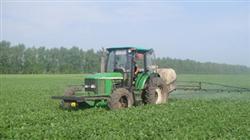
Correct Application Methods and Key Spraying Points for Foliar Fertilizers
1. Different foliar fertilizers have different application concentrations; higher is not always better. 2. Different crops and different growth stages respond differently to foliar fertilizers. 3. Different crops react differently to foliar fertilizers. 4. How well a foliar fertilizer dissolves and its dilution concentration greatly affect the spraying results...
-
Detailed Explanation of Fertilizer Types and Application Methods (Part 6)
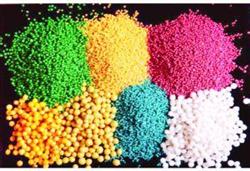
Achievement of Shandong Agricultural University: The fertilizer coating controlled-release technology involves spraying a uniform controlled-release film onto the surface of crop-specific compound fertilizer or urea granules. Its core technology lies in the film material and corresponding additives. By adjusting the formula, the number and size of pores on the film can be set to control nutrient release. Controlled-release fertilizer...
-

Key Technical Points and Detailed Methods of Foliar Fertilization
Do not spray in extremely hot weather or before rain, so as to avoid burning the seedlings or losing fertilizer nutrients. The best time to spray is in the early morning or afternoon each day, and after spraying, wait 7-10 days before spraying again. When spraying on cereal crops or crops with smooth leaves, add 0.1% adhesive (such as laundry detergent or dish soap), etc. Otherwise, the effect...
-
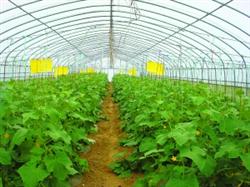
Correct Methods and Technical Key Points for Foliar Fertilization of Vegetables
Spraying an aqueous solution of the nutrients plants need onto the leaves, so that plants directly absorb effective nutrients through their leaves, is a technique called foliar fertilization of vegetables. Compared with soil fertilization, this technique has the advantages of rapid conversion, high fertilizer use efficiency, and promotion of nutrient uptake by the root system. Foliar fertilizers can be broadly divided into macro...
-
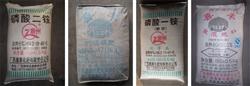
How to tell real phosphate fertilizer from fake? Here are a few practical methods
1. The role of phosphorus: the swelling element (the main nutrient for swelling of crop roots, stems, leaves and fruits), the energy of cell division. Deficiency symptoms: the most direct manifestation is uneven crop sizes in the field, especially obvious in orchards, and now most field crops also show this, with individual plants showing...
-
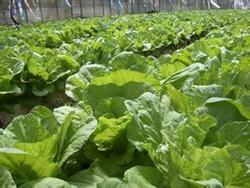
Scientific application methods and technical key points for potash fertilizer
Potassium is one of the three essential fertilizer elements. Many vegetables often require more potassium than nitrogen and phosphorus; well-grown vegetables contain potassium at 2.5%-7% of their dry matter, higher than their nitrogen and phosphorus content. Most vegetables absorb more potassium than nitrogen; for example, the nitrogen-to-potassium ratio absorbed by cucumber is 1:(1.5-1.7), by pumpkin is 1:2.1, and by tomato is 1:...
-
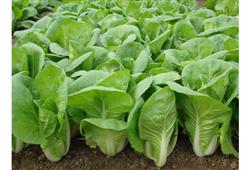
Application Methods of Potassium Fertilizer in Vegetable Cultivation
There are many types of potassium fertilizer, and different types have different application methods. Commonly used potassium fertilizers include potassium chloride, potassium sulfate, potassium-magnesium fertilizer and plant ash. Potassium chloride and potassium sulfate are physiologically acidic fertilizers and should be applied together with lime and organic fertilizer. For chlorine-sensitive crops such as potatoes, potassium chloride and potassium-magnesium fertilizer with high chlorine content should not be applied...
-
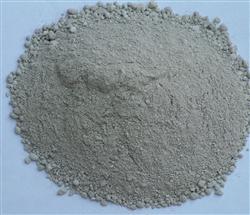
How to tell good phosphate fertilizer from bad? A few practical methods
August to October is the suitable sowing period for autumn crops in the south, such as rapeseed, broad beans, green manure, potatoes and various autumn vegetables, all of which are sown during this period. Experienced farmers know that autumn crops emphasize the application of phosphate fertilizer; this is based on the causal relationship between crops, soil and fertilizer, and is determined by phosphate fertilizer itself...
条件筛选